



.jpg&w=256&q=75&dpl=dpl_8zguW5qCKKK1KrHym6wnDWwDGBys)
.jpg&w=256&q=75&dpl=dpl_8zguW5qCKKK1KrHym6wnDWwDGBys)
.webp&w=256&q=75&dpl=dpl_8zguW5qCKKK1KrHym6wnDWwDGBys)
.webp&w=256&q=75&dpl=dpl_8zguW5qCKKK1KrHym6wnDWwDGBys)





Business
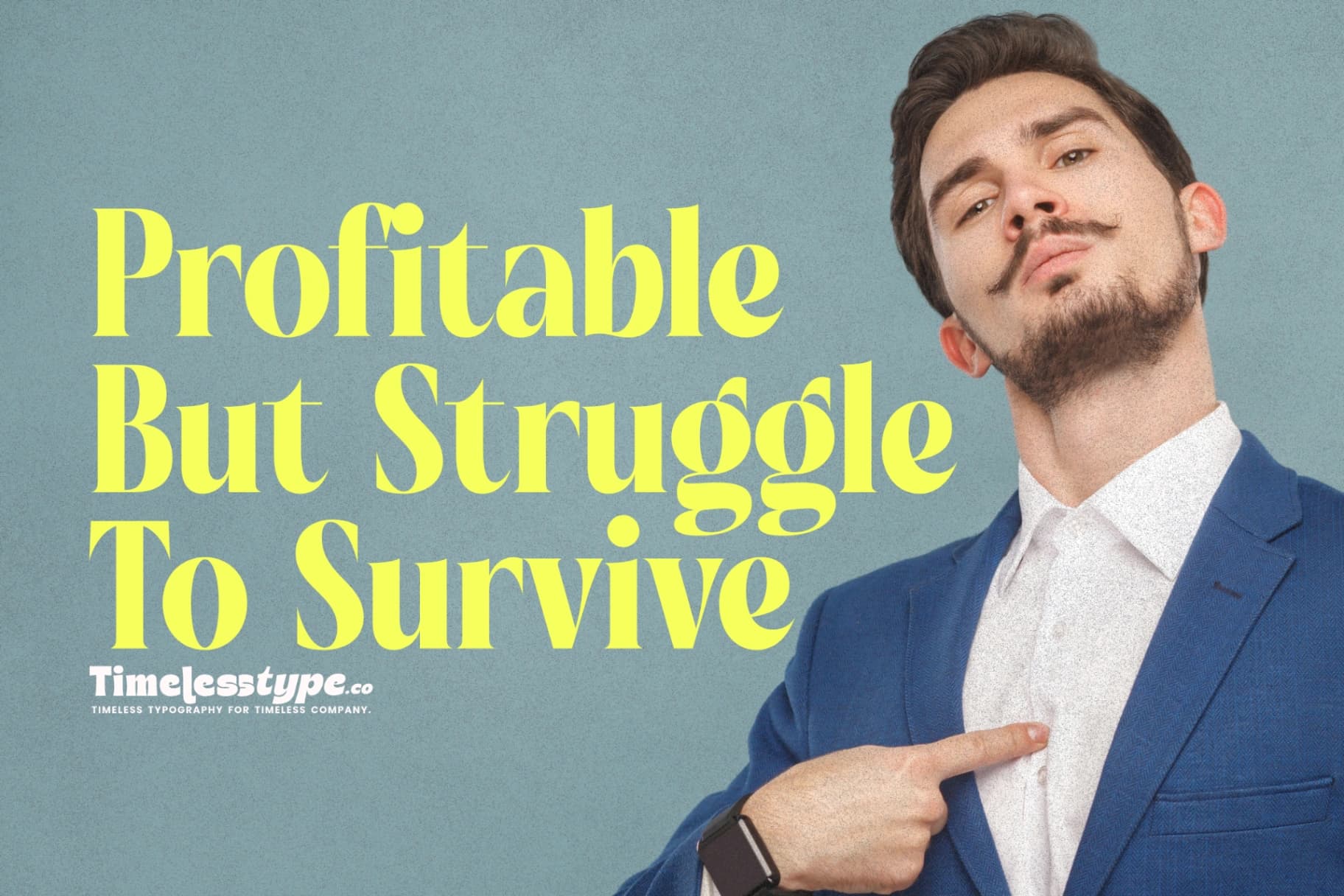
Why Many Businesses Look Successful Aren"t Profitable
Insights, tutorials, and type notes from the Timeless Type studio.
.webp&w=1920&q=75&dpl=dpl_8zguW5qCKKK1KrHym6wnDWwDGBys)
Table of Contents
- Success Is Easier to Display Than Profit
- Revenue Growth Creates False Confidence
- Profit Is Delayed—Pain Is Immediate
- The Expansion Reflex
- Underpricing Becomes Structural
- Complexity Grows Faster Than Efficiency
- The Founder as the Hidden Cost Center
- Cash Flow Masks Profit Problems
- Marketing That Looks Great but Pays Poorly
- Scaling Operations Before Fixing Economics
- Vanity Metrics Replace Financial Truth
- Emotional Attachment to Growth
- When Success Increases Stress Instead of Freedom
- Why This Problem Is So Widespread
- What Profitable Businesses Do Differently
- The Shift From Looking Successful to Being Profitable
- Final Thought: Profit Is the Difference Between a Business and a Performance
Why Many Businesses Look Successful but Aren’t Profitable
Scroll through LinkedIn, Instagram, or business media and you’ll see a familiar pattern: companies announcing growth, founders celebrating milestones, teams expanding, offices getting bigger, and brands looking increasingly polished. On the surface, everything signals success.
Yet behind closed doors, many of these businesses are struggling to stay afloat.
Invoices are paid late. Cash reserves are thin. Owners hesitate to take time off. Any dip in revenue creates panic. Despite appearances, profitability never feels secure—or never arrives at all.
This gap between looking successful and being profitable is one of the most common and misunderstood problems in modern business.
This article explores why so many businesses fall into this trap, how the illusion of success is maintained, and why profitability often disappears precisely when growth accelerates.
Success Is Easier to Display Than Profit
Modern business rewards visibility.
You can show:
Revenue growth
New clients
Website traffic
Office photos
Team size
Media features
Profit, however, is quiet. It doesn’t trend. It doesn’t photograph well. It’s rarely discussed publicly.
As a result, many businesses optimize for what can be seen, not what sustains them.
Looking successful is often mistaken for being successful—until the bank account tells a different story.
Revenue Growth Creates False Confidence
Revenue is the loudest metric in business, and also one of the most misleading.
A company can double revenue and still:
Lose money
Increase risk
Reduce flexibility
Raise stress levels
Revenue growth creates momentum bias. Founders assume that if money is coming in, everything else will eventually work itself out.
It rarely does.
Without healthy margins, revenue growth simply increases the size of the problem.
Profit Is Delayed—Pain Is Immediate
One reason profitability is neglected is timing.
Costs hit immediately:
Salaries
Software
Marketing spend
Rent
Contractors
Profit, on the other hand, feels abstract and future-oriented.
So businesses say:
“We’ll fix profit later.”
“Let’s grow first.”
“Once we scale, margins will improve.”
This thinking assumes scale automatically creates efficiency. In many cases, it does the opposite.
The Expansion Reflex
When businesses experience momentum, they expand reflexively.
They:
Hire more people
Add more services
Invest in branding
Increase operational complexity
Expansion feels like progress. But expansion without profitability is just commitment without cushion.
Each expansion decision increases fixed costs. If revenue slows—or margins shrink—there’s no buffer.
The business becomes impressive and fragile at the same time.
Underpricing Becomes Structural
Many businesses start by underpricing to gain traction.
At first, it feels strategic:
Easier sales
Faster growth
Less resistance
But underpricing quickly becomes structural.
Once clients, teams, and systems are built around low prices, raising them feels risky. The business locks itself into a high-effort, low-reward model.
Growth increases workload, not profit.
Complexity Grows Faster Than Efficiency
Every new client type, service offering, or custom request adds complexity.
Complexity:
Increases coordination costs
Reduces operational efficiency
Requires more management time
Creates more failure points
Yet complexity is rarely tracked financially.
A business may look bigger and more impressive, while each additional layer quietly erodes profit.
Simple models survive. Complex ones bleed slowly.
The Founder as the Hidden Cost Center
In many “successful” businesses, profitability is achieved only because the founder absorbs the cost.
They:
Work unpaid hours
Skip salary increases
Cover mistakes personally
Carry emotional labor
Delay rest indefinitely
On paper, the business looks fine. In reality, the founder is subsidizing operations.
This is not profit. It’s deferred burnout.
Cash Flow Masks Profit Problems
Positive cash flow can hide unprofitability for a long time.
Money comes in, expenses are paid, and the business keeps moving.
But cash flow can be deceptive when:
Costs are delayed
Debt is increasing
Growth requires constant reinvestment
There’s no surplus after obligations
Cash flow keeps the lights on. Profit builds resilience. Without profit, any shock becomes dangerous.
Marketing That Looks Great but Pays Poorly
Many businesses invest heavily in marketing to fuel growth.
The problem arises when:
Customer acquisition costs are high
Lifetime value is unclear
Retention is weak
Discounts drive volume but kill margin
Marketing success often shows up as visibility, not profitability.
If marketing doesn’t create surplus after costs, it’s not growth—it’s expensive motion.
Scaling Operations Before Fixing Economics
Scaling magnifies whatever already exists.
If unit economics are weak at small scale, scaling makes them worse.
Yet many businesses:
Hire before margins are stable
Automate broken processes
Expand markets without clarity
Add volume without understanding cost per unit
Scale is not a solution to bad economics. It’s an amplifier.
Vanity Metrics Replace Financial Truth
Modern businesses are flooded with data, but not always insight.
Vanity metrics feel good:
Followers
Engagement
Clicks
Sign-ups
Gross sales
But they don’t answer the core question:
“Is this business actually making money sustainably?”
Without focusing on margins, cost structure, and net profit, success becomes performative.
Emotional Attachment to Growth
Founders often tie their identity to growth.
Slowing down feels like failure. Cutting costs feels like retreat. Saying no feels like weakness.
So businesses keep pushing forward, even when the model isn’t working.
Profitability requires uncomfortable decisions:
Simplifying offerings
Raising prices
Letting go of growth narratives
Reducing complexity
Many businesses avoid these decisions because they threaten the image of success.
When Success Increases Stress Instead of Freedom
One of the clearest signals a business isn’t truly profitable is how it feels.
Unprofitable success feels like:
Constant anxiety
Inability to step away
Fear of revenue dips
Decision paralysis
Emotional exhaustion
If success increases pressure instead of reducing it, the foundation is weak.
Why This Problem Is So Widespread
This pattern is especially common today because:
Social media rewards visibility
Funding narratives prioritize growth
Hustle culture glorifies struggle
Profit is rarely discussed honestly
Many founders don’t realize their business isn’t profitable until it’s deeply entrenched in an unworkable structure.
What Profitable Businesses Do Differently
Truly profitable businesses prioritize:
Margins before scale
Simplicity over expansion
Financial clarity over optics
Sustainability over speed
They don’t rush to look big.
They focus on staying strong.
The Shift From Looking Successful to Being Profitable
This shift requires:
Honest financial analysis
Willingness to slow down
Redesigning offers and pricing
Reducing unnecessary complexity
Protecting cash reserves
It’s less exciting—but far more powerful.
Final Thought: Profit Is the Difference Between a Business and a Performance
A business that looks successful but isn’t profitable is performing success, not living it.
Eventually, the gap closes—either through correction or collapse.
Profit isn’t greed.
Profit is stability.
Profit is choice.
And without it, success is just a costume that gets heavier over time.
Related
Tags
Browse similar work by purpose and style.
.webp&w=1920&q=75&dpl=dpl_8zguW5qCKKK1KrHym6wnDWwDGBys)
.webp&w=1920&q=75&dpl=dpl_8zguW5qCKKK1KrHym6wnDWwDGBys)
.webp&w=1920&q=75&dpl=dpl_8zguW5qCKKK1KrHym6wnDWwDGBys)
.webp&w=1920&q=75&dpl=dpl_8zguW5qCKKK1KrHym6wnDWwDGBys)
.webp&w=1920&q=75&dpl=dpl_8zguW5qCKKK1KrHym6wnDWwDGBys)
.webp&w=1920&q=75&dpl=dpl_8zguW5qCKKK1KrHym6wnDWwDGBys)
.webp&w=1920&q=75&dpl=dpl_8zguW5qCKKK1KrHym6wnDWwDGBys)