









Fuel Your Fire: How to Stay Motivated When Life Gets Tough
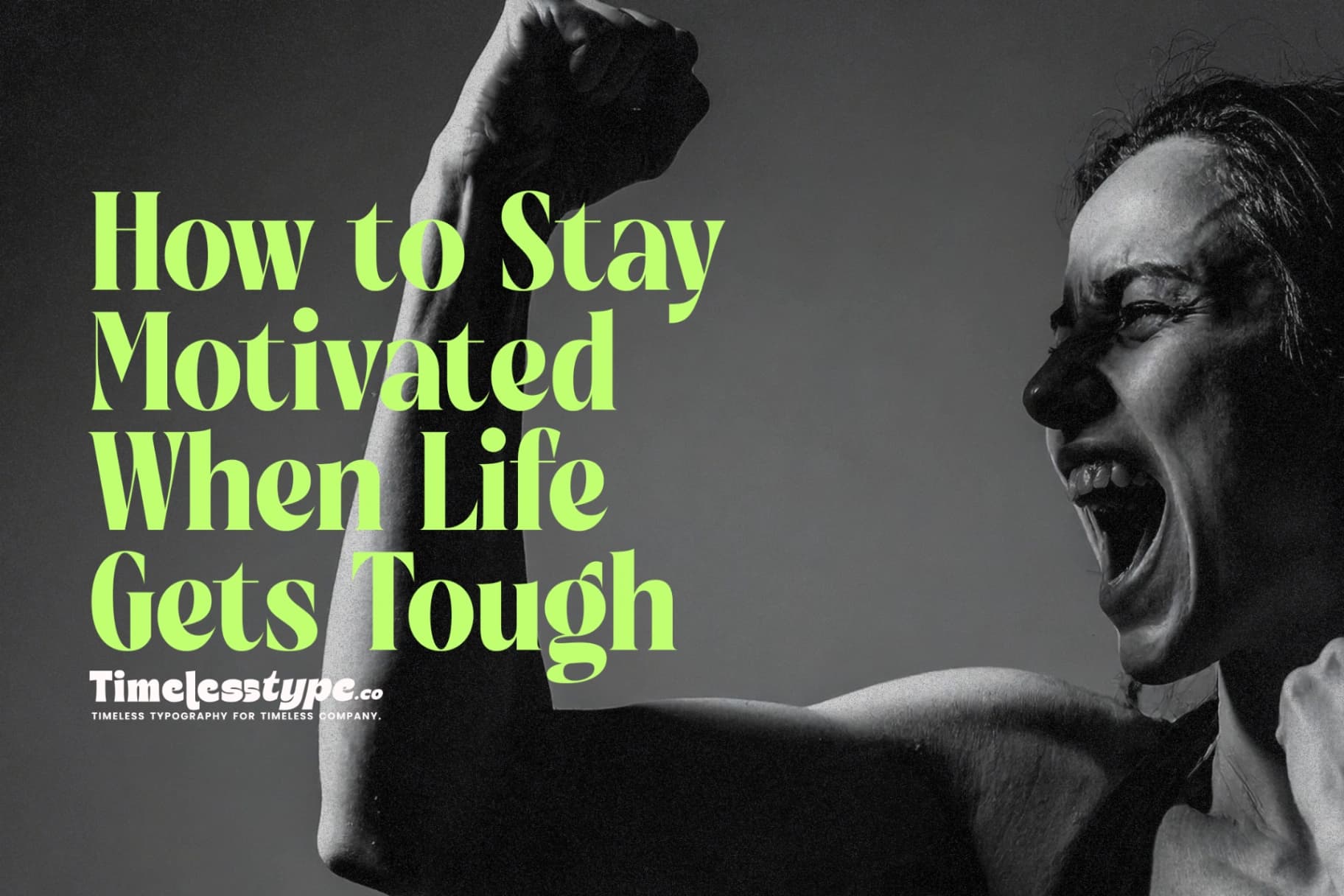
Table of Contents
- Part 1: The Great Motivation Myth
- Part 2: Anchoring in the Storm (The "Why")
- The Funeral Test
- Part 3: The Art of "Micro-Wins"
- The Dopamine Loop
- Part 4: Environmental Design
- Part 5: The Power of "Who"
- Part 6: Reframing Stress as Growth
- Part 7: Rest vs. Quitting
- Part 8: The Comparison Trap
- Part 9: Developing the "Identity of a Professional"
- Conclusion: The Fire Within
Fuel Your Fire: How to Stay Motivated When Life Gets Tough
Life is not a linear ascent. If social media is to be believed, success is a straight arrow pointing up—a constant stream of wins, promotions, and perfect mornings. But the reality of the human experience is far more jagged. It is a topography of peaks and valleys, plateaus, and occasional deep crevices where the light barely reaches.
We all know how to handle the peaks. When things are going well, motivation is easy. It feels like a tailwind, pushing us effortlessly toward our goals. We wake up energized, ideas flow, and obstacles seem like fun challenges.
But what happens when the season changes? What happens when the project fails, the relationship ends, the bank account dwindles, or a global crisis shifts the ground beneath our feet? What happens when the "why" feels fuzzy and the "how" feels impossible?
This is the moment of truth. This is where the amateur gives up and the professional digs in.
Staying motivated when life gets tough is not about forcing a fake smile or reciting empty affirmations. It is about understanding the mechanics of the human spirit, mastering the biology of drive, and building a system that functions even when your emotions don't want to cooperate.
This article is a manual for those dark times. It is a guide to refueling your fire when the rain is pouring down.
Part 1: The Great Motivation Myth
To fix our motivation, we must first understand what it is—and more importantly, what it is not.
Most people treat motivation like a lightning strike. They wait for it to hit them. They sit at their desks or stare at their running shoes, waiting for a sudden surge of inspiration to compel them into action. They believe the equation looks like this:
Inspiration
→→Motivation
→→Action
This is the "Great Motivation Myth." If you wait until you feel like doing something difficult, you will likely never do it. Our brains are wired for survival, which means they are wired to conserve energy and avoid discomfort. Your brain will never spontaneously want to do hard things when you are stressed or tired.
The actual equation, supported by behavioral psychology, is the inverse:
Action
→→Inspiration
→→Motivation
Motivation is not the spark that starts the fire; it is the heat the fire gives off after it has started burning. You have to light the match yourself.
When life gets tough, we often lose the feeling of motivation because our dopamine systems are depleted. Stress floods the body with cortisol, which suppresses the brain's reward pathways. We don't "feel" the urge to work because our biology is screaming at us to hunker down and hide.
Understanding this is liberating. It means that a lack of motivation isn't a character flaw; it’s a biological response to adversity. It also means you don't need to feel good to do good work. You just need to start.
Part 2: Anchoring in the Storm (The "Why")
Friedrich Nietzsche famously wrote, "He who has a why to live for can bear almost any how."
When the seas are calm, you can drift without an anchor. But when the storm hits, if you are not anchored to something deep and immovable, you will be washed away.
Adversity acts as a filter. It strips away superficial motivations.
If your motivation was "to look cool," tough times will kill it.
If your motivation was "to make quick money," a recession will kill it.
If your motivation was "to please others," criticism will kill it.
To fuel your fire when life is hard, you must excavate your Deep Why. This isn't about surface-level goals; it's about identity and values.
The Funeral Test
It is a morbid but effective exercise. Imagine your own funeral. What do you want the people standing there to say about you? Do you want them to say you were safe, comfortable, and gave up when things got hard? Or do you want them to say you were resilient, brave, and a source of strength for others?
When you connect your daily struggle to a larger narrative of who you are becoming, the pain creates meaning. Viktor Frankl, a psychiatrist who survived the Nazi concentration camps, observed that the prisoners who lost hope were the ones who lost their sense of future purpose. Those who survived often did so because they felt they had a mission left to fulfill—a book to write, a child to see, a truth to tell.
Action Step: Write down your "Why." Keep it visible. When you are tired, read it. Remind yourself that your current struggle is the price of admission for the legacy you are building.
Part 3: The Art of "Micro-Wins"
When life is tough, our vision narrows. We become overwhelmed by the magnitude of our problems. The mountain looks too high to climb, so we freeze at the bottom.
The antidote to overwhelm is to stop looking at the summit and start looking at your feet.
The Dopamine Loop
Neuroscience tells us that dopamine is released not just when we achieve a huge goal, but when we perceive progress toward a goal. In difficult times, you must manufacture these dopamine hits by shrinking your targets.
If you are depressed or burnt out, "Write a Book" is an impossible task. It will crush you.
But "Write one sentence" is possible.
This is the strategy of Micro-Wins.
Can't workout for an hour? Do five pushups.
Can't clean the whole house? Wash one dish.
Can't finish the project? Open the document.
By setting the bar so low that you cannot fail, you trick your brain. Once you do the small task, you get a tiny hit of dopamine. That chemical reward gives you just enough fuel to do the next small thing. Momentum is not created by giant leaps; it is created by inching forward when you want to stop.
The "Non-Zero Day" Philosophy
Adopt the rule of "No Zero Days." On your absolute worst days—when you are sick, sad, or exhausted—you must do one thing that moves you toward your goal. Just one. This preserves your identity as someone who keeps moving. It keeps the fire from going out completely, preserving the embers for when the wind dies down.
Part 4: Environmental Design
Willpower is a battery, and when life is tough, that battery is perpetually low. Relying on willpower to stay motivated during a crisis is a guaranteed recipe for failure.
Instead of relying on internal discipline, rely on External Design.
If you are trying to eat healthy but your house is full of junk food, you will fail when you are stressed. If you are trying to work but your phone is buzzing next to you, you will be distracted when you are anxious.
You must design an environment that makes the "good" behaviors easy and the "bad" behaviors hard.
The Sacred Space: Create a physical space dedicated solely to your craft or your goal. It could be a desk, a chair, or a corner of a room. When you sit there, your brain should know: It is time to work. Do not scroll social media in this space. Do not eat in this space. Protect the energy of the location.
Friction Management: Increase the friction for bad habits. Unplug the TV. Delete the apps. Hide the junk food. Decrease the friction for good habits. Lay out your gym clothes the night before. Keep your notebook open on your desk.
The Input Diet: When life is tough, we tend to "doomscroll." We consume negative news and toxic social media, which poisons our mindset. You must curate your inputs aggressively. Listen to uplifting podcasts. Read biographies of people who overcame adversity. Surround yourself with voices that say "It is possible," not voices that say "It is hopeless."
Part 5: The Power of "Who"
Isolation is the enemy of motivation. When we struggle, our instinct is often to withdraw. We feel shame about our lack of progress, or we feel that no one understands our pain.
However, humans are tribal creatures. We are hardwired for Co-regulation. This means our nervous systems sync up with the people around us. If you are surrounded by panicked, negative, lazy people, your biology will mirror that state.
To fuel your fire, you need to borrow the fire of others.
The Mentor: Find someone who has walked the path before you. Their perspective can turn your mountain back into a molehill. They can remind you that "this too shall pass."
The Peer Group: Find people who are in the trenches with you. There is immense power in shared struggle. Knowing you aren't alone reduces the psychological burden of the challenge.
The Accountability Partner: You need someone who will not accept your excuses. Empathy is good, but sometimes you need a push. Give someone permission to call you out when you are slackening.
Action Step: Reach out to one person today. Be honest about your struggle. Vulnerability is not weakness; it is the first step toward reconnection.
Part 6: Reframing Stress as Growth
One of the biggest killers of motivation is the belief that it shouldn't be this hard.
We suffer because we compare our reality to a fantasy where success is easy. We feel that the struggle is a sign that we are on the wrong path. But biology teaches us the opposite.
A muscle only grows when it is torn under tension.
An immune system only strengthens when it fights a pathogen.
A diamond is only formed under crushing pressure.
This concept is called Antifragility. It is the ability to not just withstand stress, but to get better because of it.
When you are in the middle of a crisis, try to shift your internal monologue.
Instead of saying, "Why is this happening to me?"
Try asking, "What is this trying to teach me?" or "How is this preparing me for what comes next?"
Pain is energy. You can let it consume you, or you can use it as fuel. Spite can be a powerful motivator. So can the desire to prove yourself. So can the desire to ensure no one else has to go through what you are going through. Take the negative energy and channel it into the work.
Part 7: Rest vs. Quitting
There is a crucial difference between losing motivation and being burnt out.
Losing motivation usually means you are bored, scared, or distracted. The cure is action.
Burnout means you are physiologically and emotionally depleted. The cure is rest.
In a culture of "hustle porn," we are taught that sleep is for the weak and that we must grind 24/7. This is dangerous. If you drive a car with the engine redlining for too long, it will explode.
When life gets tough, the stress load on your body increases. You actually need more rest, not less, to maintain the same level of output.
If you feel your fire dying, ask yourself: Do I need to quit, or do I need to pause?
Taking a day off to sleep, hike, or disconnect from technology is not a failure. It is a strategic maintenance stop. It allows your subconscious mind to process the trauma or stress and reset your dopamine levels.
The Rule: You are allowed to rest, but you must define the end of the rest period. "I am taking Saturday off" is strategic. "I am taking some time off" is a slippery slope to quitting.
Part 8: The Comparison Trap
Nothing extinguishes your fire faster than the wind of other people's success.
When life is tough for you, it will inevitably seem like life is perfect for everyone else. You will open Instagram and see your peers getting promoted, buying houses, and traveling the world while you are struggling to get out of bed.
This comparison is a lie. You are comparing your Behind-the-Scenes with their Highlight Reel.
You do not see their debt, their arguments, their insecurities, or their failures. You only see the curated image. Comparing yourself to others is a recipe for bitterness and paralysis.
The only valid comparison is You vs. You Yesterday.
Did you do a little better today?
Did you handle the stress with a little more grace?
Did you learn something new?
Put blinders on. Run your own race. The speed of others has absolutely no bearing on your destination.
Part 9: Developing the "Identity of a Professional"
Ultimately, staying motivated is about maturity. It is about moving from the mindset of an amateur to the mindset of a professional.
The Amateur works when they feel like it. They let life dictate their output. They treat their goals like a hobby.
The Professional works because that is who they are. They show up rain or shine. They treat their goals like a vocation.
Steven Pressfield, author of The War of Art, calls this "turning pro."
When you turn pro, you stop taking the struggle personally. You realize that "The Resistance"—that force that tries to stop you from doing your work—is impersonal. It attacks everyone.
The professional knows that motivation is a luxury, but discipline is a necessity. Discipline is not about punishment; it is about self-love. It is loving your future self enough to do the hard thing today.
Conclusion: The Fire Within
There is a story about a grandfather explaining life to his grandson.
"There is a fight going on inside me," the old man said. "It is a terrible fight and it is between two wolves. One is evil—he is anger, envy, sorrow, regret, greed, arrogance, self-pity, guilt, resentment, inferiority, lies, false pride, superiority, and ego."
He continued, "The other is good—he is joy, peace, love, hope, serenity, humility, kindness, benevolence, empathy, generosity, truth, compassion, and faith. The same fight is going on inside you—and inside every other person, too."
The grandson thought about it for a minute and then asked his grandfather, "Which wolf will win?"
The old man simply replied, "The one you feed."
When life gets tough, the evil wolf gets loud. It tells you to give up. It tells you it's not fair. It tells you that you aren't strong enough.
To stay motivated is to make the conscious decision, every single hour, to feed the good wolf.
You feed it by taking one small step.
You feed it by guarding your environment.
You feed it by reaching out for help.
You feed it by remembering your "Why."
Your fire does not need to be a roaring inferno every day. Sometimes, it will just be a flicker. That is okay. As long as there is a spark, you can build it back up.
Do not let the darkness of the situation fool you into thinking the light is gone. The light is inside you. You are the keeper of the flame.
Take a breath. Stand up. And begin again.
.webp&w=3840&q=75&dpl=dpl_3WFG66fYZ4jS6JATNdYhDAcw7pMB)
.webp&w=3840&q=75&dpl=dpl_3WFG66fYZ4jS6JATNdYhDAcw7pMB)
.webp&w=3840&q=75&dpl=dpl_3WFG66fYZ4jS6JATNdYhDAcw7pMB)
.webp&w=3840&q=75&dpl=dpl_3WFG66fYZ4jS6JATNdYhDAcw7pMB)
.webp&w=3840&q=75&dpl=dpl_3WFG66fYZ4jS6JATNdYhDAcw7pMB)

.webp&w=3840&q=75&dpl=dpl_3WFG66fYZ4jS6JATNdYhDAcw7pMB)
.webp&w=3840&q=75&dpl=dpl_3WFG66fYZ4jS6JATNdYhDAcw7pMB)