


.jpg&w=256&q=75&dpl=dpl_Gc2H6qw5qz6tftmNLm7EMoaFVtW7)
.jpg&w=256&q=75&dpl=dpl_Gc2H6qw5qz6tftmNLm7EMoaFVtW7)
.webp&w=256&q=75&dpl=dpl_Gc2H6qw5qz6tftmNLm7EMoaFVtW7)
.webp&w=256&q=75&dpl=dpl_Gc2H6qw5qz6tftmNLm7EMoaFVtW7)



Business
From Startup to Scale-Up: Smart Strategies for Sustainable Expansion
Insights, tutorials, and type notes from the Timeless Type studio.
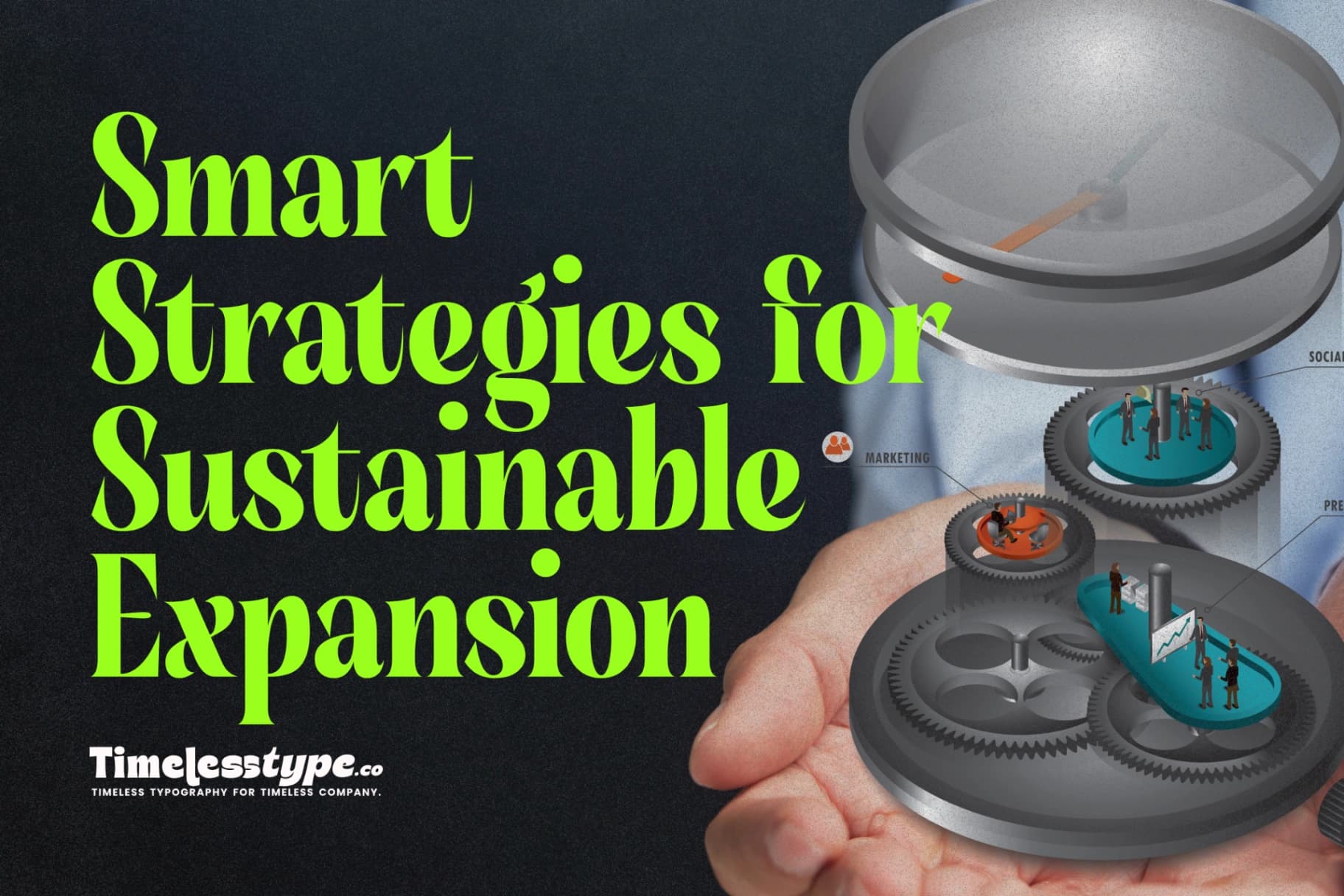
Table of Contents
- 1. The Difference Between Growing and Scaling
- 2. The Mindset Shift: From Founder to Leader
- The key shift:
- 3. Build Scalable Systems Early
- Focus on:
- 4. Strengthen Your Core Before Expanding
- 5. Build a Scalable Business Model
- 6. People Strategy: Hire for Tomorrow, Not Just Today
- Smart scaling means:
- 7. Culture: The Silent Engine of Scale
- Keep it alive by:
- 8. Data-Driven Scaling
- 9. Product and Innovation at Scale
- 10. Customer Retention Over Customer Acquisition
- Focus areas:
- 11. Financial Discipline: Scale Cash Flow, Not Just Revenue
- 12. Operational Excellence: The Backbone of Scale
- 13. Market Expansion: Grow Strategically, Not Geographically
- 14. Partnership and Ecosystem Growth
- Consider:
- 15. Technology as a Growth Enabler
- 16. Leadership Evolution: Building a Second Layer
- 17. Managing Complexity Without Losing Agility
- The solution:
- 18. Sustainable Scaling: Avoiding Burnout and Overreach
- 19. Continuous Learning: Adaptation Is the Real Scale Factor
- 20. The Long Game: Building a Legacy, Not Just a Company
From Startup to Scale-Up: Smart Strategies for Sustainable Expansion
Every startup dreams of growth — more users, more revenue, more markets. But growth without structure isn’t success; it’s instability.
Scaling is not just about getting bigger — it’s about getting stronger, smarter, and more sustainable. The transition from startup to scale-up is where many promising companies stumble. Those who survive don’t just chase expansion — they build systems that can handle it.
This article breaks down the key strategies every founder needs to scale with purpose — not chaos.
1. The Difference Between Growing and Scaling
Many startups confuse growth with scaling.
They’re not the same.
Growth means adding resources — people, capital, or effort — to increase revenue.
Scaling means increasing revenue without proportionally increasing resources.
In short: growth adds weight; scaling adds leverage.
A startup grows by hustling. A scale-up grows by systemizing.
The real goal isn’t just to grow fast — it’s to grow sustainably.
2. The Mindset Shift: From Founder to Leader
The biggest transformation in scaling isn’t operational — it’s psychological.
At the startup stage, you’re the engine — handling product, hiring, marketing, even customer support. But as you scale, that model collapses.
The key shift:
From doing everything yourself → to building a team that can do it better.
From short-term fire-fighting → to long-term strategic thinking.
The founder’s job evolves from execution to orchestration.
You’re no longer running the business — you’re building the system that runs the business.
3. Build Scalable Systems Early
Before you can scale operations, you must scale your infrastructure — the processes, tools, and culture that support growth.
Focus on:
Automation: Replace repetitive tasks with software (CRM, accounting, data dashboards).
Documentation: Build internal playbooks so knowledge doesn’t depend on individuals.
Standardization: Define consistent ways to deliver value across markets.
Systems create stability.
Without them, every new hire or new customer adds friction instead of growth.
4. Strengthen Your Core Before Expanding
Scaling amplifies everything — including weaknesses.
Before expanding, make sure your foundation is solid:
Is your product-market fit clear and proven?
Are your operations efficient and replicable?
Do you have positive unit economics?
Can your team handle growth without burning out?
If you can’t answer yes to these, you’re not scaling — you’re gambling.
Strength comes from depth before width.
5. Build a Scalable Business Model
A startup’s business model is often experimental. A scale-up’s model must be repeatable and profitable.
Ask yourself:
Can this model work in multiple markets or customer segments?
Can I onboard 10x customers without breaking operations?
Are there scalable revenue streams (subscriptions, SaaS, digital products, etc.)?
Great scale-ups don’t rely on “hype growth” — they rely on mathematical growth.
They scale when the economics make sense, not when the press does.
6. People Strategy: Hire for Tomorrow, Not Just Today
A startup hires fast. A scale-up hires smart.
The biggest bottleneck to sustainable expansion is often people — the wrong hires, unclear roles, or fragile culture.
Smart scaling means:
Hiring leaders, not just doers.
Building teams that can manage complexity.
Maintaining culture clarity even as headcount grows.
Ask in every interview: “Can this person grow with us?”
If not, they’ll become a roadblock when growth hits.
7. Culture: The Silent Engine of Scale
Culture is the invisible infrastructure of scale.
When systems expand, culture ensures alignment when you’re not in the room.
But as teams grow, culture doesn’t scale automatically — it must be engineered intentionally.
Keep it alive by:
Defining clear values and behaviors.
Communicating mission consistently.
Rewarding actions that reflect company DNA.
A company with a strong culture can scale without losing its soul.
A company without one will collapse under its own growth.
8. Data-Driven Scaling
When you scale, intuition is no longer enough. Decisions must evolve from gut to data.
Implement robust analytics to measure:
Acquisition cost (CAC)
Customer lifetime value (LTV)
Churn and retention rates
Operational efficiency metrics
Data turns chaos into clarity.
Without it, growth decisions become emotional — and expensive.
9. Product and Innovation at Scale
Startups win by innovating quickly. Scale-ups win by systemizing innovation.
That means balancing:
Core product stability with continuous improvement.
Customer feedback loops with long-term R&D investment.
Create separate teams for exploration and execution — one focused on experimenting, the other on optimizing.
Innovation must become a process, not a phase.
10. Customer Retention Over Customer Acquisition
In the startup phase, the goal is growth. In the scale-up phase, the goal is retention.
Acquiring new customers is expensive. Keeping existing ones is sustainable.
Focus areas:
Build loyalty programs.
Invest in customer success and after-sales engagement.
Personalize communication using CRM and AI tools.
A loyal customer base is a scalable asset.
Retention compounds faster than marketing spend ever can.
11. Financial Discipline: Scale Cash Flow, Not Just Revenue
Many companies die not from lack of sales — but from lack of cash discipline.
Growth can be intoxicating, but scaling requires financial maturity.
Key actions:
Maintain healthy cash reserves for unexpected dips.
Forecast costs as headcount and infrastructure expand.
Align revenue recognition with operational expenses.
Profitability and growth aren’t enemies.
Sustainable scaling means balancing both — ambition with accountability.
12. Operational Excellence: The Backbone of Scale
Operational bottlenecks are silent killers of growth.
Scaling demands that you optimize:
Supply chains for speed and reliability.
Technology stacks for automation and integration.
Customer support systems for volume and satisfaction.
The rule:
“If it breaks under 10x pressure, fix it now — not later.”
Operational excellence is what makes scaling repeatable and predictable.
13. Market Expansion: Grow Strategically, Not Geographically
Expansion isn’t always about entering new countries or verticals.
Sometimes the smartest scaling move is deeper penetration into existing markets.
Before going global, ask:
Is our current market saturated or just underdeveloped?
Do we have local expertise for new regions?
Can we maintain service quality and brand integrity at scale?
Scaling smart means growing strategically, not just widely.
14. Partnership and Ecosystem Growth
No company scales alone. Partnerships create multipliers — access to new audiences, resources, and credibility.
Consider:
Strategic alliances with complementary brands.
Integration with platforms that amplify visibility.
Collaborations for co-marketing or product bundling.
In the scale-up era, the ecosystem you build often matters more than the product you sell.
15. Technology as a Growth Enabler
Technology is the ultimate scale catalyst — when used wisely.
Adopt tools that enable:
Automation: Streamline repetitive workflows.
Scalability: Cloud-based infrastructure to handle traffic spikes.
Integration: Unified platforms for marketing, sales, and analytics.
Avoid shiny-object syndrome.
The best tech stack isn’t the newest — it’s the one that fits your process and grows with you.
16. Leadership Evolution: Building a Second Layer
As the organization grows, your leadership must scale too.
Founders can’t — and shouldn’t — manage everything.
Building a second layer of leadership ensures stability and continuity.
This means investing in:
Middle management training.
Clear delegation frameworks.
Decision-making autonomy at every level.
You can’t scale control — but you can scale trust.
17. Managing Complexity Without Losing Agility
One of the hardest challenges for scale-ups is maintaining agility as systems and hierarchies grow.
The solution:
Keep teams small (micro-teams or squads).
Empower autonomy with accountability.
Preserve a “startup mindset” — curiosity, experimentation, and speed.
Structure shouldn’t suffocate innovation.
The art of scaling is finding balance between discipline and dynamism.
18. Sustainable Scaling: Avoiding Burnout and Overreach
Scaling too fast can kill even the most promising business.
The goal isn’t to grow as fast as possible — it’s to grow as strong as necessary.
Warning signs of over-scaling:
Declining quality or customer experience.
Culture drift or rising internal friction.
Constant hiring without long-term retention.
Sustainable scaling prioritizes longevity over velocity.
You don’t need to dominate the world overnight — just build something that lasts.
19. Continuous Learning: Adaptation Is the Real Scale Factor
Markets evolve, technologies shift, and consumer behaviors change.
The most scalable companies are learning organizations — they adapt faster than they grow.
Embed feedback loops in every layer:
Customer data informs product direction.
Employee insights refine operations.
Market analysis guides expansion.
Scaling isn’t a destination — it’s an ongoing evolution.
What got you here won’t get you there.
20. The Long Game: Building a Legacy, Not Just a Company
Ultimately, scaling is not just about numbers — it’s about impact.
Sustainable growth means creating something that endures beyond quarterly reports:
A brand that customers love.
A culture that inspires employees.
A business model that uplifts communities and markets.
From startup to scale-up, the goal evolves —
from survival to significance.
The companies that master this don’t just scale profit — they scale purpose.
Related
Tags
Browse similar work by purpose and style.
.webp&w=1920&q=75&dpl=dpl_Gc2H6qw5qz6tftmNLm7EMoaFVtW7)
.webp&w=1920&q=75&dpl=dpl_Gc2H6qw5qz6tftmNLm7EMoaFVtW7)
.webp&w=1920&q=75&dpl=dpl_Gc2H6qw5qz6tftmNLm7EMoaFVtW7)
.webp&w=1920&q=75&dpl=dpl_Gc2H6qw5qz6tftmNLm7EMoaFVtW7)
.webp&w=1920&q=75&dpl=dpl_Gc2H6qw5qz6tftmNLm7EMoaFVtW7)
.webp&w=1920&q=75&dpl=dpl_Gc2H6qw5qz6tftmNLm7EMoaFVtW7)
.webp&w=1920&q=75&dpl=dpl_Gc2H6qw5qz6tftmNLm7EMoaFVtW7)