









Awaken Your Inner Strength: Daily Inspiration to Transform Your Life
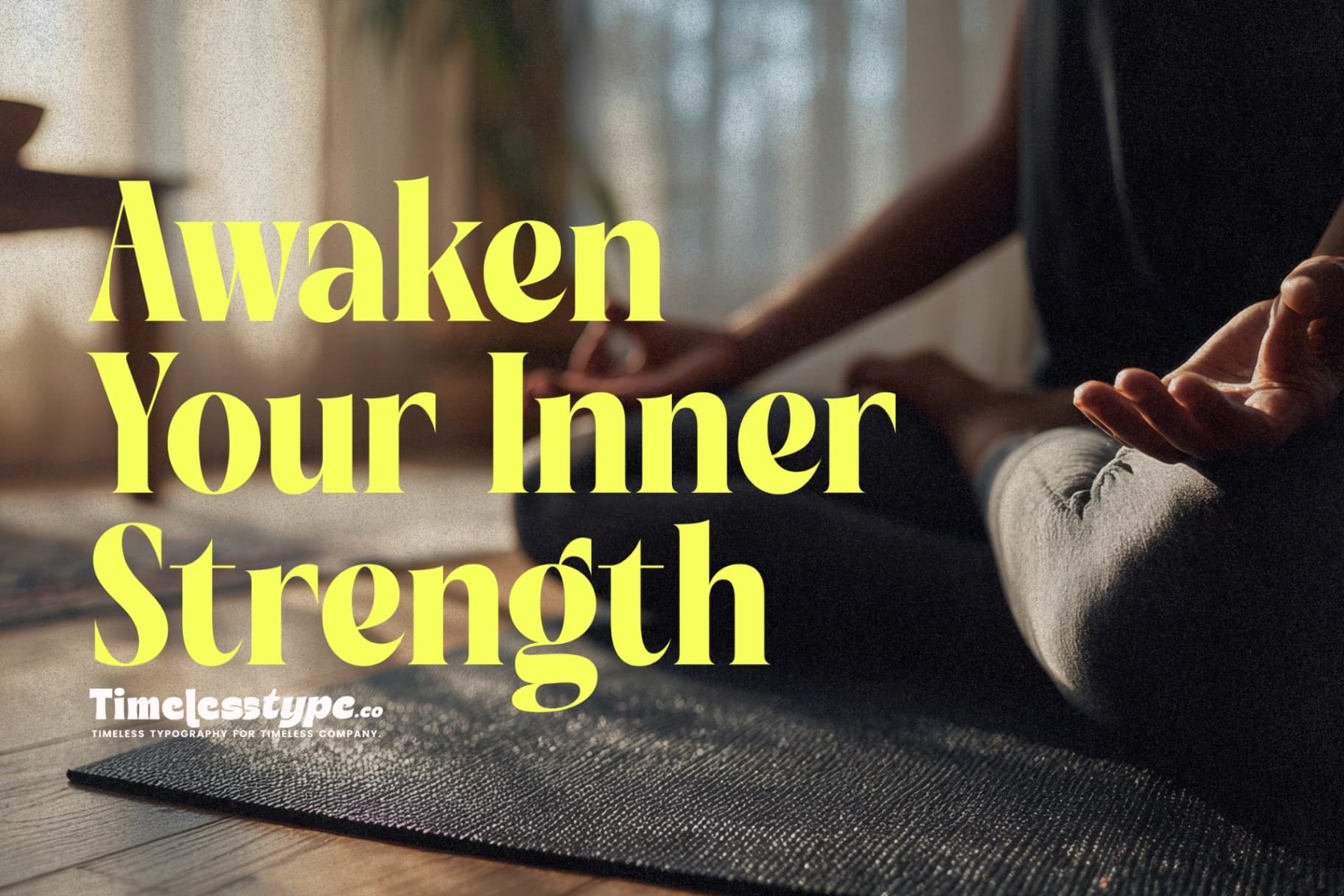
Table of Contents
- Part 1: The Anatomy of Inner Strength
- The Three Pillars of Inner Power
- Part 2: The Morning Ritual – Winning the Battle of the Bed
- The Power of Silence
- The Practice of Intention
- Part 3: Taming the Inner Critic
- Separating the Voice from the Self
- Re-writing the Narrative
- Part 4: The Discipline of Action
- The "Do Something" Principle
- Embracing Discomfort
- Part 5: Resilience and the Art of the Pivot
- The Stoic Mindset: The Dichotomy of Control
- The Growth Mindset: Transforming Failure
- Part 6: The Power of Environment
- Auditing Your Circle
- The Digital Diet
- Part 7: Emotional Alchemy – Turning Pain into Power
- The Wound is the Place Where the Light Enters
- Self-Compassion as Strength
- Part 8: The Evening Review – Consolidating Gains
- The Victory Log
- Rest is a Weapon
- Conclusion: The Journey of a Lifetime
Awaken Your Inner Strength: Daily Inspiration to Transform Your Life
We often live our lives waiting for a hero. We wait for a mentor to show us the way, a boss to give us permission, a partner to make us feel whole, or a stroke of luck to change our fortunes. We look outward, scanning the horizon for a savior, all the while ignoring the dormant volcano of potential that resides within our own chests.
The truth is, the hero you have been waiting for is you.
Inner strength is not a genetic gift bestowed upon a chosen few. It is not a mystical quality reserved for monks or Navy SEALs. Inner strength is a muscle. Just like a bicep, it is developed through resistance, repetition, and recovery. It is a practice—a daily decision to choose courage over comfort, discipline over drift, and resilience over resignation.
In a world that is increasingly chaotic, noisy, and demanding, awakening this strength is no longer a luxury; it is a necessity for survival and fulfillment. This article is a blueprint for that awakening. It is an exploration of how to excavate the power buried beneath your doubts and fears, and how to use it to transform your life, one day at a time.
Part 1: The Anatomy of Inner Strength
Before we can build inner strength, we must define what it is. Many people confuse strength with rigidity. They imagine the "strong person" as someone who is emotionless, unshakeable, and unyielding—a stone statue.
But stone statues crack under pressure. True inner strength is not like stone; it is like water. It is fluid. It creates its own path. When it meets an obstacle, it flows around it, over it, or eventually, through patience and persistence, cuts right through it.
The Three Pillars of Inner Power
Resilience: This is not just the ability to "bounce back" to who you were before a crisis. It is the ability to "bounce forward"—to let the challenge change you, making you wiser and more adaptable.
Self-Trust: This is the quiet confidence that, no matter what happens—whether you lose your job, face a breakup, or make a mistake—you have the capability to figure it out. It is the removal of the fear of the unknown.
Emotional Intelligence: Strength is not the suppression of emotion. It is the regulation of emotion. It is the ability to feel fear and act anyway. It is the ability to feel anger but choose a constructive response.
When you awaken these pillars, you stop being a victim of circumstance and become the architect of your reality.
Part 2: The Morning Ritual – Winning the Battle of the Bed
The transformation of your life happens in the margins of the day, specifically the first hour. How you wake up determines the trajectory of your entire day.
Most people start their day in a state of reactive weakness. The alarm goes off, and they hit snooze (procrastination). Then, they grab their phone and scroll through social media or email (inviting the world's chaos and demands into their brain before they have even brushed their teeth). They start the day on the defense.
To awaken inner strength, you must start on the offense.
The Power of Silence
Start your day with ten minutes of stillness. No phone. No news. No talking. Just you and your breath.
Why? Because inner strength requires a calm nervous system. If you start the day spiking your cortisol (stress hormone) with emails, you are biologically priming yourself for anxiety. Silence allows you to center yourself, creating a fortress of calm that you can carry into the chaos of the world.
The Practice of Intention
Before you write your "To-Do" list, write a "To-Be" list.
Ask yourself: Who do I need to be today?
"Today, I need to be patient with my children."
"Today, I need to be courageous in my presentation."
"Today, I need to be disciplined with my diet."
By setting an intention, you activate your Reticular Activating System (RAS)—the part of your brain that filters information. You prime your brain to look for opportunities to practice patience, courage, and discipline.
Part 3: Taming the Inner Critic
The greatest enemy you will ever face is not the economy, your competitors, or your critics. It is the voice inside your own head. We all have an Inner Critic—that nagging voice that says, "You aren't good enough," "You're going to fail," or "Who do you think you are?"
You cannot eliminate this voice (it is part of the human survival mechanism), but you can strip it of its power.
Separating the Voice from the Self
The first step to strength is realizing that you are not your thoughts. You are the thinker of your thoughts.
Imagine your mind is a bus. You are the driver. Your thoughts are the passengers. Some passengers are helpful; others are loud, rude, and obnoxious (the Inner Critic).
Weakness is letting the obnoxious passenger grab the steering wheel. Strength is looking in the rearview mirror and saying, "I hear you screaming back there, but I’m driving."
Re-writing the Narrative
Your Inner Critic operates on outdated software, usually installed during childhood or past failures. You must update the code.
Old Thought: "I can't do this; I've never done it before."
New Thought: "I can't do this yet, but I am a fast learner and I have handled difficult things before."
This is not "fake positivity." It is "rational optimism." It is looking at the evidence of your life—all the times you survived, all the things you learned—and using that to refute the fear.
Part 4: The Discipline of Action
Inspiration is a feeling; inner strength is an action.
Many people wait to "feel motivated" before they act. They wait for the lightning bolt of inspiration to strike. This is a trap. Motivation is fickle. It comes and goes like the wind. If you build your life on motivation, your foundation will be shaky.
You must build your life on Discipline.
The "Do Something" Principle
We often think that motivation leads to action. But psychologists have found that the reverse is often true: Action leads to motivation.
When you don't feel like working out, the strength isn't found in waiting for the feeling. It is found in putting on your shoes. Once you start running, the motivation arrives.
When you don't feel like working on your project, the strength is found in opening the laptop. Once you type the first sentence, the flow starts.
Inner strength is the ability to make a promise to yourself and keep it, regardless of how you feel in the moment. Every time you do the hard thing when you don't want to, you are depositing equity into your "Self-Respect Account."
Embracing Discomfort
We live in a culture that worships comfort. We have temperature-controlled rooms, food delivered to our doors, and endless entertainment. We have become allergic to discomfort.
But strength is born in the struggle.
The strength of the body is built by lifting heavy weights that tear the muscle fibers.
The strength of the mind is built by solving difficult problems that strain the intellect.
The strength of the soul is built by navigating painful emotions.
To awaken your power, you must seek out "voluntary discomfort." Take a cold shower. Have the difficult conversation. Wake up an hour earlier. By voluntarily doing difficult things, you innoculate yourself against stress. When involuntary difficulties arrive (as they always do), you will be ready.
Part 5: Resilience and the Art of the Pivot
No matter how strong you are, life will knock you down. You will face rejection, failure, and loss. The measure of your inner strength is not whether you fall, but how long you stay on the ground.
The Stoic Mindset: The Dichotomy of Control
The ancient Stoic philosophers (like Marcus Aurelius and Epictetus) had a formula for invincibility: Focus only on what you can control.
There are two categories of things in life:
Things you cannot control: The weather, the economy, the past, the opinions of others, traffic, death.
Things you can control: Your attitude, your effort, your words, your actions, your response.
Weakness comes from trying to control category #1. It leads to anxiety and frustration.
Strength comes from focusing 100% of your energy on category #2.
When a crisis hits, ask yourself: Is this within my control? If the answer is no, practice acceptance. If the answer is yes, practice action.
The Growth Mindset: Transforming Failure
In a "Fixed Mindset," failure is a verdict. It says, "I failed, therefore I am a failure."
In a "Growth Mindset," failure is data. It says, "I failed, which means I found a way that doesn't work. I am now closer to the solution."
Inner strength requires you to reframe failure as tuition. You are paying for an education in life. Did the business fail? You just paid for a masterclass in entrepreneurship. Did the relationship end? You just learned valuable lessons about compatibility and boundaries. Extract the lesson, discard the shame, and pivot.
Part 6: The Power of Environment
You cannot heal in the same environment that made you sick. Similarly, you cannot build strength in an environment that constantly weakens you.
Inner strength is personal, but it is influenced by the external.
Auditing Your Circle
Jim Rohn famously said, "You are the average of the five people you spend the most time with."
Look at your inner circle.
Are they energy vampires, constantly complaining and playing the victim?
Are they cynical about your dreams?
Or are they "battery chargers"—people who challenge you, inspire you, and hold you accountable?
If you want to awaken your inner strength, you may need to make difficult decisions about who has access to your energy. Solitude is better than toxic company.
The Digital Diet
Your mind consumes content just as your body consumes food. If you eat junk food all day, your body gets sick. If you consume "junk content" all day (fear-mongering news, shallow celebrity gossip, social media comparison traps), your mind gets sick.
Protect your psyche. Curate your feeds. Follow accounts that teach, inspire, and empower. Turn off notifications. Your attention is your most valuable resource; stop giving it away to things that drain your power.
Part 7: Emotional Alchemy – Turning Pain into Power
The deepest reservoir of inner strength often comes from our deepest wounds. Everyone carries trauma, regret, and sadness. The weak try to hide these feelings or numb them with distractions (alcohol, scrolling, overworking).
The strong use them as fuel.
The Wound is the Place Where the Light Enters
This concept, from the poet Rumi, suggests that our broken places are actually our sources of wisdom.
If you have suffered from loneliness, you have the unique power to be a friend to the outcast.
If you have suffered from poverty, you have the drive to build wealth and help others.
If you have suffered from illness, you have a profound appreciation for health.
Do not deny your pain. Acknowledge it. Feel it. And then ask: How can I use this? How can I turn this lead into gold? This is Emotional Alchemy. It is the ultimate act of taking back power from the things that hurt you.
Self-Compassion as Strength
Ironically, one of the strongest things you can do is be gentle with yourself.
Many of us believe that to be strong, we must be our own drill sergeant, screaming at ourselves when we make a mistake. But psychological research shows that self-criticism actually reduces motivation and increases procrastination.
Self-compassion—treating yourself with the same kindness you would offer a friend—increases resilience. When you fall, instead of kicking yourself, offer a hand up. Say, "That was tough, and you made a mistake. But you are human. Let's try again."
This creates a safety net within your own mind, allowing you to take bigger risks because you know you won't abuse yourself if you fail.
Part 8: The Evening Review – Consolidating Gains
Just as the morning sets the stage, the evening closes the curtain. How you end the day determines how you sleep and how you wake up.
The Victory Log
Human brains are wired with a "Negativity Bias." We naturally focus on the one thing that went wrong rather than the ten things that went right.
Counteract this by ending your day with a "Victory Log." Write down three things you did well today.
"I stayed calm during that stressful meeting."
"I chose a salad instead of a burger."
"I finished the report."
This trains your brain to identify as a "winner." It reinforces the identity of someone who is capable and strong.
Rest is a Weapon
Do not confuse burnout with strength. The "hustle culture" myth tells us to sleep when we're dead. But inner strength requires recovery. You cannot be mentally tough if you are physically exhausted.
Prioritize sleep. View it not as "time off," but as "recharging the weapon." A rested mind has more emotional regulation, better problem-solving skills, and higher resilience than a tired one.
Conclusion: The Journey of a Lifetime
Awakening your inner strength is not a one-time event like flipping a light switch. It is a lifelong journey of tending to the fire.
There will be days when the fire roars, and you feel invincible. There will be days when the fire dims to a flicker, and you feel weak, small, and afraid.
That is okay. The goal is not to be Superman every day. The goal is to never let the fire go out completely.
On the days you feel weak, remember that strength is not a feeling; it is a choice.
It is the choice to take one more step when you want to stop.
It is the choice to speak your truth when your voice shakes.
It is the choice to forgive yourself when you mess up.
It is the choice to believe in your own potential, even when no one else does.
You are capable of more than you know. You have survived 100% of your bad days. You have navigated every storm, climbed every mountain, and crossed every desert to get to this moment. The evidence of your strength is in the fact that you are still here, reading this, looking for a way to be better.
Stop looking for the hero outside. Look in the mirror.
The strength is already there. It is waiting for you to claim it.
Wake up. Rise up. Transform.
.webp&w=3840&q=75&dpl=dpl_3WFG66fYZ4jS6JATNdYhDAcw7pMB)
.webp&w=3840&q=75&dpl=dpl_3WFG66fYZ4jS6JATNdYhDAcw7pMB)
.webp&w=3840&q=75&dpl=dpl_3WFG66fYZ4jS6JATNdYhDAcw7pMB)
.webp&w=3840&q=75&dpl=dpl_3WFG66fYZ4jS6JATNdYhDAcw7pMB)
.webp&w=3840&q=75&dpl=dpl_3WFG66fYZ4jS6JATNdYhDAcw7pMB)

.webp&w=3840&q=75&dpl=dpl_3WFG66fYZ4jS6JATNdYhDAcw7pMB)
.webp&w=3840&q=75&dpl=dpl_3WFG66fYZ4jS6JATNdYhDAcw7pMB)