









Augmented Reality vs Virtual Reality: Which Will Win the Future?
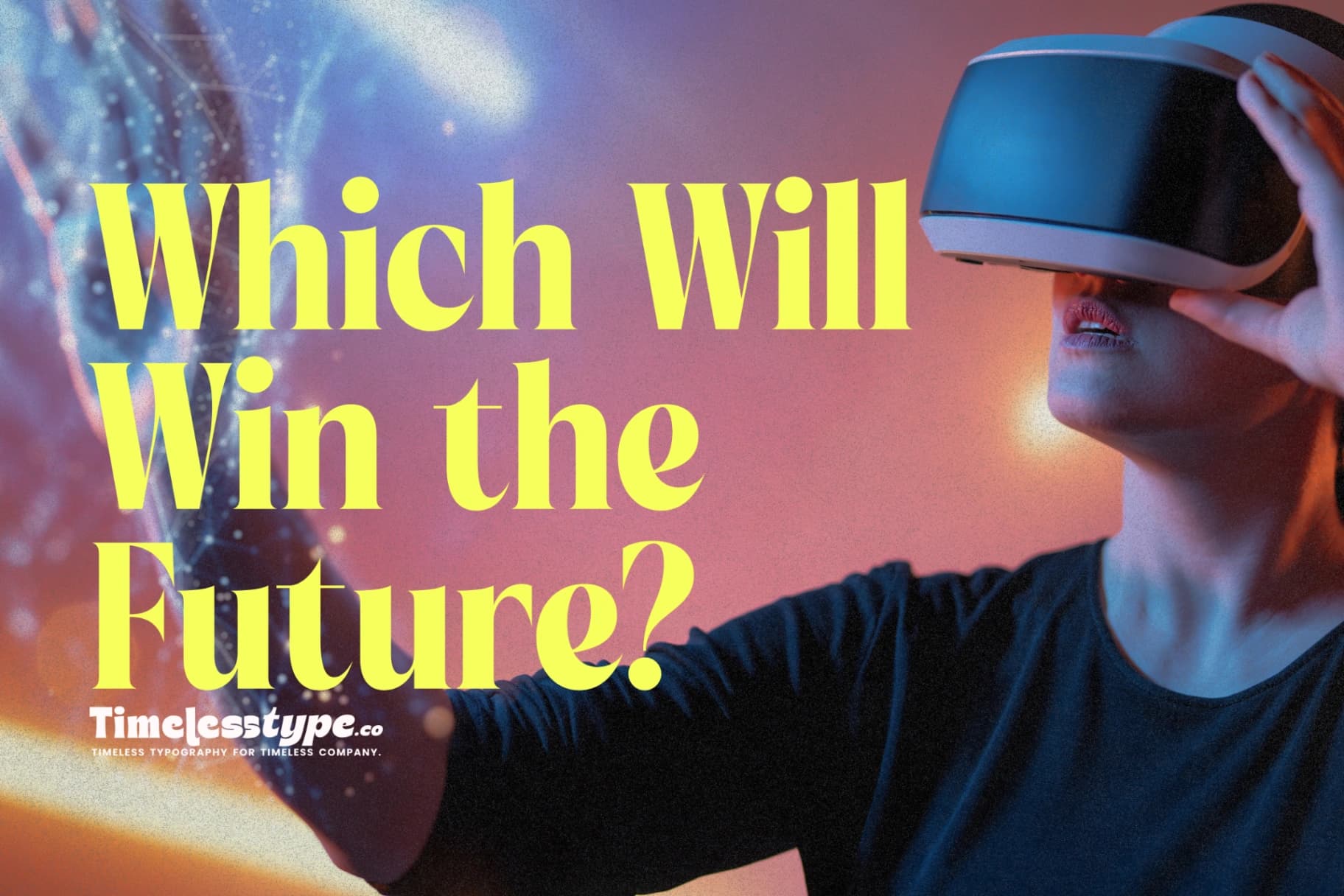
Table of Contents
- 1. The Core Difference: Integration vs Immersion
- Augmented Reality (AR)
- Virtual Reality (VR)
- 2. Accessibility: AR Has the Upper Hand
- 3. Use Cases: AR Fits Daily Life, VR Fits Specialized Experiences
- Where AR excels:
- Where VR excels:
- 4. Business Adoption: AR Is Scaling Faster
- 5. User Experience: VR Is More Exciting but Less Practical
- 6. Technological Momentum: AR Is Integrating Into the Real World Faster
- 7. Social Acceptance: AR ≫ VR
- 8. The Future: AR Will Become Mainstream, VR Will Become Niche but Powerful
- AR will dominate everyday life because it:
- VR will still thrive in:
- Final Verdict: AR Will Win the Daily Future — VR Will Win the Immersive Future
Augmented Reality vs Virtual Reality: Which Will Win the Future?
AR and VR are no longer futuristic concepts — they’re shaping how we work, play, learn, and interact right now. From gaming and entertainment to education, shopping, and remote collaboration, these technologies are redefining digital experiences. But the big question remains:
Which one will dominate the future — Augmented Reality or Virtual Reality?
Let’s break it down clearly.
1. The Core Difference: Integration vs Immersion
Augmented Reality (AR)
AR adds digital layers to the real world.
It enhances your environment without removing you from reality.
Examples:
Smartphone AR filters
Google Maps Live View
Apple Vision Pro’s mixed interfaces
IKEA’s “place furniture” feature
AR = Real world + digital overlays.
Virtual Reality (VR)
VR creates an entirely new digital world.
It replaces your surroundings with a fully immersive 3D environment.
Examples:
Meta Quest
VR gaming worlds
Virtual meetings and classrooms
Simulated training environments
VR = Fully digital experience.
2. Accessibility: AR Has the Upper Hand
Most people already have access to AR through:
Smartphones
Tablets
Smart cameras
VR requires:
A headset
Controllers
Sometimes a powerful PC
AR wins in accessibility because it uses devices people already own.
VR still feels like a gadget — AR feels like an upgrade to everyday life.
3. Use Cases: AR Fits Daily Life, VR Fits Specialized Experiences
Where AR excels:
Navigation
Shopping
Education
Healthcare visualization
Industrial work
Social media
Real-time information
AR integrates into your routine without disrupting it.
Where VR excels:
Gaming
Therapy and rehabilitation
Training (military, aviation, medical)
Virtual tourism
Full-immersion learning
Remote work in simulated spaces
VR shines when full immersion is needed.
4. Business Adoption: AR Is Scaling Faster
Companies prefer AR because:
It’s cheaper to deploy
It doesn’t require bulky equipment
It enhances real-world workflows
It improves productivity without disconnecting workers
Industries adopting AR rapidly:
Retail
Logistics
Construction
Healthcare
Education
VR is growing too — but mostly in entertainment and training.
5. User Experience: VR Is More Exciting but Less Practical
VR provides:
High emotional impact
Deep immersion
Escapism
Realistic simulations
But it also comes with:
Motion sickness
Physical isolation
Bulky hardware
Limited battery life
Limited mobility
AR feels lighter, more flexible, and more natural.
6. Technological Momentum: AR Is Integrating Into the Real World Faster
Major companies are investing heavily in AR:
Apple
Meta
Samsung
Microsoft (HoloLens)
And with the rise of smart glasses, AR will become even more invisible and intuitive.
VR continues to evolve, but its growth is slower due to hardware and comfort limitations.
7. Social Acceptance: AR ≫ VR
People prefer experiences that enhance reality — not replace it.
AR:
Lets you stay present
Allows communication
Works while moving
Feels more natural
VR:
Blocks your vision
Requires focus
Limits interaction
Feels isolating
AR blends. VR replaces.
That makes AR socially smoother.
8. The Future: AR Will Become Mainstream, VR Will Become Niche but Powerful
AR will dominate everyday life because it:
Integrates seamlessly
Works on existing devices
Improves real-world tasks
Fits into social and mobile behavior
Scales across industries
VR will still thrive in:
Gaming
Simulations
Virtual tourism
High-end productivity
Training environments
Specialized immersive experiences
Both technologies will grow — but in different directions.
Final Verdict: AR Will Win the Daily Future — VR Will Win the Immersive Future
It’s not a fight.
It’s a split.
AR will dominate mainstream life
because it enhances reality.
VR will dominate specialized and entertainment sectors
because it replaces reality when immersion matters.
The future belongs to both —
but AR will be everywhere,
while VR will be powerful where it’s needed most.
.webp&w=3840&q=75&dpl=dpl_3WFG66fYZ4jS6JATNdYhDAcw7pMB)
.webp&w=3840&q=75&dpl=dpl_3WFG66fYZ4jS6JATNdYhDAcw7pMB)
.webp&w=3840&q=75&dpl=dpl_3WFG66fYZ4jS6JATNdYhDAcw7pMB)
.webp&w=3840&q=75&dpl=dpl_3WFG66fYZ4jS6JATNdYhDAcw7pMB)
.webp&w=3840&q=75&dpl=dpl_3WFG66fYZ4jS6JATNdYhDAcw7pMB)
.webp&w=3840&q=75&dpl=dpl_3WFG66fYZ4jS6JATNdYhDAcw7pMB)
.webp&w=3840&q=75&dpl=dpl_3WFG66fYZ4jS6JATNdYhDAcw7pMB)
.webp&w=3840&q=75&dpl=dpl_3WFG66fYZ4jS6JATNdYhDAcw7pMB)