


.jpg&w=256&q=75&dpl=dpl_Gc2H6qw5qz6tftmNLm7EMoaFVtW7)
.jpg&w=256&q=75&dpl=dpl_Gc2H6qw5qz6tftmNLm7EMoaFVtW7)
.webp&w=256&q=75&dpl=dpl_Gc2H6qw5qz6tftmNLm7EMoaFVtW7)
.webp&w=256&q=75&dpl=dpl_Gc2H6qw5qz6tftmNLm7EMoaFVtW7)



Technology
Virtual Reality and Augmented Reality: The Future of Human Experience
Insights, tutorials, and type notes from the Timeless Type studio.
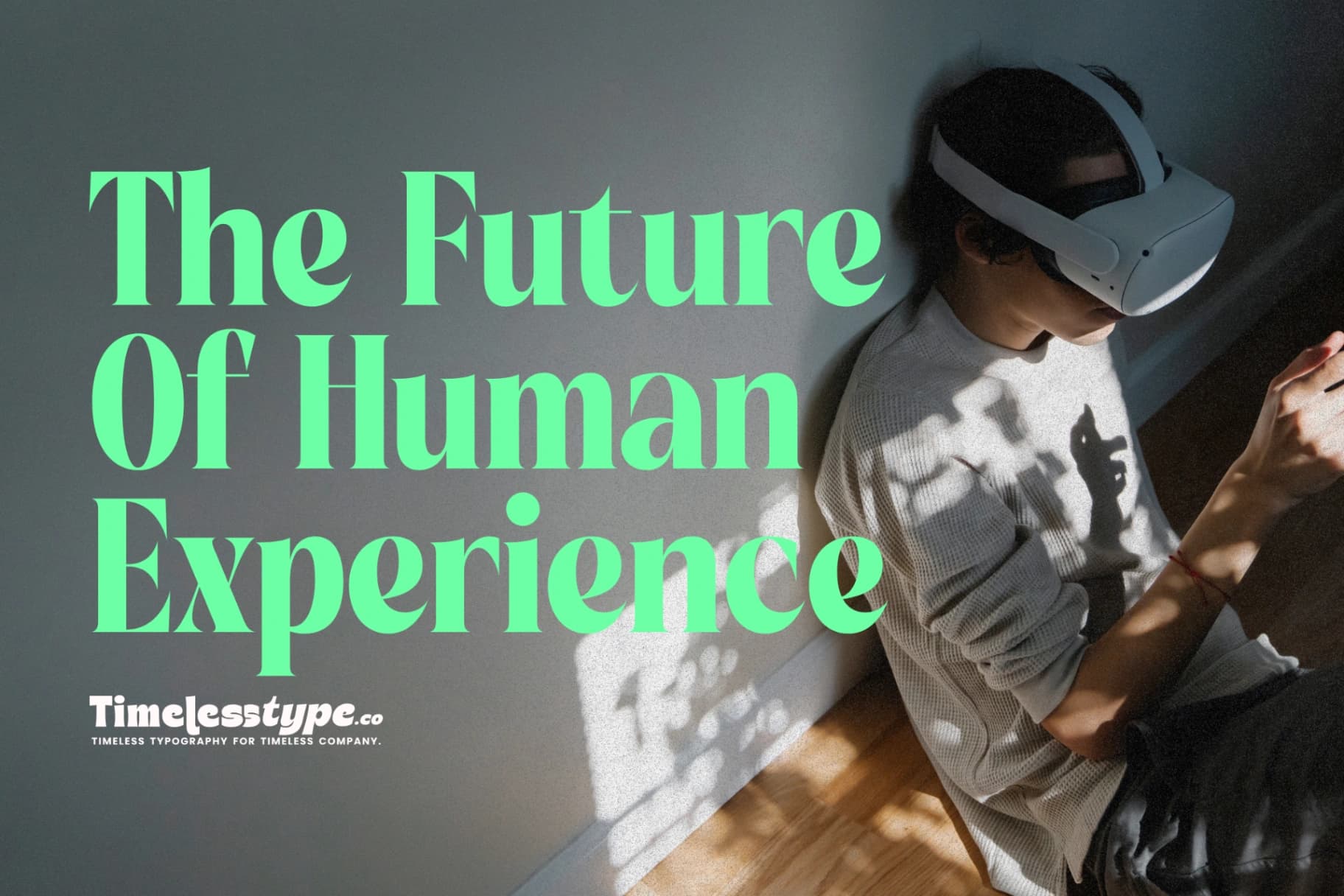
Table of Contents
- 1. Understanding Virtual and Augmented Reality
- Virtual Reality (VR)
- Augmented Reality (AR)
- 2. The Evolution of Immersive Technology
- A brief timeline:
- 3. How VR and AR Are Changing the Way We Live
- Education and Training
- 4. Business and Collaboration
- Examples:
- 5. Healthcare and Therapy
- Applications include:
- 6. Retail and E-Commerce
- Examples:
- 7. Tourism and Travel
- 8. Art, Culture, and Creativity
- 9. Gaming and Entertainment
- Today’s trends:
- 10. Real Estate and Architecture
- 11. Military and Defense
- Applications:
- 12. Accessibility and Inclusion
- For example:
- 13. Marketing and Brand Experience
- 14. The Metaverse: The Next Evolution of Reality
- 15. Challenges and Ethical Concerns
- Major concerns:
- 16. Education and Workforce of the Future
- Examples:
- 17. Integration with Artificial Intelligence
- Examples:
- 18. The Rise of Wearable and Spatial Computing
- 19. The Economic Impact
- 20. Conclusion: Beyond Reality — Toward Human Evolution
Virtual Reality and Augmented Reality: The Future of Human Experience
Technology has always expanded the boundaries of human experience — from the printing press to the internet, every innovation has changed how we see, think, and connect.
Now, we’re entering a new era where the line between the physical and digital worlds begins to blur: Virtual Reality (VR) and Augmented Reality (AR).
These immersive technologies are not just entertainment tools.
They are reshaping education, healthcare, business, and creativity — redefining what it means to experience reality itself.
Here’s how VR and AR are revolutionizing the human experience — and why the future may exist somewhere between the real and the virtual.
1. Understanding Virtual and Augmented Reality
Before diving into their impact, it’s important to understand what sets them apart.
Virtual Reality (VR)
VR immerses users in a completely digital environment — blocking out the physical world and replacing it with a simulated one.
Users wear headsets like the Meta Quest, HTC Vive, or Apple Vision Pro, experiencing environments they can see, hear, and interact with in 3D.
Augmented Reality (AR)
AR overlays digital content onto the real world.
Using devices like smartphones, tablets, or AR glasses, users can see and interact with virtual objects within their physical surroundings.
Think of Pokémon GO, IKEA Place, or Google Maps Live View — where digital meets reality in real time.
Together, VR and AR form what experts call Extended Reality (XR) — a spectrum of immersive technologies that will soon redefine everyday life.
2. The Evolution of Immersive Technology
VR and AR didn’t appear overnight — they’ve evolved over decades of innovation.
A brief timeline:
1960s: The first VR head-mounted display (the “Sword of Damocles”) was invented.
1990s: Early VR arcade games and flight simulators emerged.
2010s: Consumer VR arrived — Oculus, HTC, and PlayStation brought immersion to homes.
2020s: AR exploded through smartphones and wearables, while VR advanced with spatial computing and AI.
Today, we stand at a turning point — where immersive technologies move beyond novelty to necessity.
3. How VR and AR Are Changing the Way We Live
Immersive technology is no longer limited to gaming or entertainment.
It’s transforming how we learn, work, heal, and interact.
Education and Training
VR allows students to explore ancient civilizations, human anatomy, or even the solar system — all without leaving the classroom.
AR adds interactive 3D models to textbooks or lessons, enhancing understanding and engagement.
In vocational fields, surgeons, pilots, and engineers now train with VR simulations that replicate real-world scenarios safely and cost-effectively.
“VR turns learning from passive reading into active experience — from memorization to mastery.”
4. Business and Collaboration
Remote work and virtual collaboration are evolving through VR and AR.
Companies use virtual offices, 3D meetings, and AR productivity tools to connect global teams.
Examples:
Microsoft Mesh and Meta Horizon Workrooms allow employees to collaborate as 3D avatars.
AR-based design tools enable architects and engineers to visualize models in real space.
Virtual product launches and trade shows are creating borderless engagement.
The workplace of the future may not exist in a building — but in a shared digital environment.
5. Healthcare and Therapy
Perhaps no industry has benefited more from VR and AR than healthcare.
Applications include:
VR therapy: Treating PTSD, anxiety, and phobias through controlled simulations.
Surgical training: Doctors practice complex procedures in virtual operating rooms.
Pain management: VR distraction techniques reduce patient pain perception.
AR-assisted surgery: Surgeons overlay digital scans directly onto a patient’s body for precision.
These technologies are making medicine safer, more empathetic, and more effective.
6. Retail and E-Commerce
Shopping has become an experience of try before you buy — virtually.
Examples:
IKEA Place lets customers preview furniture in their homes using AR.
Sephora’s Virtual Artist shows how makeup looks on your face before purchase.
Amazon AR View enables customers to visualize products in real-world scale.
Virtual shopping is merging convenience with confidence — bridging the gap between online and in-store.
7. Tourism and Travel
With VR, you can explore the world without leaving home — walking through the streets of Rome or diving in the Great Barrier Reef.
AR enhances real travel — overlaying information, translations, or directions on landmarks and streets.
This creates immersive, educational, and accessible travel experiences for everyone.
8. Art, Culture, and Creativity
Artists, museums, and filmmakers are embracing immersive storytelling.
Museums like the Louvre use AR to bring exhibits to life.
VR art platforms like Tilt Brush let creators paint in 3D space.
Virtual concerts and theater performances redefine entertainment accessibility.
Creativity has entered a new dimension — where imagination knows no boundaries.
9. Gaming and Entertainment
Gaming is the birthplace — and the frontier — of VR and AR innovation.
Today’s trends:
Fully immersive VR worlds like Half-Life: Alyx and Beat Saber.
AR mobile games blending reality and fantasy (Pokémon GO, Ingress).
Virtual concerts in the metaverse, featuring artists like Travis Scott and Ariana Grande.
The next evolution of entertainment is participatory — where players become part of the story.
10. Real Estate and Architecture
VR and AR are reshaping how we design and sell spaces.
Developers use VR walkthroughs for properties still under construction.
Architects visualize complex designs at scale using AR overlays.
Buyers can tour homes remotely from anywhere in the world.
These tools reduce costs, increase sales, and redefine how we experience space.
11. Military and Defense
AR and VR are also transforming defense training and strategy.
Applications:
Simulated combat training with realistic environments.
AR overlays for navigation and target tracking in the field.
Virtual command centers for mission planning.
Technology is improving not only efficiency but also safety and preparedness.
12. Accessibility and Inclusion
Immersive technology isn’t just for entertainment — it’s breaking barriers for people with disabilities.
For example:
VR experiences provide sensory therapy for autism.
AR glasses help the visually impaired with navigation and object recognition.
Virtual classrooms enable inclusive learning for remote or limited-mobility students.
VR and AR are proving that innovation can — and should — serve everyone.
13. Marketing and Brand Experience
AR and VR marketing campaigns turn customers into participants.
Nike uses AR for interactive shopping and storytelling.
Coca-Cola combines VR experiences with real-world branding.
Gucci and Balenciaga host virtual fashion shows in the metaverse.
Experiential marketing is evolving into immersive storytelling — making consumers feel the brand, not just see it.
14. The Metaverse: The Next Evolution of Reality
The rise of the metaverse — a shared virtual universe — marks the convergence of VR, AR, and social media.
In this space:
People work, play, shop, and socialize in digital environments.
Virtual economies with NFTs and digital assets thrive.
Companies establish virtual storefronts and offices.
The metaverse represents not an escape from reality — but an expansion of it.
15. Challenges and Ethical Concerns
As immersive tech grows, so do ethical challenges.
Major concerns:
Privacy: Tracking biometric and behavioral data.
Addiction: Escaping reality instead of enhancing it.
Accessibility: High costs limiting inclusion.
Reality distortion: Blurring what’s real and what’s simulated.
To build a responsible digital future, innovation must be balanced with ethics and empathy.
16. Education and Workforce of the Future
By 2030, immersive learning will be part of mainstream education and professional training.
Examples:
Virtual classrooms connecting global students.
AR tutorials guiding workers in technical fields.
Soft-skill simulations for leadership and empathy training.
Education will no longer be confined to walls or textbooks — it will exist everywhere, for everyone.
17. Integration with Artificial Intelligence
The fusion of AI with VR and AR is creating intelligent immersive systems.
Examples:
AI-driven avatars offering real-time assistance.
Adaptive learning environments that adjust to user behavior.
Emotion recognition enabling more natural interactions.
AI makes virtual worlds smarter — and human experiences more personal.
18. The Rise of Wearable and Spatial Computing
The next phase of immersive technology goes beyond headsets — toward seamless, wearable integration.
AR glasses (Apple, Meta, Samsung) bring digital overlays into daily life.
Haptic suits allow users to feel physical sensations in VR.
Spatial computing integrates 3D interfaces directly into physical spaces.
In the near future, our devices won’t just connect us to the digital world — they’ll make it part of our reality.
19. The Economic Impact
The global VR and AR market is projected to exceed $1 trillion by 2030.
Industries investing early are already seeing massive returns in efficiency, engagement, and innovation.
The fusion of immersive tech with AI, 5G, and blockchain will unlock the next major wave of economic growth — creating jobs, industries, and ecosystems yet to exist.
20. Conclusion: Beyond Reality — Toward Human Evolution
Virtual and Augmented Reality aren’t just technologies — they’re extensions of human imagination.
They blur the boundary between what’s possible and what’s perceptible, giving us the tools to learn, heal, create, and connect in new dimensions.
The future won’t be about choosing between real and virtual — it will be about integrating both to enrich life.
“VR and AR are not about escaping reality — they’re about enhancing it.”
As these technologies evolve, they won’t just change the way we interact with the world —
they’ll change who we become within it.
Related
Tags
Browse similar work by purpose and style.
.webp&w=1920&q=75&dpl=dpl_Gc2H6qw5qz6tftmNLm7EMoaFVtW7)
.webp&w=1920&q=75&dpl=dpl_Gc2H6qw5qz6tftmNLm7EMoaFVtW7)
.webp&w=1920&q=75&dpl=dpl_Gc2H6qw5qz6tftmNLm7EMoaFVtW7)
.webp&w=1920&q=75&dpl=dpl_Gc2H6qw5qz6tftmNLm7EMoaFVtW7)
.webp&w=1920&q=75&dpl=dpl_Gc2H6qw5qz6tftmNLm7EMoaFVtW7)
.webp&w=1920&q=75&dpl=dpl_Gc2H6qw5qz6tftmNLm7EMoaFVtW7)
.webp&w=1920&q=75&dpl=dpl_Gc2H6qw5qz6tftmNLm7EMoaFVtW7)
.webp&w=1920&q=75&dpl=dpl_Gc2H6qw5qz6tftmNLm7EMoaFVtW7)