
Technology
Virtual Reality and Augmented Reality: Redefining Human Experience
Insights, tutorials, and type notes from the Timeless Type studio.
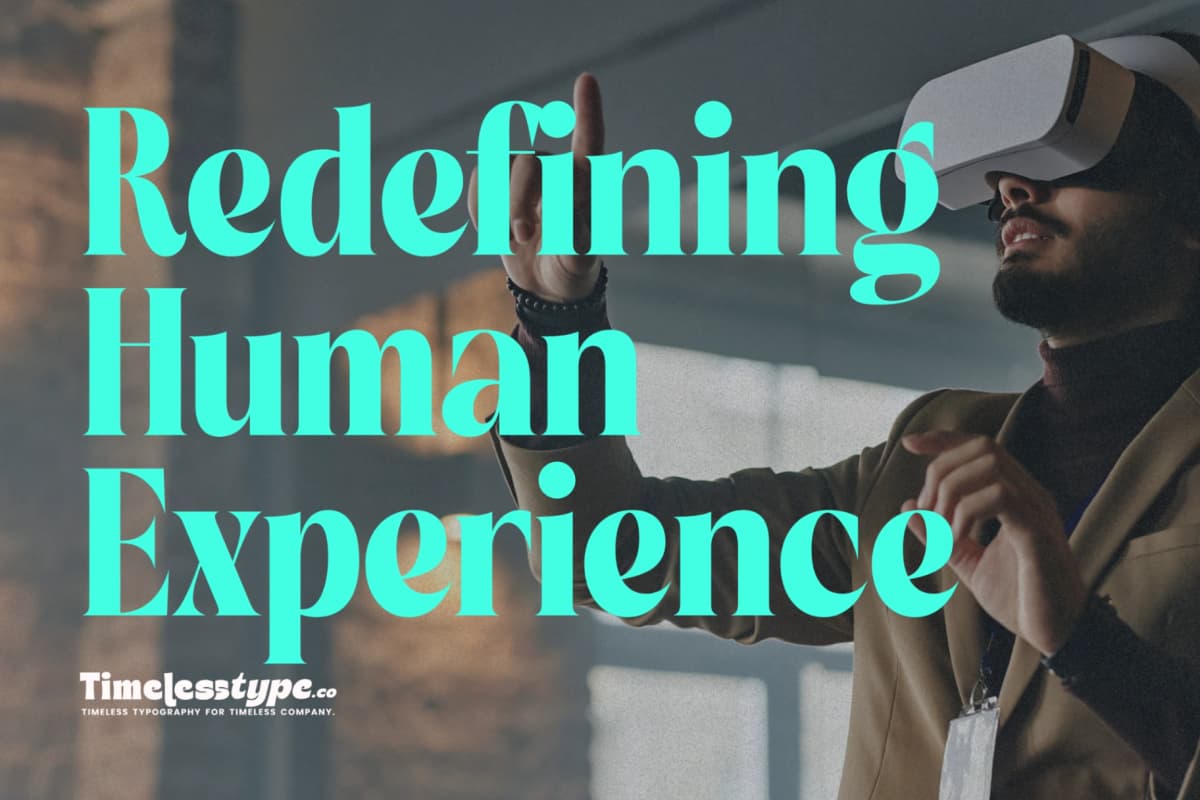
Table of Contents
- Introduction: The Merging of Realities
- 1. Understanding the Difference: VR vs. AR
- Virtual Reality (VR)
- Augmented Reality (AR)
- Mixed Reality (MR): The Hybrid Frontier
- 2. A Brief History: From Imagination to Innovation
- 3. How VR and AR Are Redefining Human Experience
- A. Education and Training
- B. Healthcare and Therapy
- C. Work and Collaboration
- D. Art and Creativity
- E. Retail and Consumer Experience
- F. Travel and Tourism
- 4. The Psychology of Immersion: Why It Feels So Real
- Key Psychological Effects
- 5. The Rise of the Metaverse: A Shared Virtual Economy
- Core Features
- 6. Challenges Ahead: Ethics, Privacy, and Overuse
- A. Privacy Concerns
- B. Mental Health Risks
- C. Accessibility and Cost
- D. Ethical Design
- 7. The Future: Where Reality and Imagination Meet
- Emerging Trends in 2025 and Beyond
- 8. What It Means for Humanity
- 9. The Human Element: Balancing Tech and Presence
- Conclusion: The Next Human Renaissance
Virtual Reality and Augmented Reality: Redefining Human Experience
Introduction: The Merging of Realities
For centuries, human imagination has dreamed of escaping the boundaries of the physical world.
From early cave paintings to cinema, we’ve always sought to expand reality — to see, feel, and experience more.
Today, that dream is no longer fantasy.
Through Virtual Reality (VR) and Augmented Reality (AR), we are entering an era where the line between the real and the digital world begins to blur.
What was once science fiction is now everyday technology — reshaping how we learn, work, play, and connect.
“We’re not just using technology anymore — we’re living inside it.”
1. Understanding the Difference: VR vs. AR
Though often mentioned together, Virtual Reality and Augmented Reality create fundamentally different experiences.
Virtual Reality (VR)
VR immerses users in a fully digital environment — replacing the real world entirely.
Using headsets like the Meta Quest 3, HTC Vive, or Sony PSVR2, users can explore computer-generated worlds in 360°, experiencing total presence and interaction.
Example:
Walking through a virtual art gallery.
Playing a VR game where you fight dragons or explore Mars.
Training in a virtual factory environment.
Augmented Reality (AR)
AR overlays digital elements onto the real world through screens or lenses — blending the virtual with the physical.
Example:
Using your smartphone to see furniture in your living room before buying it (IKEA Place).
Trying on digital makeup via a camera filter (L’Oréal, Sephora).
Real-time navigation overlays through AR glasses or car dashboards.
Mixed Reality (MR): The Hybrid Frontier
Between VR and AR lies Mixed Reality (MR) — where digital and physical objects interact in real time.
Devices like the Apple Vision Pro and Microsoft HoloLens push this boundary, merging digital holograms into real environments.
“Virtual reality takes you out of this world. Augmented reality brings new worlds into yours.”
2. A Brief History: From Imagination to Innovation
1968: Ivan Sutherland created the first VR headset prototype, “The Sword of Damocles.”
1990s: Early AR research began in universities and defense industries.
2010s: Oculus Rift made VR commercially viable, while Pokémon GO made AR mainstream.
2020s: The Metaverse, AI, and wearable computing made immersive tech part of everyday life.
By 2025, VR and AR are no longer niche — they’re pillars of the immersive economy, valued at over $300 billion globally.
3. How VR and AR Are Redefining Human Experience
The impact of immersive technologies extends far beyond entertainment — it’s transforming every dimension of human experience.
A. Education and Training
VR and AR are revolutionizing the way we learn — turning classrooms and training sessions into interactive, experiential environments.
Virtual Classrooms: Students explore ancient Rome, dissect a digital frog, or travel inside a human cell.
Corporate Training: Employees practice safety drills, customer service, or machinery operation in risk-free VR environments.
Medical Education: Surgeons use VR to simulate operations before real procedures.
Result:
Learning becomes more engaging, practical, and emotionally memorable.
“Tell me and I forget. Show me and I remember. Involve me and I understand.”
B. Healthcare and Therapy
Immersive technology is helping patients heal both physically and mentally.
VR Pain Management: Patients use VR experiences to distract from chronic pain or anxiety during medical procedures.
AR Surgery Assistance: Surgeons use AR overlays to see critical data during operations.
Mental Health Therapy: VR exposure therapy helps treat PTSD, phobias, and depression.
VR doesn’t just entertain — it heals, empowers, and restores.
C. Work and Collaboration
The pandemic accelerated remote work — and VR/AR took collaboration to the next level.
Virtual Offices: Platforms like Horizon Workrooms and Spatial allow teams to meet as avatars in 3D spaces.
Digital Twins: AR helps engineers visualize real-time data overlays on physical equipment.
Virtual Prototyping: Designers can manipulate 3D models together from different continents.
This is more than convenience — it’s a redefinition of global teamwork.
D. Art and Creativity
Artists and creators now use VR as both a canvas and a stage.
They paint in 3D, sculpt digital sculptures, and build immersive exhibitions.
Examples:
Tilt Brush (now Open Brush): A 3D painting tool for artists.
The Louvre AR Experience: Walk among historical masterpieces from anywhere.
Virtual concerts by artists like Travis Scott or BTS inside virtual worlds.
Creativity no longer exists on flat surfaces — it surrounds you.
E. Retail and Consumer Experience
AR is transforming shopping from a transaction into an experience.
Virtual Try-Ons: Test clothes, glasses, or furniture digitally before buying.
AR Product Visualization: Customers can view 3D models of products at home.
Immersive Stores: Brands like Nike and Gucci use VR showrooms for storytelling.
The result: higher engagement, fewer returns, and stronger brand loyalty.
F. Travel and Tourism
Not everyone can afford or access global destinations — but VR travel changes that.
Virtual Tourism: Explore the pyramids, Paris, or deep oceans without leaving home.
AR Tourism: City apps overlay historical facts, maps, or translations in real-time.
Sustainability Impact: Reduces the carbon footprint from traditional travel.
In the 2020s, VR made exploration limitless — not exclusive.
4. The Psychology of Immersion: Why It Feels So Real
VR and AR work because they hijack the brain’s perception system.
When visual, auditory, and motion cues align perfectly, your brain believes the digital world is real — triggering emotional and physical responses identical to real-life experiences.
Key Psychological Effects
Presence: The feeling of “being there.”
Embodiment: Feeling that the virtual body is your own.
Empathy Building: Experiencing life from another person’s perspective.
These effects have profound implications — from empathy education to emotional therapy.
“Immersive experiences don’t just show you new worlds — they change how you see your own.”
5. The Rise of the Metaverse: A Shared Virtual Economy
The Metaverse — the interconnected network of virtual spaces — is where VR and AR converge.
Core Features
Persistent virtual worlds.
Digital avatars and identities.
Virtual real estate and commerce.
Integration with blockchain and AI.
Companies like Meta, NVIDIA, and Epic Games are investing billions into creating this next iteration of the internet — the Internet of Experiences.
By 2030, users may:
Attend concerts, classes, or work in VR.
Own and trade virtual assets.
Blend digital and physical experiences seamlessly.
The Metaverse is not about escapism — it’s about extension of reality.
6. Challenges Ahead: Ethics, Privacy, and Overuse
While the benefits are vast, immersive technologies also raise complex ethical questions.
A. Privacy Concerns
VR and AR collect massive amounts of biometric data — eye movement, reaction time, even emotions.
This raises serious privacy and surveillance issues.
B. Mental Health Risks
Overuse can lead to disconnection, addiction, or distorted perception of reality.
Balance between digital and physical life is crucial.
C. Accessibility and Cost
High-end headsets remain expensive.
Developers must ensure inclusive access to avoid creating a “digital divide.”
D. Ethical Design
Developers must design experiences that enhance well-being — not manipulate behavior or exploit attention.
“Technology should expand human potential — not replace it.”
7. The Future: Where Reality and Imagination Meet
In the next decade, the boundaries between the physical and digital world will continue to dissolve.
Emerging Trends in 2025 and Beyond
Wearable AR Glasses: Lightweight, stylish, and powered by AI.
Haptic Feedback: Touch and feel objects in virtual environments.
Full-Body Tracking: Immersive fitness, gaming, and healthcare experiences.
AI-Powered Worlds: Dynamic, evolving virtual environments driven by machine learning.
Education Metaverses: Global classrooms that transcend language and geography.
VR and AR won’t replace real life — they’ll enhance it.
They’ll redefine what it means to experience, learn, and connect.
8. What It Means for Humanity
Beyond the technology, VR and AR are fundamentally about human experience.
They expand empathy, creativity, and connection across cultures and distances.
Imagine:
A student in Jakarta learning with peers in New York in a shared digital lab.
A grandparent “attending” a wedding across continents through VR.
Doctors performing surgeries remotely using AR precision.
This isn’t the future — it’s happening now.
VR and AR don’t separate us from humanity.
They remind us how vast — and how connected — human imagination can be.
“Reality isn’t disappearing. It’s evolving.”
9. The Human Element: Balancing Tech and Presence
As immersive tech grows, one truth remains timeless: presence is power.
Whether physical or digital, meaningful experiences come from how deeply we engage.
To thrive in this new age:
Use VR and AR as tools for empathy, creativity, and education.
Stay grounded in the physical world.
Create digital experiences that connect — not isolate.
The goal isn’t to escape life — but to experience it more fully.
Conclusion: The Next Human Renaissance
Virtual and Augmented Reality are not just technological trends — they are gateways to a new dimension of human experience.
They challenge what it means to be present, to learn, to create, and to connect.
In this decade, we are not choosing between real and virtual — we’re merging them.
And in that union, we’ll rediscover one of humanity’s oldest desires: to imagine, to feel, and to transcend limits.
The world ahead is not less real — it’s more human than ever.
“The future of experience is not about escaping reality — it’s about expanding it.”
Related
Tags
Browse similar work by purpose and style.
.webp&w=1200&q=75)
.webp&w=1200&q=75)
.webp&w=1200&q=75)
.webp&w=1200&q=75)
.webp&w=1200&q=75)
.webp&w=1200&q=75)
.webp&w=1200&q=75)
.webp&w=1200&q=75)