


.jpg&w=256&q=75&dpl=dpl_Gc2H6qw5qz6tftmNLm7EMoaFVtW7)
.jpg&w=256&q=75&dpl=dpl_Gc2H6qw5qz6tftmNLm7EMoaFVtW7)
.webp&w=256&q=75&dpl=dpl_Gc2H6qw5qz6tftmNLm7EMoaFVtW7)
.webp&w=256&q=75&dpl=dpl_Gc2H6qw5qz6tftmNLm7EMoaFVtW7)



Inspiration
The Strength Within: Finding Hope and Purpose in Difficult Times
Insights, tutorials, and type notes from the Timeless Type studio.
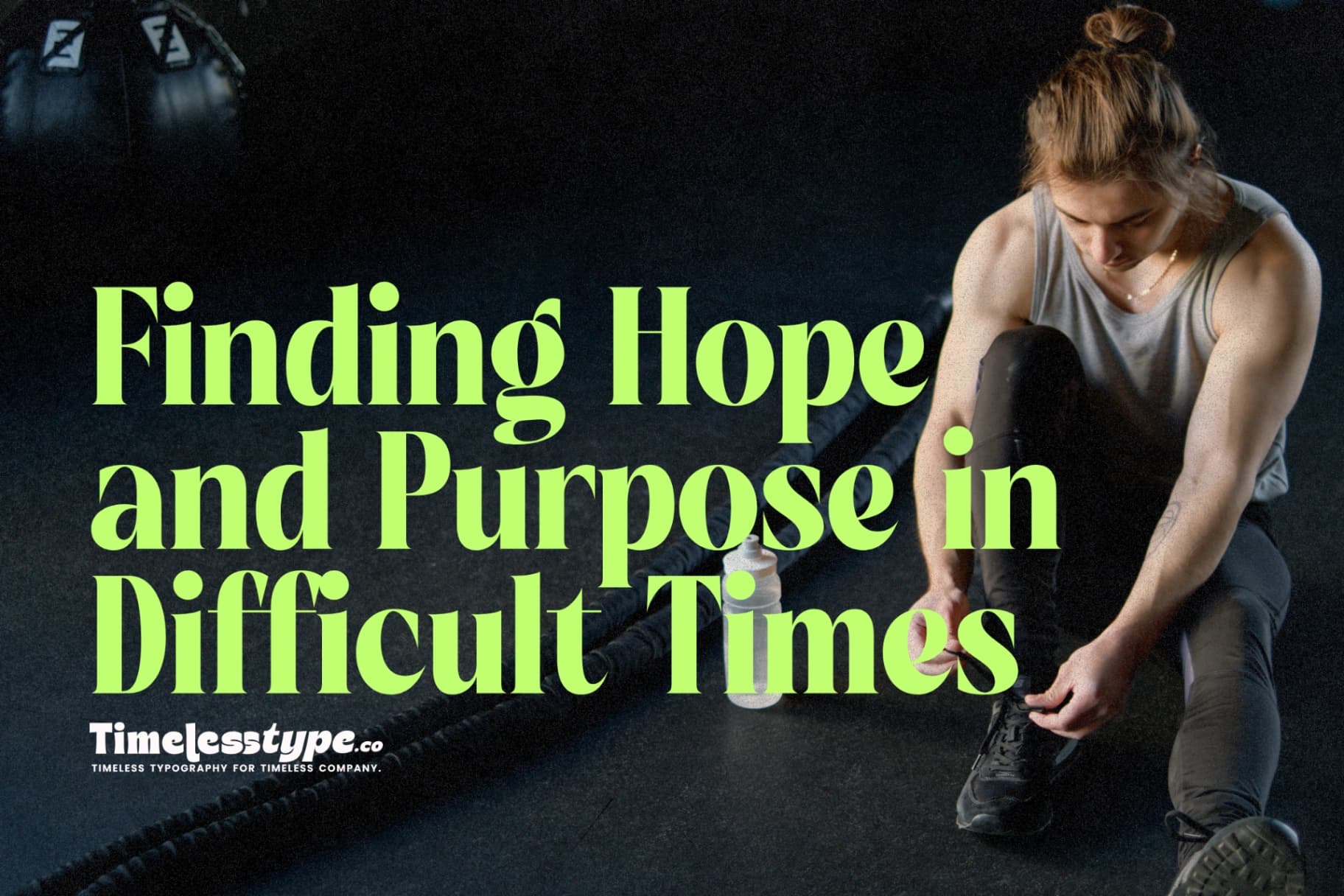
Table of Contents
- 1. Accepting Reality Without Losing Yourself
- 2. Redefining Strength: It’s Not About Endurance Alone
- 3. Pain as a Teacher, Not a Punishment
- 4. The Power of Purpose: Why Meaning Heals
- 5. Hope Is a Discipline, Not a Feeling
- 6. Rebuilding from the Inside Out
- 7. The Role of Connection and Community
- 8. Gratitude in the Midst of Hardship
- 9. The Quiet Power of Perspective
- 10. Turning Wounds Into Wisdom
- 11. Building Spiritual and Emotional Resilience
- 12. The Role of Forgiveness
- 13. Purpose After Pain
- 14. Learning to Rest, Not Quit
- 15. Moving Forward With Meaning
- Conclusion: The Strength Within
The Strength Within: Finding Hope and Purpose in Difficult Times
Life isn’t built to be easy. It’s built to be real — unpredictable, messy, and sometimes brutal. At some point, everyone faces a storm: the loss of someone dear, a dream that falls apart, a crisis that breaks the rhythm of daily life. During these moments, it’s easy to feel powerless, questioning if hope or purpose can still exist amid the chaos.
But resilience isn’t born in comfort. It’s forged in struggle. True strength doesn’t appear when everything is going right; it emerges when you have every reason to give up and you keep standing anyway.
This article is about that strength within — how to find meaning, hope, and direction when life tests you to your core.
1. Accepting Reality Without Losing Yourself
The first step toward resilience is acceptance — not denial, not forced positivity, but honest acknowledgment. Pretending everything is fine doesn’t heal pain; it buries it deeper.
Acceptance means facing the truth as it is, not as you wish it to be. It means saying, “Yes, this is happening, and it hurts.” That’s where real growth begins.
You can’t rebuild from a reality you refuse to face. Accepting pain doesn’t make you weak — it makes you awake. And when you’re awake, you can choose how to respond.
2. Redefining Strength: It’s Not About Endurance Alone
We often think of strength as toughness — being unbreakable, unshaken, always in control. But that’s not human strength; that’s armor. And armor, while protective, also isolates.
Real strength is softer. It’s having the courage to cry, to ask for help, to admit fear but move anyway. It’s the strength to bend without breaking — to be vulnerable without surrendering your soul.
In dark times, emotional honesty becomes your anchor. It keeps you connected to your humanity when everything else feels mechanical.
3. Pain as a Teacher, Not a Punishment
Pain changes people — but how it changes you is a choice. You can let it make you bitter, or you can let it make you wiser.
Every setback, heartbreak, and disappointment carries a message: a mirror showing who you are beneath your expectations. Sometimes the most painful experiences are the ones that teach the deepest truths — about patience, humility, and compassion.
When life strips everything away, what remains is what’s real. And that’s where purpose starts to rebuild itself.
4. The Power of Purpose: Why Meaning Heals
Psychologists and philosophers have long agreed: people can endure almost anything if they have a “why.” Viktor Frankl, who survived Nazi concentration camps, said it best — “Those who have a ‘why’ to live can bear almost any ‘how.’”
Purpose gives suffering structure. It turns chaos into a challenge. Even when your purpose feels small — taking care of your health, supporting someone you love, finishing what you started — it acts as a compass that keeps you moving through uncertainty.
Finding purpose doesn’t require grandeur. It simply requires intention. Ask yourself:
What still matters to me, even now?
Who can I still serve?
What lesson might this pain be teaching me?
Purpose turns survival into direction — and direction into strength.
5. Hope Is a Discipline, Not a Feeling
Hope isn’t naive optimism. It’s a discipline — something you practice, not something you wait for.
When you’ve lost everything familiar, hope becomes the decision to keep showing up, even when you don’t see results yet. It’s the quiet act of refusing to quit on yourself.
You build hope through small victories:
Getting out of bed.
Taking that first walk.
Writing one honest sentence in your journal.
Calling someone you trust.
Every small act says: “I’m still here.”
And that’s where recovery begins.
6. Rebuilding from the Inside Out
When life breaks down, the instinct is to rebuild quickly — to replace what was lost. But rushing to “move on” often means carrying the same wounds into the next chapter.
Instead, rebuild from the inside out:
Reflection: Understand what this hardship revealed about your needs and values.
Release: Let go of what’s no longer serving you — old expectations, toxic patterns, the illusion of control.
Reconstruction: Create new habits and boundaries that align with who you’re becoming, not who you were.
Growth isn’t about becoming unscarred — it’s about becoming integrated. Every scar becomes part of your story.
7. The Role of Connection and Community
Resilience thrives in connection. Humans are wired for it — no one endures alone forever.
Isolation amplifies pain; community absorbs it. Surrounding yourself with people who listen without judgment, or even strangers who share your struggles, reminds you that pain is universal — and survivable.
Whether through therapy, support groups, faith communities, or close friendships, shared vulnerability creates healing. When you let others see your struggle, you also let them remind you of your worth.
Even one authentic connection can reignite your sense of belonging.
8. Gratitude in the Midst of Hardship
It might sound counterintuitive to talk about gratitude when life feels cruel, but it’s precisely in those times that gratitude becomes most transformative.
Gratitude isn’t ignoring pain; it’s expanding your awareness beyond it. It’s saying, “Yes, this hurts — and still, there are things worth appreciating.”
Science backs it up: gratitude rewires your brain, lowers stress, and increases resilience. Start small:
A warm cup of coffee.
A message from a friend.
A quiet morning where you can breathe.
Finding light doesn’t erase the dark — it helps you see through it.
9. The Quiet Power of Perspective
When you’re in pain, your world shrinks. Every problem feels larger, every solution feels distant. That’s when perspective becomes survival.
Zoom out. Remind yourself that hardship isn’t permanent — it’s a season, not a sentence. Life moves in cycles, and this chapter, too, will pass.
Ask yourself:
How might I look back on this one year from now?
What could this experience be preparing me for?
How would I advise someone else going through the same thing?
Perspective doesn’t minimize your pain — it contextualizes it. It gives suffering a timeline instead of eternity.
10. Turning Wounds Into Wisdom
Eventually, when the dust settles, you’ll realize something profound: the hardest chapters often give you the deepest empathy and wisdom.
You become someone who understands pain — and therefore, someone who can help others through theirs. Your scars become signposts for those still lost.
Turning wounds into wisdom isn’t about romanticizing suffering; it’s about extracting meaning from it. It’s how resilience transforms tragedy into legacy.
Pain, when processed, becomes power.
11. Building Spiritual and Emotional Resilience
True hope often has a spiritual dimension — not necessarily religious, but deeply existential. It’s about believing that your life, even at its hardest, still has inherent meaning.
Meditation, prayer, journaling, or even moments of silence reconnect you with that deeper sense of self. They create a pause — a space where chaos can’t reach you.
Resilience isn’t constant strength. It’s rhythm — moments of falling apart, followed by moments of rebuilding. The goal isn’t to stay unbroken; it’s to keep returning to your center.
12. The Role of Forgiveness
Forgiveness is often misunderstood. It doesn’t mean excusing what happened. It means releasing its control over you.
Holding onto anger or resentment may feel powerful, but it quietly drains your peace. Forgiveness — whether toward others or yourself — is liberation. It doesn’t erase the past; it simply stops it from dictating your future.
Forgiveness clears space for growth. Without it, hope struggles to take root.
13. Purpose After Pain
One of the most profound transformations is realizing that your pain can serve a purpose.
People who’ve endured loss often become the strongest sources of compassion. Those who’ve faced failure often mentor others out of theirs. Those who’ve struggled with mental health often become advocates for awareness.
You can’t always control your suffering — but you can control what it teaches you. Purpose gives your pain direction.
The question is not “Why did this happen to me?” but “What can I do with this now?”
14. Learning to Rest, Not Quit
Resilience isn’t about endless motion. It’s about knowing when to rest. Exhaustion and failure often feel the same, but they’re not. One requires recovery; the other requires surrender.
Rest when you need to, recharge your body and mind, and trust that slowing down doesn’t mean giving up. It’s preparation for what comes next.
The strength within you doesn’t disappear when you pause — it regenerates.
15. Moving Forward With Meaning
When life feels uncertain, focus on progress, not perfection. Healing doesn’t follow a straight line — it’s messy, unpredictable, and deeply personal.
Each step forward — however small — matters. You rebuild through motion, through action.
Purpose grows stronger when lived out, not just thought about.
You won’t return to who you were before hardship. But maybe that’s the point. Maybe you’re meant to become someone wiser, braver, and more grounded.
Conclusion: The Strength Within
Hope isn’t a miracle that appears from nowhere. It’s a seed planted in the darkest soil — one that grows only through patience, faith, and daily effort.
Finding purpose during hard times doesn’t erase pain; it transforms it. It helps you see that meaning isn’t lost — it’s hidden, waiting to be rediscovered.
You are stronger than the moment trying to break you.
And when you finally rise — slower, quieter, but unshakable — you’ll realize: the strength you were searching for was never gone. It was always within you.
Related
Tags
Browse similar work by purpose and style.
.webp&w=1920&q=75&dpl=dpl_Gc2H6qw5qz6tftmNLm7EMoaFVtW7)
.webp&w=1920&q=75&dpl=dpl_Gc2H6qw5qz6tftmNLm7EMoaFVtW7)
.webp&w=1920&q=75&dpl=dpl_Gc2H6qw5qz6tftmNLm7EMoaFVtW7)
.webp&w=1920&q=75&dpl=dpl_Gc2H6qw5qz6tftmNLm7EMoaFVtW7)
.webp&w=1920&q=75&dpl=dpl_Gc2H6qw5qz6tftmNLm7EMoaFVtW7)

.webp&w=1920&q=75&dpl=dpl_Gc2H6qw5qz6tftmNLm7EMoaFVtW7)
.webp&w=1920&q=75&dpl=dpl_Gc2H6qw5qz6tftmNLm7EMoaFVtW7)