


.jpg&w=256&q=75&dpl=dpl_Gc2H6qw5qz6tftmNLm7EMoaFVtW7)
.jpg&w=256&q=75&dpl=dpl_Gc2H6qw5qz6tftmNLm7EMoaFVtW7)
.webp&w=256&q=75&dpl=dpl_Gc2H6qw5qz6tftmNLm7EMoaFVtW7)
.webp&w=256&q=75&dpl=dpl_Gc2H6qw5qz6tftmNLm7EMoaFVtW7)



Lifestyle
The Power of Gratitude: How Appreciation Transforms Everyday Life
Insights, tutorials, and type notes from the Timeless Type studio.
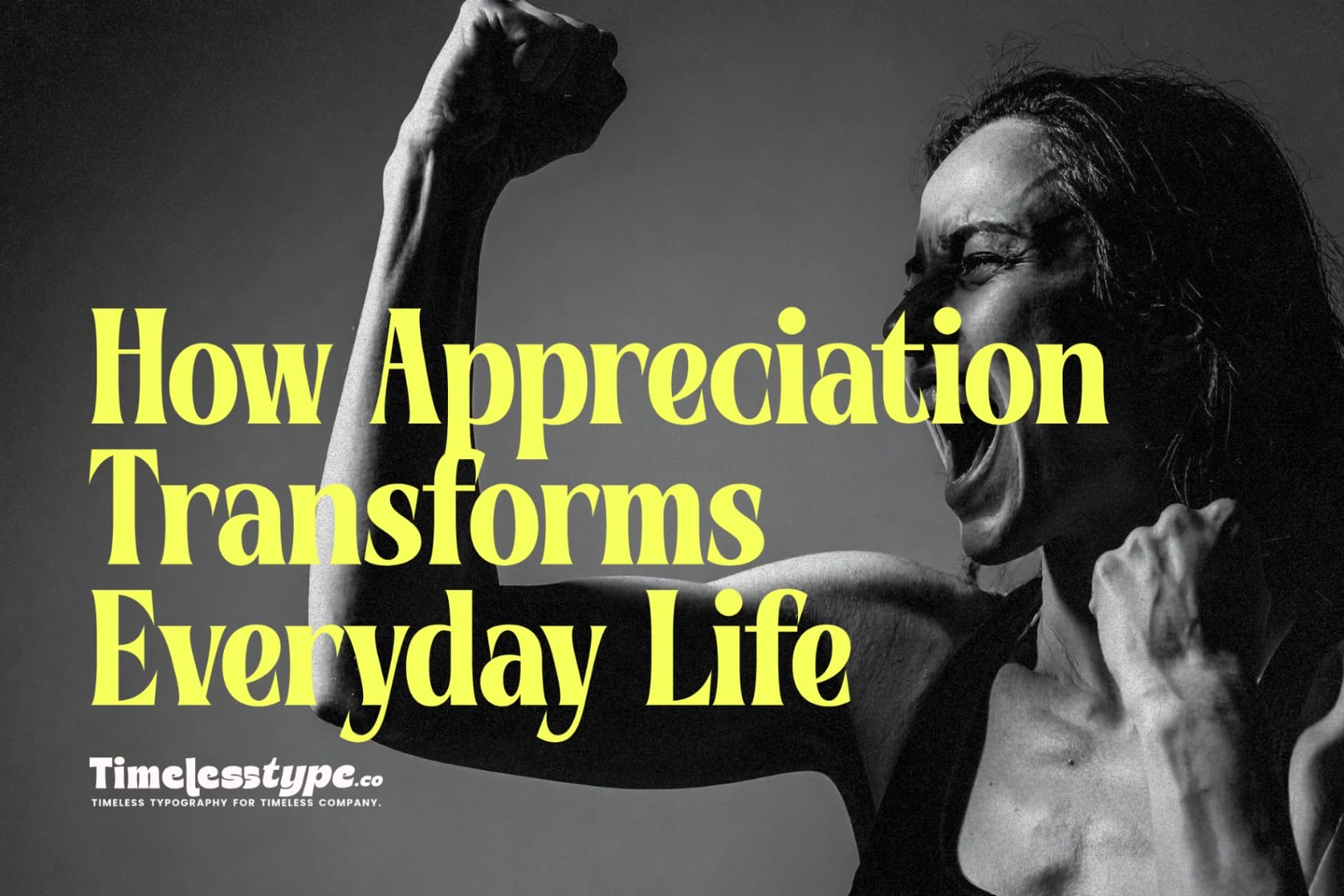
Table of Contents
- 1. What Gratitude Really Means
- 2. The Science Behind Gratitude
- According to research:
- 3. Gratitude as a Perspective Shift
- 4. How Gratitude Changes Your Brain
- When practiced regularly:
- 5. The Connection Between Gratitude and Mental Health
- How it helps:
- 6. Gratitude in Relationships
- Simple gratitude habits for stronger relationships:
- 7. Gratitude at Work: The Hidden Superpower
- 8. Gratitude and Physical Health
- Health benefits include:
- 9. The Power of Small Moments
- 10. Gratitude in Difficult Times
- In hard times, gratitude teaches you:
- 11. How to Practice Gratitude Daily
- Simple ways to start:
- 12. The Gratitude Journal Method
- How to do it:
- 13. The Role of Gratitude in Leadership
- Gratitude in leadership means:
- 14. Teaching Gratitude to the Next Generation
- Ways to cultivate it in children:
- 15. Gratitude in Spiritual and Cultural Contexts
- Examples:
- 16. How Gratitude Fuels Resilience
- Gratitude builds resilience by:
- 17. Gratitude and the Law of Attraction
- 18. Acts of Gratitude in Daily Life
- Practice gratitude by:
- 19. Gratitude as a Lifestyle
- Living gratefully means:
- 20. Conclusion: Gratitude as the Gateway to Joy
The Power of Gratitude: How Appreciation Transforms Everyday Life
In a world that moves fast, it’s easy to focus on what’s missing — the next goal, the next purchase, the next problem to solve.
But gratitude invites us to slow down, breathe, and notice what’s already here.
It’s not just a polite “thank you” — it’s a mindset, a way of seeing life through the lens of abundance rather than lack.
And research shows it can transform not just your emotions, but your health, relationships, and even your brain.
Here’s why gratitude is one of the most powerful forces for change — and how you can cultivate it to live a richer, calmer, and more meaningful life.
1. What Gratitude Really Means
Gratitude isn’t just about saying thanks when something good happens.
It’s about appreciation in every circumstance — seeing value in the ordinary and finding lessons in the difficult.
It means:
Acknowledging life’s blessings, big or small.
Recognizing that goodness often comes from outside yourself.
Choosing appreciation over entitlement.
In essence, gratitude is the art of focusing on what is right instead of what is missing.
“Gratitude turns what we have into enough.” — Aesop
2. The Science Behind Gratitude
Modern psychology and neuroscience have proven what ancient wisdom has long taught — gratitude has measurable benefits for the mind and body.
According to research:
Grateful people are 25% happier on average (UC Davis, Emmons & McCullough study).
Practicing gratitude reduces stress hormones like cortisol by up to 23%.
It improves sleep quality, lowers blood pressure, and strengthens immunity.
MRI scans show that gratitude activates brain regions linked to empathy, joy, and reward.
When you practice gratitude consistently, your brain literally rewires itself to notice positivity — turning appreciation into a habit, not a moment.
3. Gratitude as a Perspective Shift
Life will always have challenges — but gratitude changes how you see them.
Instead of asking, “Why is this happening to me?”
you begin to ask, “What is this teaching me?”
This shift doesn’t erase pain or difficulty; it balances it.
You start recognizing the lessons, the helpers, and the resilience that grows through adversity.
Gratitude doesn’t deny reality — it expands it.
It allows light to coexist with darkness, peace to coexist with chaos.
4. How Gratitude Changes Your Brain
Gratitude activates the brain’s “feel-good” neurotransmitters — dopamine, serotonin, and oxytocin.
These chemicals improve mood, motivation, and social bonding.
When practiced regularly:
The brain’s prefrontal cortex (responsible for decision-making and emotion regulation) becomes more active.
Negative thought patterns decrease as optimism increases.
The amygdala — linked to fear and stress — becomes calmer.
Gratitude literally changes the architecture of your brain — helping you respond to life with peace instead of panic.
5. The Connection Between Gratitude and Mental Health
Gratitude is one of the simplest yet most powerful antidotes to anxiety, depression, and burnout.
How it helps:
It breaks the cycle of overthinking by shifting focus from worry to appreciation.
It cultivates mindfulness — anchoring you in the present moment.
It increases resilience — helping you bounce back from setbacks faster.
Psychologists call gratitude a “natural antidepressant” — and unlike medication, it has no side effects, only side benefits.
6. Gratitude in Relationships
Nothing strengthens human connection like appreciation.
When you thank someone sincerely, you make them feel seen, valued, and loved.
Simple gratitude habits for stronger relationships:
Say “thank you” daily — not just for big gestures, but for small acts.
Express appreciation publicly (at work, in family, or online).
Write notes of gratitude to friends or mentors.
Couples who express gratitude toward each other are happier and more satisfied in their relationships (University of Georgia study).
Gratitude doesn’t just improve love — it sustains it.
7. Gratitude at Work: The Hidden Superpower
In workplaces, gratitude fosters motivation, collaboration, and trust.
Employees who feel appreciated are:
50% more productive.
44% more likely to stay longer in their jobs.
2x as likely to report high job satisfaction.
A simple “thank you” from a leader can boost morale more than financial incentives.
Because at the end of the day, everyone wants to feel that their effort matters.
8. Gratitude and Physical Health
Gratitude isn’t just emotional — it’s biological.
Health benefits include:
Lower blood pressure and heart disease risk.
Better sleep quality and duration.
Stronger immune system response.
Faster recovery from illness or surgery.
When you feel grateful, your body relaxes, your breathing slows, and your immune system strengthens.
Gratitude heals both the heart and the body.
9. The Power of Small Moments
Gratitude doesn’t require grand gestures or life-changing events.
It thrives in the everyday:
Morning sunlight on your skin.
A kind word from a stranger.
The aroma of your favorite coffee.
The laughter of someone you love.
These small, fleeting moments — when noticed — add up to a profound sense of joy.
Happiness doesn’t come from having more; it comes from noticing more.
10. Gratitude in Difficult Times
It’s easy to be grateful when life feels good — harder when things fall apart.
But that’s when gratitude becomes most powerful.
In hard times, gratitude teaches you:
To focus on what remains, not just what’s lost.
To find meaning in struggle.
To see progress, not perfection.
Even in grief, gratitude can coexist — for the love you had, the lessons learned, and the strength you’re discovering.
Gratitude doesn’t erase pain — it gives it purpose.
11. How to Practice Gratitude Daily
Gratitude grows with practice — like a muscle, it strengthens the more you use it.
Simple ways to start:
Keep a gratitude journal.
Write down three things you’re thankful for each day.
Practice morning gratitude.
Before checking your phone, list one thing you appreciate about the day ahead.
Say it out loud.
Tell people you value them — often.
Pause before meals.
Reflect on the food, the hands that made it, and your ability to enjoy it.
End your day with reflection.
Ask: What went well today? What did I learn? Who helped me?
The more you express gratitude, the more reasons you’ll find to be grateful.
12. The Gratitude Journal Method
Keeping a gratitude journal is one of the most effective ways to rewire your brain for positivity.
How to do it:
Set aside 5 minutes daily.
Write 3–5 things you’re thankful for — specific, not generic.
Include emotions — “I felt peaceful when…” or “I smiled because…”
Review entries weekly to remind yourself how far you’ve come.
Over time, your journal becomes a mirror of abundance, even through difficult seasons.
13. The Role of Gratitude in Leadership
Great leaders understand that gratitude fuels loyalty and innovation.
Gratitude in leadership means:
Recognizing effort publicly.
Encouraging growth through appreciation, not fear.
Creating a culture where every team member feels valued.
When leaders express genuine appreciation, employees bring their best selves to work — not out of obligation, but out of pride.
14. Teaching Gratitude to the Next Generation
Gratitude is a skill that can — and should — be taught early.
Ways to cultivate it in children:
Encourage them to share what they’re thankful for at dinner.
Teach empathy through acts of kindness.
Help them write thank-you notes.
Model gratitude in your own behavior.
When children grow up with appreciation, they become happier, kinder, and more resilient adults.
15. Gratitude in Spiritual and Cultural Contexts
Every culture and faith tradition emphasizes gratitude.
Examples:
In Buddhism, gratitude is part of mindfulness and compassion.
In Christianity, gratitude is central to prayer and worship.
In Islam, shukr (thankfulness) is a daily practice of humility.
Indigenous traditions honor the Earth and its cycles with gratitude rituals.
Gratitude is a universal language — a bridge between humans and the divine, people and planet.
16. How Gratitude Fuels Resilience
Gratitude turns adversity into wisdom.
When life feels uncertain, it reminds you of what’s stable.
Gratitude builds resilience by:
Training your mind to find light in darkness.
Reframing challenges as opportunities for growth.
Strengthening faith in yourself and others.
Resilient people aren’t those who avoid hardship — they’re those who appreciate their capacity to endure it.
17. Gratitude and the Law of Attraction
From a mindset perspective, gratitude is magnetic.
When you appreciate what you have, you attract more of what you value.
Gratitude aligns your thoughts with abundance — shifting focus from what’s lacking to what’s possible.
It’s not magic — it’s mental clarity.
When you’re grateful, your energy shifts — and so does your life.
18. Acts of Gratitude in Daily Life
Gratitude is best expressed through action.
Practice gratitude by:
Volunteering your time or skills.
Supporting causes that matter to you.
Paying genuine compliments.
Writing thank-you letters or messages.
Paying it forward with kindness.
Gratitude isn’t just a feeling — it’s a movement of generosity that ripples outward.
19. Gratitude as a Lifestyle
When gratitude becomes a daily habit, it changes how you live.
You start to see abundance everywhere — in people, in moments, even in challenges.
Living gratefully means:
Less complaining, more appreciating.
Less comparing, more celebrating.
Less rushing, more savoring.
Gratitude isn’t just a practice — it’s a way of being that transforms ordinary days into extraordinary ones.
20. Conclusion: Gratitude as the Gateway to Joy
Gratitude won’t make life perfect — but it will make it beautiful.
It doesn’t erase challenges, but it gives you the strength and perspective to face them.
Every “thank you,” spoken or silent, reshapes your heart, rewires your brain, and reconnects you with what truly matters.
So pause — right now — and look around.
What can you appreciate in this moment?
Because gratitude isn’t something you wait to feel after life gets better.
It’s the very thing that makes life better.
“It is not happiness that makes us grateful; it is gratitude that makes us happy.” — David Steindl-Rast
Gratitude doesn’t just change your day — it changes your life.
.webp&w=1920&q=75&dpl=dpl_Gc2H6qw5qz6tftmNLm7EMoaFVtW7)
.webp&w=1920&q=75&dpl=dpl_Gc2H6qw5qz6tftmNLm7EMoaFVtW7)
.webp&w=1920&q=75&dpl=dpl_Gc2H6qw5qz6tftmNLm7EMoaFVtW7)
.webp&w=1920&q=75&dpl=dpl_Gc2H6qw5qz6tftmNLm7EMoaFVtW7)
.webp&w=1920&q=75&dpl=dpl_Gc2H6qw5qz6tftmNLm7EMoaFVtW7)
.webp&w=1920&q=75&dpl=dpl_Gc2H6qw5qz6tftmNLm7EMoaFVtW7)
.webp&w=1920&q=75&dpl=dpl_Gc2H6qw5qz6tftmNLm7EMoaFVtW7)
.webp&w=1920&q=75&dpl=dpl_Gc2H6qw5qz6tftmNLm7EMoaFVtW7)