
Finance
The Future of Smartphones: Innovations That Will Shape
Insights, tutorials, and type notes from the Timeless Type studio.
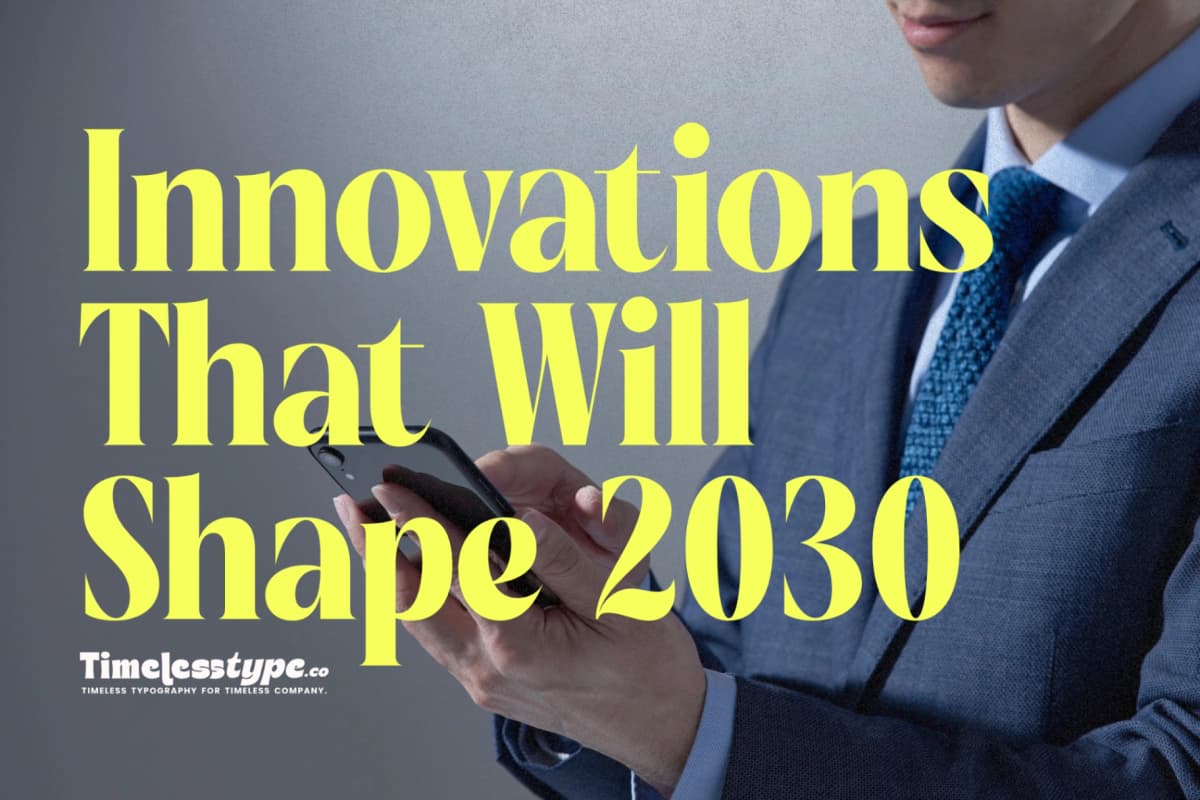
Table of Contents
- 1. The Smartphone Evolution: From Tool to Intelligent Companion
- 2. Artificial Intelligence: The Heart of Future Smartphones
- 1. Hyper-Personalized Experiences
- 2. On-Device AI Processing
- 3. The End of Screens: Holographic and Foldable Futures
- 1. Holographic Displays
- 2. Rollable and Shape-Shifting Devices
- 3. AR-First Interfaces
- 4. Voice, Gesture, and Mind Control Interfaces
- 1. Voice as the Primary Input
- 2. Gesture and Air Control
- 3. Neural Interfaces
- 5. Quantum and 6G Connectivity: The Speed of Light Era
- What This Means:
- 6. Sustainability and Eco-Friendly Innovation
- 1. Modular Design and Longevity
- 2. Eco Materials
- 3. Energy Efficiency
- 7. Enhanced Security: Privacy in the AI Era
- 1. Biometric Evolution
- 2. Decentralized Data Storage
- 3. Transparent AI Ethics
- 8. The Fusion of Smartphone and Wearable Technology
- 1. Smart Glasses and AR Contacts
- 2. Smart Clothing and Skin Sensors
- 3. The Disappearing Device
- 9. The Camera Revolution: Seeing Beyond Reality
- 1. Multi-Spectrum Imaging
- 2. Computational Photography 3.0
- 3. Immersive 3D and 360° Capture
- 10. Integration with Everyday Life: The “Invisible Smartphone”
- 1. Smart Environments
- 2. Predictive Automation
- 3. Health and Lifestyle Monitoring
- 11. The Ethical Side of Future Smartphones
- Key Ethical Challenges:
- 12. The Role of AI Companions: Emotional Connection and Empathy
- 13. Global Accessibility: The Smartphone as a Human Right
- The Impact:
- 14. What Smartphones Will Look Like in 2030
- 15. The Future Beyond 2030: When the Smartphone Becomes Obsolete
- Final Reflection: The Next Decade of Connection
The Future of Smartphones: Innovations That Will Shape 2030
Smartphones have become extensions of our lives — tools for work, creativity, connection, and identity.
But as we move toward 2030, the device that once revolutionized communication is undergoing its biggest transformation yet.
From AI-driven personalization to holographic displays and even brain-controlled interfaces, smartphones are evolving beyond screens — becoming intelligent companions that adapt to your needs in real time.
The question isn’t just “What will phones look like in 2030?”
It’s “What will life look like when phones become smarter than ever before?”
Let’s explore the innovations that will define the next generation of smartphones — and how they’ll reshape the way we live, work, and connect.
1. The Smartphone Evolution: From Tool to Intelligent Companion
The first smartphone, launched in the early 2000s, was revolutionary because it put the internet in our pockets.
By 2025, smartphones had become powerful personal hubs — combining AI assistants, cameras, payments, and productivity into one device.
But by 2030, smartphones will no longer be just smart devices.
They’ll be intelligent companions — deeply integrated into our environment, learning from us, and anticipating our needs.
“The smartphones of 2030 won’t just understand commands — they’ll understand context.”
This shift will redefine how we interact with technology: from touch-based interfaces to seamless, multi-sensory, and AI-driven experiences.
2. Artificial Intelligence: The Heart of Future Smartphones
Artificial Intelligence will be the single most transformative element in the smartphone evolution.
By 2030, AI will move from being an assistant to being a co-pilot for life.
1. Hyper-Personalized Experiences
Phones will adapt dynamically to their owners.
They’ll understand tone, emotion, and behavior — recommending actions, content, and responses before you even ask.
Example:
Your phone will suggest calming music if it detects stress in your voice.
It will rearrange your schedule automatically if it senses fatigue or travel delays.
It may even predict your needs — from ordering groceries to calling loved ones when you’re feeling low.
2. On-Device AI Processing
Unlike cloud-based systems, next-gen phones will have AI chips that process data locally for better speed, privacy, and sustainability.
Think of ultra-fast computation, real-time translation, or instant object recognition — all without an internet connection.
“In 2030, your phone won’t need to be told what to do — it will know what you need.”
3. The End of Screens: Holographic and Foldable Futures
The traditional rectangular screen may be gone by 2030.
1. Holographic Displays
3D holograms will replace 2D screens.
Imagine video calling someone and seeing them projected in front of you — life-size, in full color, and interactive.
Samsung, Apple, and Meta are already experimenting with spatial displays that blur the line between physical and digital presence.
2. Rollable and Shape-Shifting Devices
Forget foldables — future phones will be morphable.
Flexible materials like graphene and nanoglass will allow phones to roll, bend, and reshape depending on the task.
Roll into a smartwatch.
Expand into a tablet.
Flatten into a projection surface.
3. AR-First Interfaces
By 2030, smartphones will integrate seamlessly with augmented reality (AR) glasses or contact lenses.
Instead of staring at screens, information will appear overlaid onto your real world — directions on roads, messages floating in view, or interactive holographic apps.
The smartphone won’t disappear — it will dissolve into your environment.
4. Voice, Gesture, and Mind Control Interfaces
Typing will feel ancient by 2030.
Human-technology interaction will be driven by natural input — voice, gestures, and even brain signals.
1. Voice as the Primary Input
Voice assistants like Siri, Alexa, and Google Assistant are just the beginning.
Future smartphones will understand emotion, tone, and nuance — having conversations instead of executing commands.
2. Gesture and Air Control
Using motion sensors and spatial tracking, you’ll control your phone without touching it.
A wave could answer a call; a pinch could zoom photos midair.
3. Neural Interfaces
Elon Musk’s Neuralink and other neurotech companies are pioneering brain-computer interfaces (BCIs).
By 2030, phones may connect directly with your thoughts — allowing you to send messages, browse content, or even compose music just by thinking.
“The ultimate smartphone is not one you hold — it’s one that reads your mind.”
This integration raises ethical questions, but it’s also the next frontier of human-machine communication.
5. Quantum and 6G Connectivity: The Speed of Light Era
The 5G revolution was just the beginning.
By 2030, 6G networks will deliver speeds up to 100 times faster — with near-zero latency and seamless global coverage.
What This Means:
Real-time holographic calls with no lag.
Cloud gaming and AR streaming at cinematic quality.
Instant data sync between devices and environments.
Smart cities fully interconnected with personal devices.
And beyond 6G lies quantum communication — enabling unhackable encryption and near-instant data transfer between continents.
Connectivity will no longer be a limitation — it will be invisible.
6. Sustainability and Eco-Friendly Innovation
By 2030, the smartphone industry must confront its biggest challenge: sustainability.
1. Modular Design and Longevity
Phones will shift from disposable to upgradeable.
Instead of replacing devices every two years, users will swap out components — processors, batteries, or cameras — extending device life cycles.
2. Eco Materials
Biodegradable casings, recycled metals, and renewable energy production will become standard.
Brands will prioritize zero-waste manufacturing and carbon-neutral supply chains.
3. Energy Efficiency
Next-gen batteries will use solid-state or graphene technology — charging in minutes, lasting for days, and minimizing waste.
“The future smartphone won’t just be smart — it’ll be sustainable.”
7. Enhanced Security: Privacy in the AI Era
With great intelligence comes great responsibility.
As AI becomes deeply integrated, privacy and cybersecurity will become critical.
1. Biometric Evolution
Forget fingerprints — by 2030, phones will use multi-biometric security:
Face, voice, and heartbeat recognition.
Behavioral analysis (typing rhythm, walking pattern).
Real-time threat detection powered by AI.
2. Decentralized Data Storage
Data privacy will shift from cloud servers to user-owned encryption vaults.
Blockchain and quantum cryptography will protect information against hacking and surveillance.
3. Transparent AI Ethics
Consumers will demand control over how AI systems use their data.
Companies will compete not just on power, but on trust.
8. The Fusion of Smartphone and Wearable Technology
By 2030, the line between smartphones and wearables will blur completely.
1. Smart Glasses and AR Contacts
Apple, Meta, and Google are investing heavily in wearable augmented reality.
These devices will project smartphone functions — messages, navigation, entertainment — directly into your field of vision.
2. Smart Clothing and Skin Sensors
Phones may soon live on your skin — via flexible displays or biometric patches.
Your shirt could monitor heart rate; your bracelet could project a screen onto your wrist.
3. The Disappearing Device
As AI and cloud processing evolve, the smartphone could shrink into an invisible interface — a combination of earpiece, lens, and microchip.
You’ll carry intelligence, not a device.
“By 2030, the smartphone may no longer be in your pocket — it’ll be part of you.”
9. The Camera Revolution: Seeing Beyond Reality
The camera has always been the soul of smartphone innovation — and by 2030, it will transcend photography.
1. Multi-Spectrum Imaging
Phones will capture not only visible light but also infrared and ultraviolet — revealing details invisible to the human eye.
2. Computational Photography 3.0
AI-driven algorithms will enable near-DSLR quality in any light.
You’ll be able to adjust focus, depth, or exposure after taking the photo.
3. Immersive 3D and 360° Capture
Smartphones will create fully immersive media — blending photography, AR, and holographic storytelling.
The smartphone camera of 2030 won’t just record moments — it will recreate experiences.
10. Integration with Everyday Life: The “Invisible Smartphone”
The ultimate evolution of smartphones is invisibility — when they become so integrated that we forget they’re there.
1. Smart Environments
Your home, car, and office will all sync with your phone automatically.
Lighting, music, and temperature will adapt to your mood and routine.
2. Predictive Automation
Your phone will act as a personal ecosystem manager:
Booking appointments.
Managing energy consumption.
Coordinating with other devices through AI-driven IoT (Internet of Things).
3. Health and Lifestyle Monitoring
Phones will constantly track physical and emotional well-being — from heart rate to stress levels — and provide proactive suggestions to improve health.
By 2030, your smartphone will not just serve you — it will care for you.
11. The Ethical Side of Future Smartphones
With new power comes new responsibility.
As technology grows more intelligent and invasive, society must redefine what privacy, consent, and ethics mean.
Key Ethical Challenges:
Data Ownership: Who controls your personal information?
AI Bias: Can we ensure fairness and inclusivity in machine decisions?
Tech Addiction: How do we balance convenience with mindfulness?
Future innovation must prioritize not only advancement but accountability.
The best technology will not just be the smartest — it will be the most humane.
12. The Role of AI Companions: Emotional Connection and Empathy
By 2030, phones will evolve from tools into companions — devices that understand human emotion and respond empathetically.
Imagine an AI assistant that:
Detects sadness and offers comforting messages.
Encourages breaks during overwork.
Supports mental health through personalized insights.
Technology will finally bridge logic and emotion — helping humans reconnect not only with data, but with themselves.
“The future of technology isn’t more humanlike machines — it’s more humane technology.”
13. Global Accessibility: The Smartphone as a Human Right
In the next decade, smartphones will become essential infrastructure — not luxury.
With cheaper components, open-source software, and satellite-based internet, access will expand globally.
The Impact:
Education and e-learning for remote communities.
Digital banking and entrepreneurship for underserved populations.
Healthcare access through telemedicine.
The smartphone will become the world’s gateway to opportunity — connecting billions more people to knowledge, resources, and hope.
14. What Smartphones Will Look Like in 2030
Based on current innovations, here’s what the 2030 smartphone might feature:
Holographic 3D display instead of screens.
AI-driven personal assistant that anticipates needs.
Self-healing body made of flexible graphene.
Quantum encryption for absolute security.
Modular design with replaceable components.
Battery life of one week through nanotech.
Voice, gesture, and neural control integration.
In short, your phone will be less a device — and more a digital extension of you.
15. The Future Beyond 2030: When the Smartphone Becomes Obsolete
Ironically, the ultimate goal of smartphone evolution may be its own disappearance.
As AI, wearables, and brain-computer interfaces merge, the need for physical devices may fade.
The “smartphone” may evolve into an ecosystem — a personal network of invisible intelligence woven into daily life.
Your world will become your interface.
Technology will become intuitive, invisible, and omnipresent.
And in that moment, the smartphone will have achieved its destiny — not as a gadget, but as a gateway to a smarter, more connected world.
Final Reflection: The Next Decade of Connection
The smartphone revolution changed how we communicate.
The next revolution — driven by AI, sustainability, and human-centric design — will change who we become.
By 2030, smartphones will no longer be about pixels and processors.
They’ll be about possibility — expanding human intelligence, creativity, and connection.
Technology will continue to evolve, but the purpose remains timeless:
to help us live better, think deeper, and stay closer to what matters most — each other.
Related
Tags
Browse similar work by purpose and style.
.webp&w=1200&q=75)
.webp&w=1200&q=75)
.webp&w=1200&q=75)
.webp&w=1200&q=75)
.webp&w=1200&q=75)
.webp&w=1200&q=75)
.webp&w=1200&q=75)
.webp&w=1200&q=75)