


.jpg&w=256&q=75&dpl=dpl_Gc2H6qw5qz6tftmNLm7EMoaFVtW7)
.jpg&w=256&q=75&dpl=dpl_Gc2H6qw5qz6tftmNLm7EMoaFVtW7)
.webp&w=256&q=75&dpl=dpl_Gc2H6qw5qz6tftmNLm7EMoaFVtW7)
.webp&w=256&q=75&dpl=dpl_Gc2H6qw5qz6tftmNLm7EMoaFVtW7)



Technology
Quantum Computing Explained: Why It’s the Next Tech Revolution
Insights, tutorials, and type notes from the Timeless Type studio.
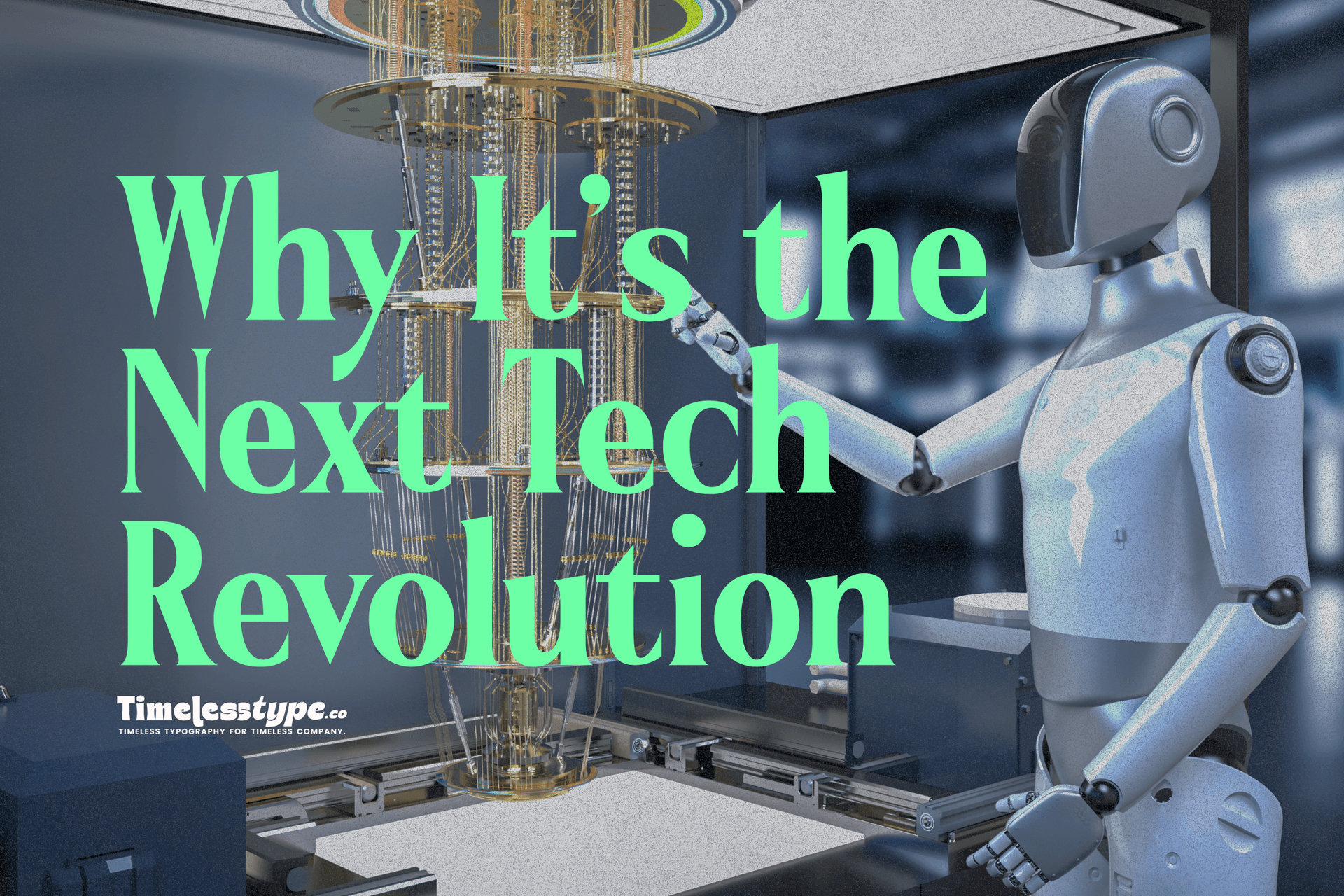
Table of Contents
- Introduction
- What is Quantum Computing?
- Key Concepts of Quantum Computing
- 1. Superposition
- 2. Entanglement
- 3. Quantum Interference
- 4. Decoherence
- Why Quantum Computing is Revolutionary
- Applications of Quantum Computing
- 1. Drug Discovery & Healthcare
- 2. Finance
- 3. Artificial Intelligence & Machine Learning
- 4. Cybersecurity
- 5. Climate Modeling & Sustainability
- 6. Logistics & Supply Chains
- Challenges of Quantum Computing
- Quantum Computing Today (2025)
- The Road to 2030 and Beyond
- Why It’s the Next Tech Revolution
- Conclusion
Quantum Computing Explained: Why It’s the Next Tech Revolution
Introduction
For decades, classical computers have powered everything from the internet to space exploration. But as problems become more complex — from simulating molecules to optimizing global supply chains — even the most advanced supercomputers struggle. Enter quantum computing, a technology that promises to revolutionize how we process information.
In 2025, quantum computing is moving from research labs into practical applications. Tech giants, startups, and governments are racing to harness its potential. But what exactly is quantum computing, and why is it considered the next big revolution in technology?
This article will break down what quantum computing is, how it works, its potential applications, and why it could reshape industries in the coming decades.
What is Quantum Computing?
Quantum computing is a new type of computation that uses principles of quantum mechanics — the science of the very small. Unlike classical computers, which process information in binary (0s and 1s), quantum computers use qubits that can exist in multiple states at once.
Classical Bit: Either 0 or 1.
Quantum Bit (Qubit): Can be 0, 1, or both simultaneously (superposition).
This allows quantum computers to process enormous amounts of data in parallel, solving problems much faster than classical machines.
Key Concepts of Quantum Computing
1. Superposition
A qubit can be in multiple states at once, enabling massive parallelism.
2. Entanglement
Qubits can be linked, meaning the state of one affects the other instantly. This creates powerful correlations.
3. Quantum Interference
Quantum states can interfere with each other, amplifying correct solutions and canceling incorrect ones.
4. Decoherence
Quantum states are fragile and easily disrupted by the environment. Building stable qubits is one of the biggest challenges.
Why Quantum Computing is Revolutionary
Exponential Speed – Can solve problems classical computers would take thousands of years to handle.
New Capabilities – Enables simulations and optimizations impossible with today’s machines.
Industry Disruption – From medicine to cybersecurity, quantum computing could change everything.
Scientific Breakthroughs – Opens doors to understanding complex natural systems.
Applications of Quantum Computing
1. Drug Discovery & Healthcare
Simulating molecules to design new drugs faster.
Personalized medicine through complex genetic modeling.
2. Finance
Portfolio optimization with massive datasets.
Faster risk analysis and fraud detection.
3. Artificial Intelligence & Machine Learning
Training AI models exponentially faster.
Quantum-enhanced optimization for better predictions.
4. Cybersecurity
Potential to break current encryption methods.
Development of quantum-safe cryptography.
5. Climate Modeling & Sustainability
Simulating global weather systems.
Optimizing renewable energy grids.
6. Logistics & Supply Chains
Optimizing routes for global shipping.
Reducing costs in manufacturing and transport.
Challenges of Quantum Computing
Hardware Stability: Qubits are fragile and require near-absolute-zero temperatures.
Error Correction: Quantum error rates are high compared to classical systems.
Scalability: Building quantum machines with thousands of stable qubits remains a hurdle.
Accessibility: Currently limited to specialized labs and cloud platforms.
Quantum Computing Today (2025)
IBM, Google, Microsoft, and Amazon lead in building quantum platforms.
Startups like Rigetti, IonQ, and PsiQuantum push innovation.
Governments invest billions into quantum research (US, China, EU).
Cloud Access: Developers can experiment with quantum algorithms via cloud services like IBM Quantum Experience.
The Road to 2030 and Beyond
By 2030, experts predict:
Quantum Advantage: Quantum computers outperform classical ones on practical problems.
Quantum Cloud Services: Accessible to businesses like today’s cloud computing.
New Industries: Entire sectors emerge around quantum applications.
Quantum-Safe World: Cryptography standards adapt to protect against quantum attacks.
Why It’s the Next Tech Revolution
Just as classical computers revolutionized the 20th century, quantum computing will transform the 21st.
Its potential impact spans healthcare, finance, climate, AI, and national security.
It represents not just faster computing, but a fundamentally new way of processing information.
Conclusion
Quantum computing is no longer science fiction. In 2025, it is emerging as one of the most disruptive technologies of our time. While challenges remain, its potential to transform industries and solve humanity’s biggest problems makes it the next great tech revolution.
The question is not if, but when quantum computing will reshape our world — and how prepared we are to harness its power responsibly.
.webp&w=1920&q=75&dpl=dpl_Gc2H6qw5qz6tftmNLm7EMoaFVtW7)
.webp&w=1920&q=75&dpl=dpl_Gc2H6qw5qz6tftmNLm7EMoaFVtW7)
.webp&w=1920&q=75&dpl=dpl_Gc2H6qw5qz6tftmNLm7EMoaFVtW7)
.webp&w=1920&q=75&dpl=dpl_Gc2H6qw5qz6tftmNLm7EMoaFVtW7)
.webp&w=1920&q=75&dpl=dpl_Gc2H6qw5qz6tftmNLm7EMoaFVtW7)
.webp&w=1920&q=75&dpl=dpl_Gc2H6qw5qz6tftmNLm7EMoaFVtW7)
.webp&w=1920&q=75&dpl=dpl_Gc2H6qw5qz6tftmNLm7EMoaFVtW7)
.webp&w=1920&q=75&dpl=dpl_Gc2H6qw5qz6tftmNLm7EMoaFVtW7)