
Lifestyle
Minimalist Living: How to Simplify Your Life and Find Peace
Insights, tutorials, and type notes from the Timeless Type studio.
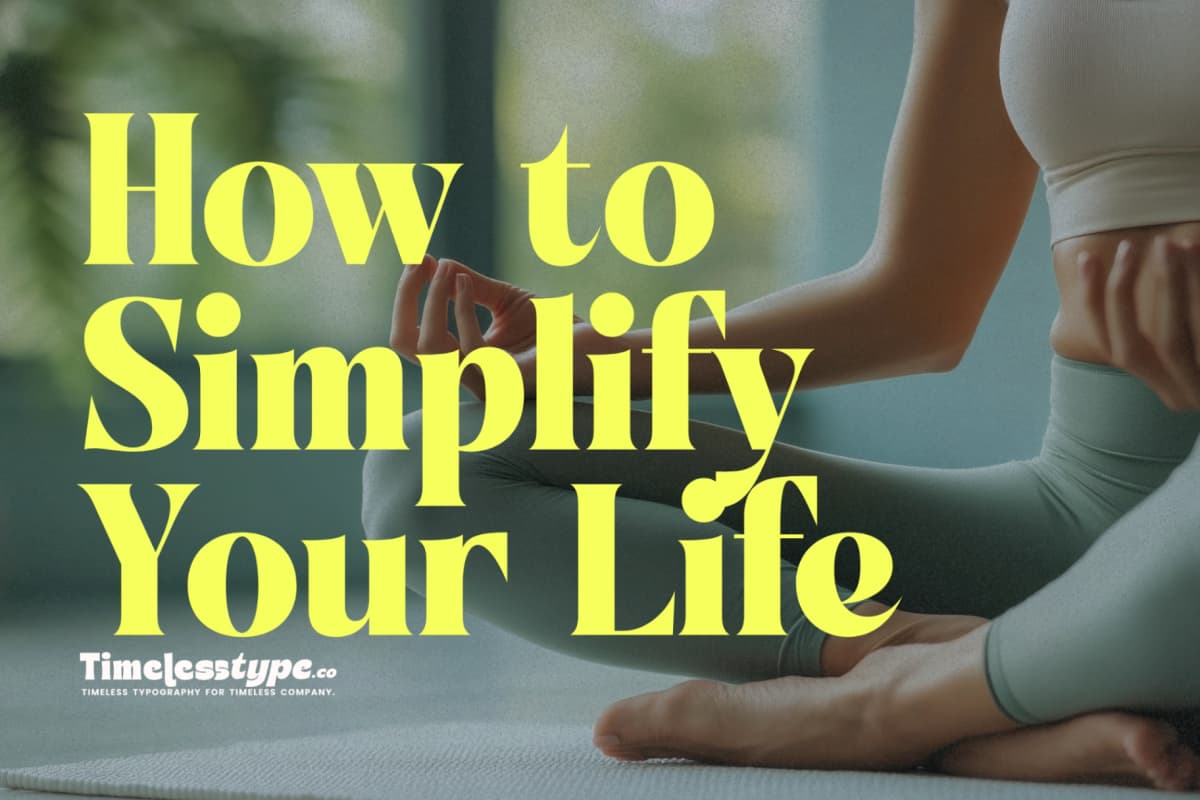
Table of Contents
- Introduction: The Beauty of Less
- 1. What Is Minimalist Living?
- The Core Principles of Minimalism
- 2. Why We Crave Simplicity
- The Cost of Too Much
- 3. The Benefits of a Minimalist Lifestyle
- A. Mental Clarity
- B. Financial Freedom
- C. Time and Energy
- D. Emotional Balance
- E. Environmental Impact
- 4. Step One: Declutter Your Space
- How to Begin
- Tips for Sustainable Decluttering
- 5. Step Two: Simplify Your Digital Life
- Digital Detox Steps
- 6. Step Three: Streamline Your Finances
- Practical Ways to Simplify Money
- 7. Step Four: Declutter Your Schedule
- Simplify Your Time
- 8. Step Five: Simplify Your Mind
- Mental Minimalism Practices
- 9. Step Six: Embrace Minimalism in Relationships
- How to Simplify Your Social Life
- 10. Step Seven: Redefine Success and Happiness
- Ask Yourself:
- 11. Step Eight: Focus on Experiences, Not Possessions
- Ways to Live Experience-First
- 12. Step Nine: Practice Mindful Consumption
- Before Buying, Ask:
- 13. Step Ten: Keep It Simple, Not Perfect
- How to Sustain Simplicity
- 14. The Emotional Side of Letting Go
- 15. Finding Peace in Simplicity
- Conclusion: The Freedom of Living Light
Minimalist Living: How to Simplify Your Life and Find Peace
Introduction: The Beauty of Less
We live in an age of more — more things, more noise, more pressure.
Our days are filled with endless to-do lists, cluttered spaces, and constant digital distractions.
Yet, despite having more than ever before, many of us feel overwhelmed, exhausted, and disconnected.
Minimalism offers an alternative.
It’s not about owning nothing — it’s about making room for what truly matters.
When you simplify your space, schedule, and mind, you discover that peace isn’t something you chase — it’s what remains when you let go of the unnecessary.
“Minimalism isn’t about having less. It’s about making space for more — more peace, more clarity, more life.”
1. What Is Minimalist Living?
Minimalism is a lifestyle centered around intentionality — choosing what adds value and letting go of what doesn’t.
It’s not just about decluttering your home; it’s about decluttering your entire life — your possessions, habits, relationships, and even thoughts.
The Core Principles of Minimalism
Intentionality: Every item, task, and commitment has a purpose.
Simplicity: Removing excess to reveal what’s essential.
Freedom: Breaking free from material and mental clutter.
Mindfulness: Living consciously, not reactively.
Minimalism is not deprivation — it’s clarity in action.
2. Why We Crave Simplicity
The modern world thrives on consumption.
We are constantly told that happiness comes from the next purchase, promotion, or possession.
But the more we accumulate, the heavier life feels.
The Cost of Too Much
Cluttered Homes: More cleaning, organizing, and stress.
Cluttered Minds: Too many choices lead to decision fatigue.
Cluttered Schedules: No time for rest or reflection.
That’s why minimalism feels revolutionary — it gives us permission to stop chasing and start being.
“The greatest wealth is to live content with little.” — Plato
3. The Benefits of a Minimalist Lifestyle
Minimalism isn’t just aesthetic — it transforms your well-being, focus, and finances.
A. Mental Clarity
Less visual and mental clutter reduces anxiety and improves focus.
You start thinking more clearly and living more intentionally.
B. Financial Freedom
You spend less on things you don’t need — and start saving or investing in experiences that matter.
C. Time and Energy
With fewer distractions, you reclaim hours each week for creativity, rest, or loved ones.
D. Emotional Balance
When you detach your identity from possessions, your happiness becomes internal, not external.
E. Environmental Impact
Consuming less reduces waste and supports sustainable living.
Minimalism brings balance — not by adding, but by subtracting.
4. Step One: Declutter Your Space
Physical clutter often mirrors mental clutter.
Start your minimalist journey by simplifying your surroundings.
How to Begin
Start Small: Choose one area — a drawer, desk, or closet.
Follow the “Keep, Donate, Discard” Method:
Keep only what’s useful or meaningful.
Donate what others can use.
Discard what no longer serves a purpose.
Ask This Question:
“Does this item add value to my life?”
Tips for Sustainable Decluttering
Avoid guilt — focus on progress, not perfection.
Organize what remains in clean, functional ways.
Don’t declutter just to buy new “minimalist” things.
“Have nothing in your home that you do not know to be useful or believe to be beautiful.” — William Morris
5. Step Two: Simplify Your Digital Life
Your devices may be more cluttered than your home.
Emails, notifications, and apps constantly compete for your attention.
Digital Detox Steps
Unsubscribe from unnecessary newsletters.
Turn off non-essential notifications.
Delete unused apps or duplicate files.
Limit screen time — especially social media.
Create “tech-free” hours or zones in your home.
Reclaiming digital silence restores your focus — and peace of mind.
6. Step Three: Streamline Your Finances
Financial minimalism is about spending with awareness.
It’s not how much you earn — it’s how intentionally you use it.
Practical Ways to Simplify Money
Track expenses for a month.
Identify non-essential spending habits.
Automate savings and bill payments.
Invest in quality over quantity.
Practice the “one in, one out” rule for purchases.
When your money aligns with your values, it becomes a tool for freedom — not stress.
7. Step Four: Declutter Your Schedule
Busyness has become a modern status symbol — but constant activity isn’t the same as productivity.
Simplify Your Time
Audit your week: What truly matters, and what drains you?
Say “no” to commitments that don’t align with your priorities.
Block time for rest and reflection.
Create white space — unscheduled time for spontaneity.
Balance is not about doing everything — it’s about doing the right things well.
“If it’s not a hell yes, it’s a no.” — Greg McKeown, Essentialism
8. Step Five: Simplify Your Mind
True minimalism begins when you quiet your inner world.
When thoughts slow down, peace rises naturally.
Mental Minimalism Practices
Meditate: Even five minutes a day makes a difference.
Journal: Write down worries to clear mental clutter.
Practice Gratitude: Focus on what you already have.
Let Go: Release control over things you can’t change.
Your mind doesn’t need more input — it needs more stillness.
9. Step Six: Embrace Minimalism in Relationships
Not every relationship nurtures you — and that’s okay.
Minimalism in relationships means choosing quality over quantity.
How to Simplify Your Social Life
Spend time with people who uplift and inspire you.
Set healthy boundaries.
Limit exposure to negativity and gossip.
Be fully present — listen deeply, not distractedly.
The people you keep close shape your peace.
Choose intentionally.
10. Step Seven: Redefine Success and Happiness
Society tells us success means more — more money, more followers, more recognition.
But true happiness often lives in enough.
Ask Yourself:
What does “enough” mean to me?
Am I chasing goals that align with my values or with others’ expectations?
What would my life look like if I already felt fulfilled?
When you define success on your own terms, you stop running — and start living.
“Happiness is not having what you want. It’s wanting what you have.” — Unknown
11. Step Eight: Focus on Experiences, Not Possessions
Memories age well — things don’t.
Minimalists prioritize experiences that enrich the heart, not the closet.
Ways to Live Experience-First
Travel light — physically and emotionally.
Create rituals with family and friends.
Learn new skills instead of collecting things.
Celebrate moments, not milestones.
The more you experience, the less you crave — because presence is the ultimate luxury.
12. Step Nine: Practice Mindful Consumption
Every purchase is a vote — for the kind of world you want to live in.
Mindful consumption isn’t about restriction; it’s about awareness.
Before Buying, Ask:
Do I need this?
Will I use it regularly?
Can I borrow or repurpose instead?
Will this still matter a month from now?
Buying less doesn’t mean missing out — it means making space for what truly counts.
13. Step Ten: Keep It Simple, Not Perfect
Minimalism isn’t a destination — it’s an ongoing practice.
Some days you’ll feel grounded, others cluttered again — and that’s fine.
How to Sustain Simplicity
Regularly review your space and habits.
Avoid comparing your journey to others’.
Celebrate small progress.
Stay flexible — let minimalism adapt to your evolving life.
Minimalism is a mindset, not a metric.
Its goal isn’t perfection — it’s peace.
“Simplicity is the ultimate sophistication.” — Leonardo da Vinci
14. The Emotional Side of Letting Go
Letting go isn’t always easy.
Some things carry memories, meaning, and emotions.
But remember — keeping everything isn’t honoring your past; it’s carrying it.
You can love a memory without keeping the object.
Letting go is an act of trust — trusting that what truly matters will always stay with you, even without physical reminders.
15. Finding Peace in Simplicity
When you declutter your home, mind, and priorities, you begin to notice the subtle joys of life — morning light, deep conversations, moments of silence.
Peace doesn’t arrive from adding — it blooms when you subtract.
Minimalism teaches us that we don’t need more to live fully — we just need to live more consciously.
“The best things in life aren’t things.”
Conclusion: The Freedom of Living Light
Minimalism isn’t about sacrifice — it’s about freedom.
Freedom from the noise, from comparison, from the weight of “too much.”
It’s an invitation to slow down, breathe deeply, and reconnect with what’s real — love, purpose, and peace.
In simplifying your life, you don’t lose anything of value.
You make room for everything that truly matters.
So take the first step — one drawer, one day, one decision at a time.
You’ll be amazed how light life feels when you finally stop carrying what you don’t need.
Related
Tags
Browse similar work by purpose and style.
.webp&w=1200&q=75)
.webp&w=1200&q=75)
.webp&w=1200&q=75)
.webp&w=1200&q=75)
.webp&w=1200&q=75)
.webp&w=1200&q=75)
.webp&w=1200&q=75)