
Lifestyle
Mindful Living: How to Stay Present in a Digital World
Insights, tutorials, and type notes from the Timeless Type studio.
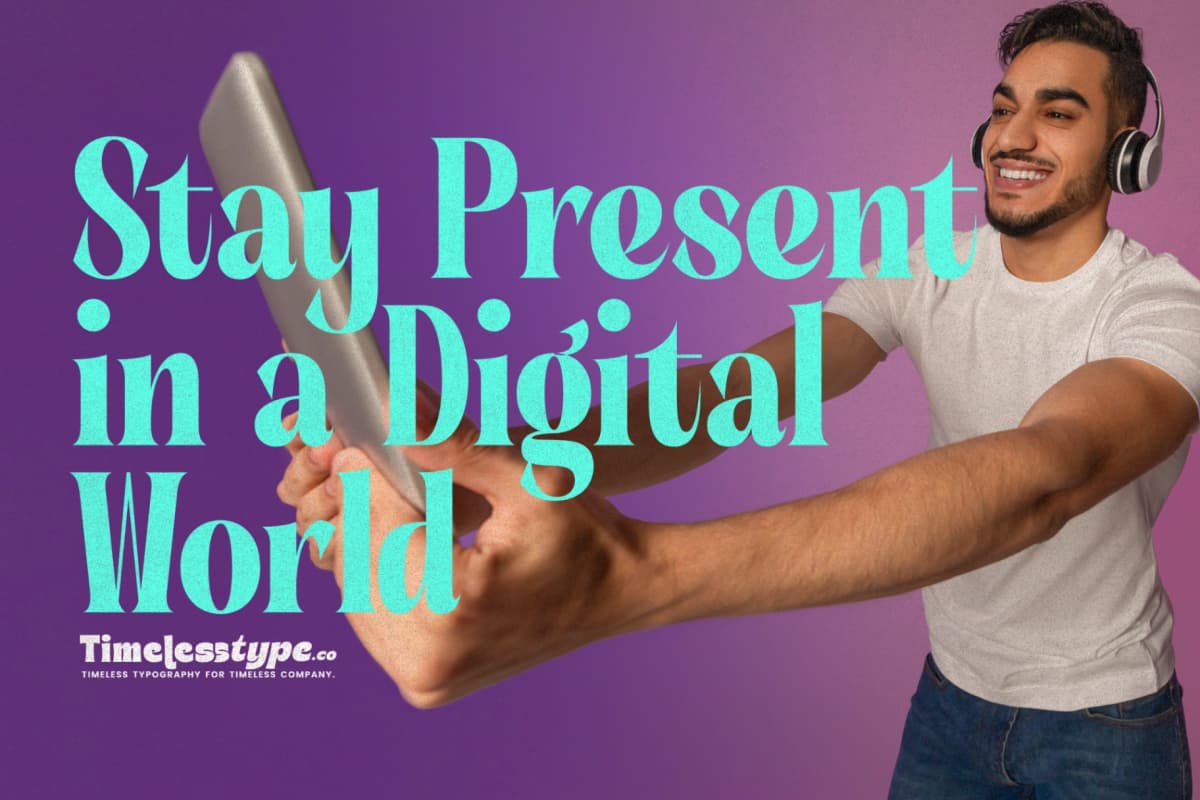
Table of Contents
- Introduction: When the World Moves Faster Than Your Mind
- 1. What Mindful Living Really Means
- 2. The Cost of Distraction: How the Digital Age Hijacks Your Focus
- The result:
- 3. Why Being Present Matters More Than Ever
- 4. The Myth of Multitasking: How It Damages Mindfulness
- 5. Practical Steps to Cultivate Mindful Living in a Digital World
- 1️⃣ Start Your Day Intentionally (Not Digitally)
- 2️⃣ Schedule Tech-Free Moments
- 3️⃣ Practice the 5-Sense Grounding Technique
- 4️⃣ Turn Routine into Ritual
- 5️⃣ Breathe — The Simplest, Most Overlooked Practice
- 6️⃣ Curate Your Digital Space
- 7️⃣ Practice Mindful Listening
- 8️⃣ Journal or Reflect Daily
- 9️⃣ Redefine Productivity
- 10️⃣ End Your Day With Stillness
- 6. The Role of Mindfulness in Emotional Health
- 7. Bringing Mindfulness into Work and Digital Spaces
- At Work
- Online
- 8. The Science Behind Mindful Living
- 9. Common Myths About Mindful Living
- 10. The Deep Reward: Freedom From Auto-Pilot Living
- Conclusion: Choosing Awareness Over Automation
Mindful Living: How to Stay Present in a Digital World
Introduction: When the World Moves Faster Than Your Mind
We live in a time when our minds rarely get the chance to rest.
Every second, something is asking for our attention — notifications, emails, scrolling feeds, the endless digital noise that blurs one day into the next.
We call it “connection,” but more often, it feels like overload.
We multitask, refresh, reply, react — yet somehow, feel more detached from ourselves than ever.
That’s why mindful living isn’t just a wellness trend anymore.
It’s a survival skill — a way to stay present, grounded, and human in an age built to pull you away from all three.
1. What Mindful Living Really Means
Mindfulness is not about living slowly or rejecting technology.
It’s about being fully aware — of where you are, what you’re doing, and how you feel, without judgment.
It’s learning to experience life as it happens, instead of letting it rush past while your mind is already somewhere else.
Mindful living isn’t escape. It’s engagement — intentional attention to what matters right now.
“Mindfulness is the art of being fully awake to life — not half-asleep through distraction.”
2. The Cost of Distraction: How the Digital Age Hijacks Your Focus
Our attention has become the new currency — and tech companies are the ones spending it.
The average person checks their phone around 150 times a day.
We consume more content in one week than people did in an entire year just two decades ago.
Constant notifications trigger dopamine loops — the same cycle that fuels addiction.
Every swipe, ping, and scroll fragments our focus a little more.
And when focus goes, so does presence — the ability to be fully here, with yourself or the people around you.
The result:
We respond more but connect less.
We consume more but absorb less.
We communicate constantly but feel lonelier than ever.
“We’re drowning in information, but starving for meaning.” — John Naisbitt
3. Why Being Present Matters More Than Ever
Presence is more than awareness — it’s the foundation of everything that gives life quality.
When you’re present:
You listen more deeply.
You make better decisions.
You enjoy moments instead of chasing the next one.
You reduce anxiety, because you stop living in imagined futures or recycled pasts.
Presence is peace — not because it eliminates chaos, but because it teaches you how to move through it consciously.
4. The Myth of Multitasking: How It Damages Mindfulness
We wear multitasking like a badge of honor.
But neuroscience proves what mindfulness practitioners have known for centuries:
The brain can’t truly do two things at once — it just switches rapidly, losing accuracy and emotional depth each time.
Constant multitasking increases:
Stress hormones
Fatigue
Reduced memory
Decreased empathy
You think you’re being productive, but you’re actually just busy being busy.
Mindful living replaces multitasking with monotasking — giving one thing your full attention, one moment at a time.
That’s how quality replaces quantity — in work, in relationships, in life.
5. Practical Steps to Cultivate Mindful Living in a Digital World
Mindfulness doesn’t require a yoga mat, a retreat, or an app.
It starts with simple awareness in the ordinary moments of your day.
Here’s how you can bring it back — realistically, sustainably, and without guilt.
1️⃣ Start Your Day Intentionally (Not Digitally)
Your first 10 minutes set the tone for your mind.
Instead of reaching for your phone, take a few breaths, stretch, or write one line in a journal.
Ask: “What do I want to feel today?” instead of “What do I need to do?”
Let your first thought be your own, not someone else’s update.
Small change, big clarity.
2️⃣ Schedule Tech-Free Moments
You don’t have to quit your devices — just give your mind room to breathe.
Try:
No screens during meals.
No phone for the first and last 30 minutes of your day.
One offline day each week — walk, cook, talk, or simply rest.
It’s not about deprivation — it’s about reclaiming your attention.
3️⃣ Practice the 5-Sense Grounding Technique
When you feel overwhelmed or distracted:
Name 5 things you can see
4 things you can touch
3 things you can hear
2 things you can smell
1 thing you can taste
This pulls you out of mental noise and back into your body — the present moment, where peace lives.
4️⃣ Turn Routine into Ritual
Mindfulness thrives in repetition.
Turn everyday moments into anchors of awareness:
Sip coffee slowly, tasting it fully.
Feel the water while washing your hands.
Walk without headphones sometimes.
When you treat ordinary actions with intention, they stop being chores — they become moments of quiet joy.
5️⃣ Breathe — The Simplest, Most Overlooked Practice
Breathing is your built-in reset button.
When you focus on your breath, you train your mind to stay anchored to the present.
Try this 3-minute mindful reset:
Inhale for 4 seconds
Hold for 4
Exhale for 4
Pause for 4
Repeat.
You’ll notice your body relax and your thoughts slow — awareness returning, naturally.
6️⃣ Curate Your Digital Space
Don’t let your devices dictate your mindset — design them intentionally.
Turn off non-essential notifications.
Unfollow accounts that drain you or fuel comparison.
Set “Focus” modes for work, rest, and reflection.
Replace mindless apps with mindful ones — journaling, meditation, or nature sounds.
Your phone isn’t the problem — your relationship with it is.
“Technology should serve your life, not steal it.”
7️⃣ Practice Mindful Listening
In a digital age, attention is the highest form of love.
When someone speaks — listen not to reply, but to understand.
Put the phone down.
Look into their eyes.
Let silence fill the gaps.
This simple act rebuilds depth in relationships that the online world often dilutes.
8️⃣ Journal or Reflect Daily
Writing clears the clutter.
It’s not about being poetic — it’s about processing your thoughts instead of letting them loop endlessly.
Ask yourself before bed:
What made me smile today?
What drained me?
What am I grateful for?
What can I let go of before tomorrow?
Mindfulness isn’t just about noticing the world — it’s about noticing yourself.
9️⃣ Redefine Productivity
Productivity without presence is just motion.
You’re not a machine — you’re a mind and a heart.
Be productive in alignment, not in exhaustion.
Work deeply, rest fully, and measure success by impact — not hours logged.
10️⃣ End Your Day With Stillness
Before sleep, close your eyes for one minute and replay your day — slowly.
Notice three things that went right, and one thing you’ll do better tomorrow.
No self-judgment. Just awareness.
That’s how days turn into growth, not guilt.
6. The Role of Mindfulness in Emotional Health
Mindful living isn’t just about presence — it’s about peace.
It improves focus, lowers anxiety, and strengthens your emotional resilience.
When you’re mindful:
You respond, not react.
You notice emotions before they control you.
You learn that feelings aren’t facts — they’re weather patterns passing through.
This emotional clarity protects your mental health — especially in a digital culture that thrives on outrage and comparison.
“Awareness is the first step toward freedom.”
7. Bringing Mindfulness into Work and Digital Spaces
You don’t need to choose between mindfulness and modern life — you can integrate them.
At Work
Take 1-minute breaks to stretch and breathe between tasks.
Do one thing at a time — and do it well.
Practice gratitude at the end of each day — one success, one lesson.
Online
Before posting, ask: “Why am I sharing this?”
Before reacting, ask: “What am I feeling right now?”
Before scrolling, ask: “What am I looking for?”
When you bring consciousness to your clicks, you turn the internet from a distraction into a tool.
8. The Science Behind Mindful Living
Studies have shown that mindfulness:
Reduces cortisol (the stress hormone)
Improves sleep quality
Boosts memory and creativity
Increases empathy and compassion
Regular practice literally rewires your brain — strengthening the prefrontal cortex (focus and decision-making) and calming the amygdala (fear and stress response).
Mindfulness isn’t just philosophy — it’s neuroscience in action.
9. Common Myths About Mindful Living
Let’s debunk a few misconceptions:
MythTruth“Mindfulness means being calm all the time.”No — it means being aware, even when you’re not calm.“It takes hours of meditation daily.”Even 5 conscious minutes can shift your state.“Mindfulness is only for spiritual people.”It’s for anyone who wants clarity and balance.“You must quit technology.”You just need to use it mindfully — not mindlessly.
Mindfulness isn’t a ritual; it’s a return — to presence, purpose, and peace.
10. The Deep Reward: Freedom From Auto-Pilot Living
When you live mindfully, life slows down — not because time changes, but because you do.
You start tasting food again.
You start hearing the quiet again.
You start realizing that ordinary moments were extraordinary all along.
You stop chasing “someday” and start living today.
That’s not detachment — it’s awakening.
And in a digital world built to consume your attention, mindfulness is how you reclaim your humanity.
“The present moment is the only place where life actually happens.”
Conclusion: Choosing Awareness Over Automation
You can’t stop the digital world from spinning faster — but you can choose how deeply you live within it.
Mindfulness won’t make life perfect; it will make it real.
So pause.
Breathe.
Look up from the screen.
Because the world — the real one — is still here, waiting for you to notice it again.
Related
Tags
Browse similar work by purpose and style.
.webp&w=1200&q=75)
.webp&w=1200&q=75)
.webp&w=1200&q=75)
.webp&w=1200&q=75)
.webp&w=1200&q=75)
.webp&w=1200&q=75)
.webp&w=1200&q=75)