
Lifestyle
Mindful Living: How to Be Present in Every Moment
Insights, tutorials, and type notes from the Timeless Type studio.
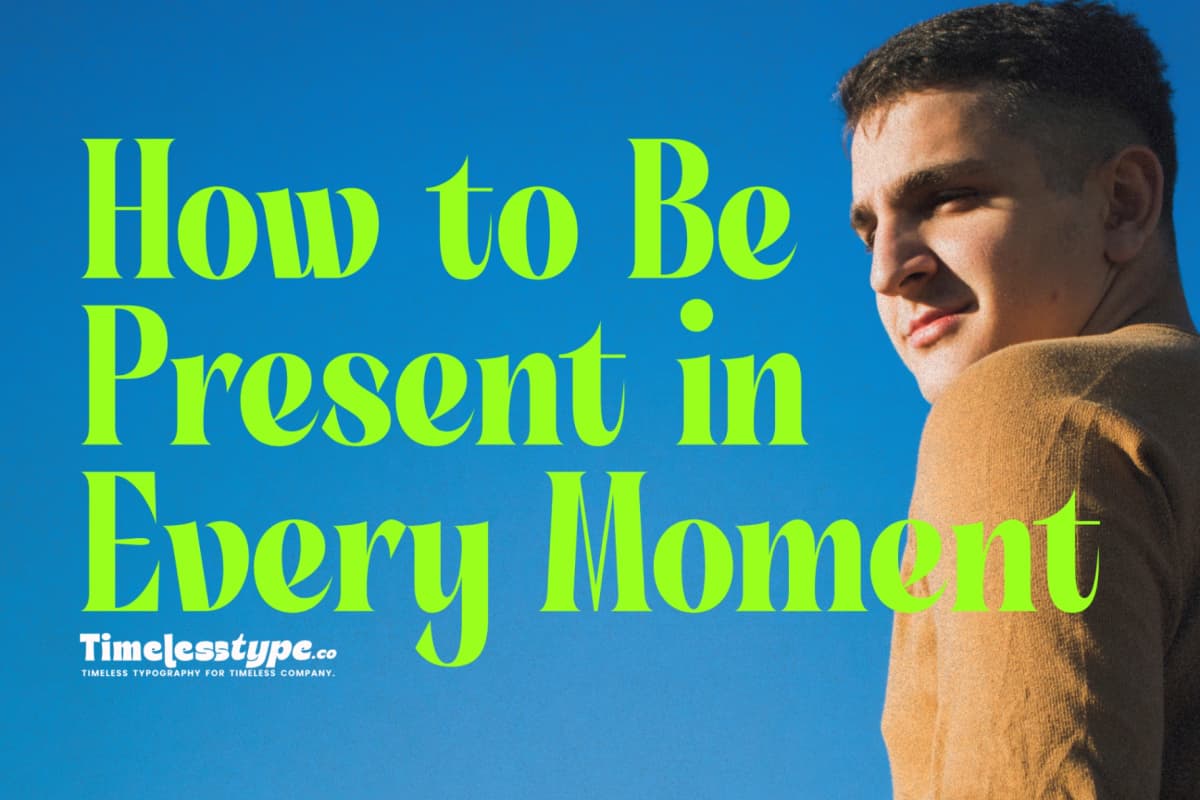
Table of Contents
- 1. What Mindful Living Really Means
- 2. The Cost of Distraction
- 3. The Science Behind Mindfulness
- 4. Start With the Breath
- Try This Simple Practice:
- 5. Be Where Your Feet Are
- 6. Practice Gratitude Daily
- 7. Listen More, React Less
- Mindful Listening Means:
- 8. Slow Down Your Routines
- Try Mindful Versions of Ordinary Activities:
- 9. Limit Digital Noise
- Practical Digital Detox Tips:
- 10. Accept, Don’t Judge
- 11. Be Kind to Yourself
- 12. Find Mindful Spaces
- Ideas:
- 13. Embrace Impermanence
- 14. Turn Mindfulness Into a Habit
- How to Build the Habit:
- 15. Final Thought: Presence Is the Greatest Gift
Mindful Living: How to Be Present in Every Moment
Life moves fast.
We rush through mornings, multitask through days, and fall asleep thinking about tomorrow.
We check our phones during meals, our minds wander during conversations, and before we know it — days, months, even years pass in a blur.
In a world that glorifies speed and productivity, mindful living is an act of quiet rebellion.
It’s the choice to slow down, to breathe, and to truly experience life — not just move through it.
Mindfulness isn’t about escaping the world; it’s about being here for it.
Here’s how to bring more presence, peace, and clarity into every moment of your life.
1. What Mindful Living Really Means
Mindful living is the art of being fully present — aware of your thoughts, emotions, and surroundings without judgment.
It’s about noticing life as it unfolds, rather than constantly reliving the past or worrying about the future.
You can’t control every moment, but you can experience every moment.
“Mindfulness is the miracle by which we master and restore ourselves.” — Thich Nhat Hanh
When you live mindfully, even ordinary moments — sipping coffee, walking outside, breathing deeply — become extraordinary.
Because presence turns routine into reverence.
2. The Cost of Distraction
Modern life thrives on distraction.
Notifications, endless scrolling, and the pressure to always do more have made “busy” the default mode of living.
But distraction has a cost:
It fragments your attention.
It drains your energy.
It steals your joy.
When you’re never fully here, you miss what matters most — connection, clarity, and peace.
Mindfulness invites you to pause, to reclaim your attention, and to remember that you are not your distractions.
3. The Science Behind Mindfulness
Mindfulness isn’t just a spiritual concept — it’s a science-backed practice.
Studies from Harvard, Stanford, and Oxford have shown that mindfulness:
Reduces stress and anxiety.
Improves focus and memory.
Lowers blood pressure.
Increases emotional regulation and compassion.
In brain scans, regular mindfulness practitioners show thicker gray matter in regions linked to awareness and empathy — and less activity in the amygdala, the brain’s fear center.
In short: mindfulness doesn’t just change how you feel — it changes how your brain functions.
4. Start With the Breath
The breath is the simplest and most powerful anchor to the present.
It’s always with you, always available, and always honest.
When your mind wanders, your breath brings you back.
Just notice it — the inhale, the exhale, the gentle rhythm of life moving through you.
Try This Simple Practice:
Sit comfortably and close your eyes.
Inhale slowly for 4 counts.
Hold for 2 counts.
Exhale gently for 6 counts.
Repeat for 2–3 minutes.
That’s mindfulness — awareness through presence, one breath at a time.
“Feelings come and go like clouds in a windy sky. Conscious breathing is my anchor.” — Thich Nhat Hanh
5. Be Where Your Feet Are
One of the simplest yet most profound mindfulness reminders:
Be where your feet are.
If you’re eating — just eat.
If you’re working — just work.
If you’re talking — truly listen.
When you focus on what’s in front of you, you bring depth to your actions — and peace to your mind.
Multitasking feels productive, but mindfulness makes you effective.
You don’t need to do more. You just need to be there for what you’re already doing.
6. Practice Gratitude Daily
Gratitude is mindfulness in motion.
It shifts your focus from what’s missing to what’s already here.
Start small:
Notice the warmth of sunlight on your face.
The smell of morning coffee.
The sound of someone’s laughter.
Write down three things you’re grateful for each day — not as a ritual, but as a reminder.
Gratitude turns ordinary days into blessings.
It’s impossible to be anxious and thankful at the same time.
7. Listen More, React Less
Most people listen to respond, not to understand.
But mindful listening transforms relationships.
When you listen deeply — without planning your reply, without interrupting — you give others a gift: your presence.
Mindful Listening Means:
Putting away distractions.
Making eye contact.
Noticing tone and emotion, not just words.
Responding with empathy, not advice.
When you truly hear others, you begin to hear yourself more clearly, too.
8. Slow Down Your Routines
You don’t need a retreat or meditation cushion to live mindfully.
You can begin right where you are — in your daily habits.
Try Mindful Versions of Ordinary Activities:
Eating: Chew slowly, notice flavors and textures.
Walking: Feel your feet touching the ground.
Showering: Notice the water’s warmth, the scent of soap.
Driving: Focus on the road, not your phone or worries.
Mindfulness transforms the mundane into meditation.
It’s not about doing something new — it’s about doing familiar things with awareness.
9. Limit Digital Noise
The digital world is designed to grab your attention — not protect it.
To live mindfully, you need to create boundaries between connection and consumption.
Practical Digital Detox Tips:
Disable non-essential notifications.
Avoid checking your phone first thing in the morning.
Set “screen-free” hours — especially before bed.
Follow fewer accounts; follow more meaning.
Technology should serve you, not own you.
Reclaim your focus — one notification at a time.
10. Accept, Don’t Judge
Mindfulness isn’t about controlling your thoughts — it’s about observing them.
When you notice anxiety, boredom, or frustration, resist the urge to label them as “bad.”
Just say to yourself: “This is what’s here right now.”
Acceptance doesn’t mean approval — it means awareness without resistance.
And that simple shift — from judgment to curiosity — creates peace.
“Whatever the present moment contains, accept it as if you had chosen it.” — Eckhart Tolle
11. Be Kind to Yourself
Living mindfully includes compassion — especially toward yourself.
The world can be harsh; your mind doesn’t have to be.
When you make mistakes, miss goals, or feel scattered, don’t criticize yourself — comfort yourself.
Speak to yourself the way you’d speak to someone you love.
Self-compassion builds emotional resilience — and makes mindfulness sustainable.
12. Find Mindful Spaces
Environment influences awareness.
Create small spaces that encourage calm, even in busy surroundings.
Ideas:
A corner with a candle, book, or plant.
A park bench where you can sit quietly.
A clutter-free desk for focused work.
Mindfulness isn’t just an inner state — it’s a relationship between your mind and environment.
Design spaces that remind you to breathe.
13. Embrace Impermanence
Everything changes — the seasons, relationships, emotions, even you.
Instead of fearing change, mindfulness teaches you to embrace it.
When you realize that nothing lasts forever, you stop clinging and start appreciating.
Every ending carries a beginning.
Every breath in eventually becomes a breath out.
Let impermanence soften you, not scare you.
It’s the rhythm of life — and awareness of it is the essence of peace.
14. Turn Mindfulness Into a Habit
Consistency matters more than intensity.
You don’t need hours of meditation — just moments of awareness woven through your day.
How to Build the Habit:
Anchor mindfulness to existing routines (e.g., brushing teeth, walking, cooking).
Use reminders — sticky notes, alarms, or apps like Headspace, Calm, or Insight Timer.
Celebrate small wins — one mindful breath counts.
Over time, mindfulness becomes second nature — not something you do, but how you live.
15. Final Thought: Presence Is the Greatest Gift
You can’t control the past or predict the future — but you can fully live the present.
And in doing so, you reclaim what technology, busyness, and worry often steal: your peace.
Mindful living isn’t about perfection or constant calm.
It’s about awareness — returning to yourself, moment by moment, breath by breath.
When you start paying attention, you realize life has always been beautiful — you just needed to slow down enough to see it.
“The present moment is filled with joy and happiness. If you are attentive, you will see it.” — Thich Nhat Hanh
Be here.
Now.
Because this — this breath, this moment — is all you ever truly have.
Related
Tags
Browse similar work by purpose and style.
.webp&w=1200&q=75)
.webp&w=1200&q=75)
.webp&w=1200&q=75)
.webp&w=1200&q=75)
.webp&w=1200&q=75)
.webp&w=1200&q=75)
.webp&w=1200&q=75)