


.jpg&w=256&q=75&dpl=dpl_Gc2H6qw5qz6tftmNLm7EMoaFVtW7)
.jpg&w=256&q=75&dpl=dpl_Gc2H6qw5qz6tftmNLm7EMoaFVtW7)
.webp&w=256&q=75&dpl=dpl_Gc2H6qw5qz6tftmNLm7EMoaFVtW7)
.webp&w=256&q=75&dpl=dpl_Gc2H6qw5qz6tftmNLm7EMoaFVtW7)



Technology
How Emerging Technologies Are Empowering Small Businesses in 2025
Insights, tutorials, and type notes from the Timeless Type studio.
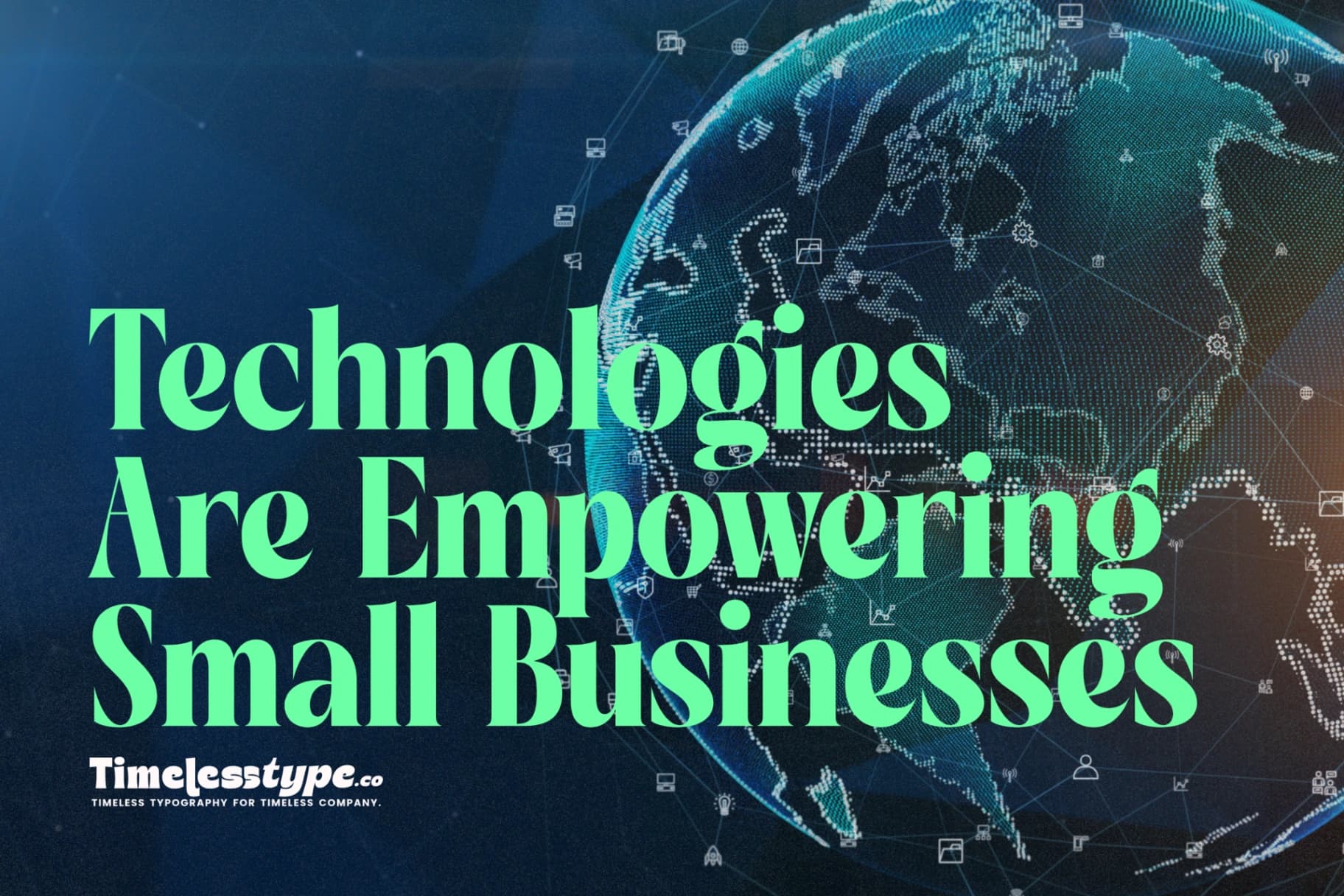
Table of Contents
- 1. The Democratization of Technology
- Key factors driving this shift:
- 2. Artificial Intelligence as a Business Partner
- How AI empowers small businesses:
- 3. Automation for Efficiency and Growth
- Examples of automation in 2025:
- 4. Cloud Computing: The Great Equalizer
- Benefits in 2025:
- 5. Digital Payments and Fintech Innovation
- Fintech innovations driving the change:
- 6. E-Commerce and the Rise of the Global Microbrand
- Emerging technologies fueling this shift:
- 7. Social Media and the Power of Digital Storytelling
- How small businesses use social media in 2025:
- 8. Cybersecurity for Small Businesses
- In 2025, small businesses are investing in:
- 9. The Internet of Things (IoT) for Operational Intelligence
- Examples in 2025:
- 10. 5G Connectivity: Speeding Up Innovation
- Advantages:
- 11. Generative AI and Content Creation
- Use cases:
- 12. Data Analytics for Smarter Decision-Making
- Tools in 2025:
- 13. Green Tech and Sustainable Innovation
- How small businesses use green tech:
- 14. Remote Work and Global Collaboration
- Tools driving this shift:
- 15. Customer Experience and AI Personalization
- Key innovations:
- 16. Blockchain for Transparency and Trust
- Applications:
- 17. The Rise of No-Code and Low-Code Platforms
- Examples:
- 18. AI-Powered HR and Talent Management
- AI-driven HR tools:
- 19. The Integration of AR and VR in Training and Marketing
- Use cases:
- 20. The Future Is Small — and Smart
How Emerging Technologies Are Empowering Small Businesses in 2025
The business world in 2025 is being reshaped by a wave of technological innovation that’s no longer reserved for big corporations.
Artificial intelligence, automation, cloud computing, and data-driven tools are now more accessible, affordable, and adaptable than ever — putting small businesses in a position of power like never before.
What used to take teams of specialists and massive budgets can now be done by startups and local entrepreneurs with smart digital tools and a vision for growth.
Here’s how emerging technologies are empowering small businesses in 2025, driving efficiency, innovation, and resilience in a rapidly changing global economy.
1. The Democratization of Technology
In previous decades, technology innovation favored big enterprises with deep pockets.
Now, thanks to cloud computing, AI-as-a-Service, and no-code tools, small businesses can access the same capabilities at a fraction of the cost.
Key factors driving this shift:
Subscription-based pricing models: Affordable, scalable solutions (e.g., SaaS platforms).
Open-source ecosystems: Tools and frameworks that accelerate innovation.
User-friendly interfaces: No need for technical expertise to deploy powerful tech.
This democratization of technology has made agility the new competitive advantage — and small businesses are leading the charge.
2. Artificial Intelligence as a Business Partner
AI is no longer futuristic — it’s foundational.
In 2025, AI tools have become the backbone of small business operations, helping with everything from marketing and sales to logistics and customer service.
How AI empowers small businesses:
Data-driven insights: Tools like ChatGPT, Jasper, and Copilot analyze data and generate actionable strategies.
Customer support automation: AI chatbots provide instant, personalized responses 24/7.
Predictive analytics: Small retailers forecast demand and optimize inventory with AI algorithms.
Marketing personalization: AI tailors messages and offers based on individual behavior.
AI doesn’t replace entrepreneurs — it enhances their decision-making power and allows them to compete on a global scale.
3. Automation for Efficiency and Growth
Automation has become the silent engine of productivity for small businesses.
What once required entire departments can now be handled automatically — freeing entrepreneurs to focus on strategy and creativity.
Examples of automation in 2025:
Accounting & finance: Tools like QuickBooks and Xero automate bookkeeping and reporting.
Email & marketing campaigns: Platforms like HubSpot or Mailchimp send personalized messages at scale.
E-commerce operations: Automated order tracking, fulfillment, and inventory management.
Workflow optimization: Tools like Zapier or Make (formerly Integromat) connect apps and eliminate manual tasks.
Automation is more than convenience — it’s a force multiplier, allowing small teams to operate like large corporations.
4. Cloud Computing: The Great Equalizer
Cloud computing continues to be a game-changer for small businesses, offering flexibility, scalability, and cost efficiency.
Benefits in 2025:
Remote collaboration: Teams work seamlessly from anywhere using Google Workspace, Slack, and Microsoft Teams.
Scalable infrastructure: Businesses grow without expensive hardware investments.
Data security: Cloud platforms now provide enterprise-grade protection by default.
Accessibility: Small businesses access advanced analytics and storage with pay-as-you-go models.
Cloud computing has effectively erased geographic limitations, allowing even the smallest business to go global.
5. Digital Payments and Fintech Innovation
In 2025, digital finance has become mainstream — and it’s empowering small business owners like never before.
Fintech innovations driving the change:
Instant digital payments: Services like Stripe, PayPal, and Square simplify transactions.
Smart accounting: AI-powered tools categorize expenses and optimize taxes.
Microloans and crowdfunding: Alternative financing platforms help startups raise capital faster.
Blockchain-based security: Transparent and tamper-proof transactions reduce fraud.
Financial technology has made it easier for small businesses to manage cash flow, attract investment, and build trust through transparency.
6. E-Commerce and the Rise of the Global Microbrand
The internet has turned small shops into global brands.
In 2025, even one-person e-commerce businesses can reach customers in multiple countries through integrated digital ecosystems.
Emerging technologies fueling this shift:
AR & VR shopping experiences: Virtual try-ons and immersive showrooms enhance online retail.
AI-driven product recommendations: Personalized suggestions improve conversion rates.
Global logistics automation: Cross-border shipping and customs managed by smart software.
Voice commerce: Customers place orders via smart assistants.
E-commerce tools empower small businesses to act big — but stay authentically local and personal.
7. Social Media and the Power of Digital Storytelling
Social platforms are no longer just for promotion — they’re now community-building engines.
How small businesses use social media in 2025:
AI-assisted content creation: Tools like Canva and Runway AI simplify professional branding.
Micro-influencer partnerships: Niche collaborations drive authentic engagement.
Short-form video dominance: TikTok, YouTube Shorts, and Instagram Reels remain key storytelling platforms.
Social commerce: Direct in-app shopping transforms followers into buyers.
Social media helps small businesses build relationships, not just reach.
8. Cybersecurity for Small Businesses
With increased digitalization comes increased risk.
Cybersecurity is no longer optional — it’s a necessity for survival.
In 2025, small businesses are investing in:
AI-powered security: Systems that detect threats in real time.
Zero-trust networks: Protecting data by verifying every access point.
Employee training: Awareness against phishing and ransomware attacks.
Data backup automation: Cloud redundancy ensures continuity.
Security used to be a big-business privilege — now it’s accessible and essential for all.
9. The Internet of Things (IoT) for Operational Intelligence
IoT has expanded beyond smart homes — it’s revolutionizing small business operations.
Examples in 2025:
Retail: Smart shelves track inventory automatically.
Hospitality: Sensors monitor energy use and enhance guest comfort.
Agriculture: Smart irrigation and soil sensors optimize yield.
Logistics: Real-time tracking of fleet and deliveries.
IoT gives small business owners real-time visibility, turning data into smarter decisions.
10. 5G Connectivity: Speeding Up Innovation
5G technology has enabled faster, smoother, and more reliable connectivity — especially critical for small businesses relying on digital tools.
Advantages:
Faster cloud operations.
Instant communication and collaboration.
Enhanced mobile customer experience.
Empowerment of AR, VR, and IoT applications.
With 5G, small businesses operate at the speed of innovation, not limitation.
11. Generative AI and Content Creation
By 2025, generative AI tools like ChatGPT, Suno, and Midjourney have transformed how small businesses create content and market themselves.
Use cases:
Blog and ad copy generation.
Video scriptwriting and editing.
Graphic design and branding.
Automated customer outreach emails.
These tools allow small businesses to produce high-quality marketing materials quickly — without expensive agencies.
Creativity is no longer limited by resources but by imagination.
12. Data Analytics for Smarter Decision-Making
Access to data was once reserved for big corporations.
Now, even small businesses use analytics to guide every decision — from pricing to product development.
Tools in 2025:
Google Analytics 5.0 and AI dashboards: Provide real-time insights.
Customer behavior prediction: Anticipate needs through machine learning.
Inventory optimization: Prevent waste and stockouts.
Data-driven insights help small businesses reduce risk and increase agility.
13. Green Tech and Sustainable Innovation
Sustainability is no longer a buzzword — it’s a competitive advantage.
How small businesses use green tech:
Solar-powered operations.
Sustainable packaging materials.
Energy-efficient IoT systems.
ESG (Environmental, Social, Governance) tracking software.
Tech-enabled sustainability helps businesses cut costs, attract eco-conscious customers, and align with global green standards.
14. Remote Work and Global Collaboration
The post-pandemic era solidified remote work as a permanent reality.
Small businesses now tap into global talent pools using digital collaboration platforms.
Tools driving this shift:
Project management: Asana, Notion, ClickUp.
Virtual offices: Gather, Zoom, and Microsoft Teams.
Freelancer networks: Upwork, Fiverr, and Toptal for specialized work.
Technology enables small businesses to scale without traditional boundaries — creating distributed yet cohesive teams.
15. Customer Experience and AI Personalization
In 2025, customer experience (CX) is the ultimate differentiator.
Emerging tech allows small businesses to offer hyper-personalized, big-brand-level service.
Key innovations:
Chatbots with emotional intelligence.
AI-driven recommendation engines.
Voice and gesture-based customer interaction.
Real-time feedback analytics.
Customer loyalty isn’t about price — it’s about feeling seen and understood.
AI makes that possible, even for small companies.
16. Blockchain for Transparency and Trust
Blockchain technology, once associated only with crypto, has evolved into a tool for transparency and trust in small business operations.
Applications:
Smart contracts for transparent transactions.
Supply chain tracking for authenticity and ethics.
Secure payment verification to reduce fraud.
Blockchain builds credibility — a priceless asset for small businesses seeking customer and investor trust.
17. The Rise of No-Code and Low-Code Platforms
No-code and low-code platforms empower entrepreneurs without programming experience to build powerful applications, websites, and systems.
Examples:
Webflow and Bubble: Create websites visually.
Airtable and Notion: Manage data and projects.
Glide and Softr: Build mobile apps in hours.
These tools make innovation accessible to anyone with an idea and initiative.
18. AI-Powered HR and Talent Management
Hiring is now smarter and faster for small businesses.
AI-driven HR tools:
Automated candidate screening.
Employee sentiment analysis.
Predictive retention models.
Personalized training recommendations.
With these systems, small businesses build strong, happy teams — a cornerstone of sustainable growth.
19. The Integration of AR and VR in Training and Marketing
AR and VR have gone mainstream — not just in gaming, but in training and sales.
Use cases:
Virtual product demos and tours.
Immersive employee onboarding.
Interactive trade shows and presentations.
These tools help small businesses engage audiences deeply and memorably.
20. The Future Is Small — and Smart
In 2025, emerging technologies are not replacing small businesses — they’re empowering them.
Automation handles the repetitive.
AI enhances decision-making.
Clouds and data remove physical barriers.
The result?
Small businesses now have the same technological power as global corporations — with the agility to innovate faster.
The future belongs to the small, smart, and adaptive.
And with the right tools, your business can not only survive 2025 — it can lead it.
Related
Tags
Browse similar work by purpose and style.
.webp&w=1920&q=75&dpl=dpl_Gc2H6qw5qz6tftmNLm7EMoaFVtW7)
.webp&w=1920&q=75&dpl=dpl_Gc2H6qw5qz6tftmNLm7EMoaFVtW7)
.webp&w=1920&q=75&dpl=dpl_Gc2H6qw5qz6tftmNLm7EMoaFVtW7)
.webp&w=1920&q=75&dpl=dpl_Gc2H6qw5qz6tftmNLm7EMoaFVtW7)
.webp&w=1920&q=75&dpl=dpl_Gc2H6qw5qz6tftmNLm7EMoaFVtW7)
.webp&w=1920&q=75&dpl=dpl_Gc2H6qw5qz6tftmNLm7EMoaFVtW7)
.webp&w=1920&q=75&dpl=dpl_Gc2H6qw5qz6tftmNLm7EMoaFVtW7)
.webp&w=1920&q=75&dpl=dpl_Gc2H6qw5qz6tftmNLm7EMoaFVtW7)