


.jpg&w=256&q=75&dpl=dpl_Gc2H6qw5qz6tftmNLm7EMoaFVtW7)
.jpg&w=256&q=75&dpl=dpl_Gc2H6qw5qz6tftmNLm7EMoaFVtW7)
.webp&w=256&q=75&dpl=dpl_Gc2H6qw5qz6tftmNLm7EMoaFVtW7)
.webp&w=256&q=75&dpl=dpl_Gc2H6qw5qz6tftmNLm7EMoaFVtW7)



Technology
How AI and Machine Learning Are Revolutionizing Healthcare
Insights, tutorials, and type notes from the Timeless Type studio.
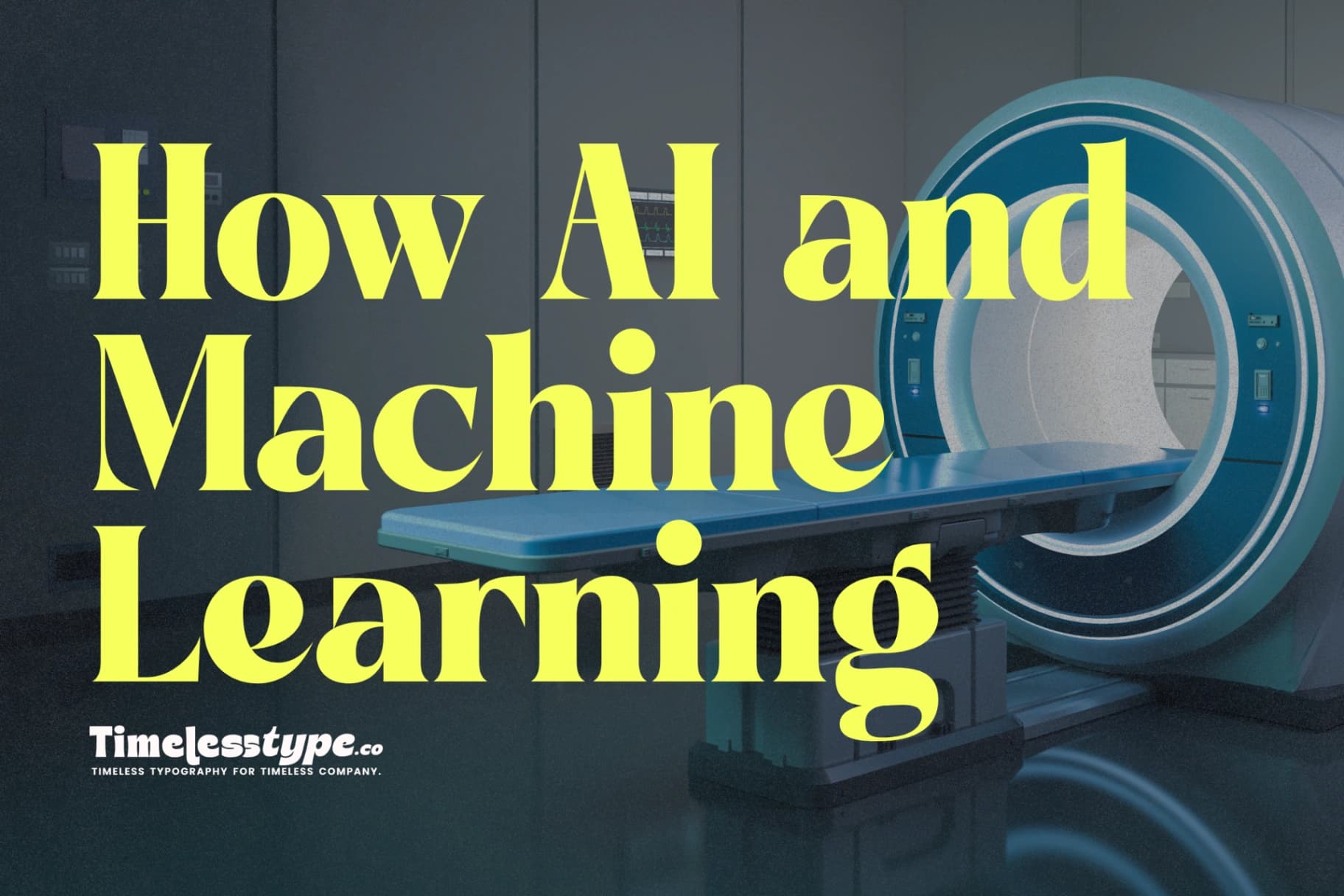
Table of Contents
- How AI and Machine Learning Are Revolutionizing Healthcare
- 🧠 Understanding AI and Machine Learning in Healthcare
- 🩺 1. Early Diagnosis and Disease Detection
- 💓 2. Predictive Analytics and Preventive Medicine
- 🧬 3. Personalized and Precision Medicine
- 🏥 4. Streamlining Hospital Operations and Workflow
- 💊 5. Drug Discovery and Development
- 🧍♀️ 6. Virtual Health Assistants and Remote Monitoring
- ⚕️ 7. Robotics and Surgery Precision
- 🌍 8. Global Health and Accessibility
- 🛡️ 9. Data Security and Ethical Challenges
- 🔬 10. The Future: AI as a Healthcare Partner, Not a Replacement
- 🌤️ Closing Thought: Humanity Enhanced, Not Replaced
How AI and Machine Learning Are Revolutionizing Healthcare
Healthcare has always been driven by innovation — from the discovery of antibiotics to robotic surgery. But in the 21st century, a new force is reshaping medicine from the ground up: Artificial Intelligence (AI) and Machine Learning (ML).
What was once futuristic — algorithms diagnosing diseases, predictive models preventing illness, and smart devices monitoring patients — is now reality. AI isn’t just improving healthcare; it’s redefining how it’s delivered, personalized, and understood.
Let’s break down how AI and machine learning are transforming healthcare today — and what it means for patients, doctors, and the future of medicine.
🧠 Understanding AI and Machine Learning in Healthcare
AI refers to machines that can perform tasks that normally require human intelligence — like analyzing data, recognizing patterns, and making decisions.
Machine Learning, a subset of AI, allows systems to learn and improve from experience without being explicitly programmed.
In healthcare, these technologies are being used to:
Detect diseases earlier and more accurately.
Predict patient risks before symptoms appear.
Personalize treatments based on genetics and data.
Streamline administrative tasks for doctors and hospitals.
“AI won’t replace doctors — but doctors who use AI will replace those who don’t.”
🩺 1. Early Diagnosis and Disease Detection
AI is revolutionizing diagnostics — helping doctors identify diseases faster and more precisely than ever.
Examples:
Radiology: AI algorithms analyze X-rays, CT scans, and MRIs to detect abnormalities such as tumors, fractures, or infections. Tools like Google’s DeepMind and IBM Watson Health are achieving diagnostic accuracy equal to — and sometimes exceeding — human specialists.
Oncology: AI detects early-stage cancers through subtle imaging and genetic patterns invisible to the human eye.
Pathology: Machine learning models scan biopsy slides to detect cancer cells with extraordinary precision.
The result? Faster diagnoses, fewer errors, and earlier treatment — which means more lives saved.
💓 2. Predictive Analytics and Preventive Medicine
The best healthcare isn’t reactive — it’s preventive.
AI helps doctors predict health issues before they happen by analyzing vast amounts of patient data: medical records, lifestyle habits, genetics, and even wearable data.
Applications:
Predicting heart attacks, diabetes, or strokes using real-time monitoring.
Identifying high-risk patients for chronic diseases.
Detecting outbreaks and pandemic trends before they spread.
Imagine getting an alert on your smartwatch that warns of cardiac irregularities before you even feel discomfort — that’s AI in action.
“AI transforms healthcare from treatment-focused to prevention-focused.”
🧬 3. Personalized and Precision Medicine
Every person’s biology is unique — and so should be their treatment.
AI enables precision medicine, where therapies are customized based on a patient’s genetic profile, environment, and behavior.
For example:
Oncologists can now match cancer patients with drugs designed for their specific tumor mutations.
Pharmacogenomics uses AI to predict how patients will respond to certain medications.
Genetic AI models help identify hereditary risks and design individualized prevention plans.
This approach replaces the one-size-fits-all model with one that treats you — not your condition in general.
🏥 4. Streamlining Hospital Operations and Workflow
Beyond diagnostics, AI is quietly transforming hospital management and patient experience.
Automation tools can:
Manage appointment scheduling and patient triage.
Optimize resource allocation (beds, staff, supplies).
Reduce paperwork and administrative overload.
Predict hospital admissions and patient discharges.
For doctors, this means less time on data entry and more time on patient care.
For patients, it means shorter wait times, fewer errors, and better experiences.
💊 5. Drug Discovery and Development
Developing new drugs traditionally takes 10–15 years and billions of dollars. AI is cutting that down dramatically.
Machine learning models can analyze massive datasets to:
Identify promising compounds in weeks instead of years.
Simulate how drugs interact with the human body.
Predict potential side effects before trials even begin.
AI-driven companies like Insilico Medicine and Atomwise are already accelerating drug discovery — finding new treatments for cancer, COVID-19, and rare genetic disorders.
This means faster innovation, cheaper development, and faster access to life-saving medicine.
🧍♀️ 6. Virtual Health Assistants and Remote Monitoring
AI-powered chatbots and voice assistants are now handling routine health questions, appointment scheduling, and medication reminders — giving patients 24/7 support.
Meanwhile, wearable tech like Fitbit, Apple Watch, and Oura Ring use AI to monitor heart rate, sleep, blood oxygen, and more — helping people stay proactive about their health.
For patients with chronic conditions, AI-enabled remote monitoring systems allow doctors to track progress and intervene early — without requiring hospital visits.
“The hospital of the future might be your living room.”
⚕️ 7. Robotics and Surgery Precision
AI isn’t just working behind screens — it’s entering operating rooms.
Robotic-assisted surgery, powered by AI, helps surgeons perform complex procedures with unparalleled precision and minimal invasiveness.
Systems like Da Vinci Surgical Robot can analyze hand movements and stabilize precision at microscopic levels.
AI-guided imaging ensures accuracy and faster recovery times.
AI-driven robotics are especially powerful in neurosurgery, orthopedics, and cardiac procedures — where millimeters matter.
🌍 8. Global Health and Accessibility
AI is breaking barriers for healthcare access, especially in underserved regions.
AI diagnostic tools on smartphones can identify diseases like malaria, tuberculosis, or eye disorders without expensive lab equipment.
Translation and voice recognition AI bridge communication gaps between doctors and patients globally.
Telemedicine powered by AI ensures that people in remote areas get timely care and second opinions from top specialists.
AI is democratizing healthcare — bringing expert-level care to anyone, anywhere.
🛡️ 9. Data Security and Ethical Challenges
With great innovation comes great responsibility.
AI runs on data — and healthcare data is among the most sensitive in existence.
Challenges include:
Privacy and Security: Protecting patient records from breaches.
Bias and Fairness: Ensuring AI systems don’t inherit prejudices from flawed data.
Transparency: Making AI decision-making processes explainable and accountable.
Ethical AI design is crucial — because in medicine, trust is everything.
“AI in healthcare must be not only smart, but also safe, fair, and human-centered.”
🔬 10. The Future: AI as a Healthcare Partner, Not a Replacement
The future of healthcare isn’t machines replacing doctors — it’s machines empowering them.
AI will handle the heavy data analysis, and doctors will focus on empathy, judgment, and complex decision-making.
Future innovations to watch:
Digital twins: Virtual replicas of patients to test treatments safely.
Real-time diagnosis: AI analyzing live body data during procedures.
Predictive genomics: Preventing diseases decades before symptoms.
Healthcare will become more predictive, personalized, and accessible than ever before.
And the result? A system that’s not just reactive — but intelligent, compassionate, and proactive.
🌤️ Closing Thought: Humanity Enhanced, Not Replaced
AI and machine learning aren’t here to take the human out of healthcare — they’re here to make healthcare more human.
By automating the technical and analytical, they allow doctors and caregivers to focus on what machines can’t replicate: empathy, intuition, and human connection.
The future of healthcare isn’t cold or robotic — it’s deeply personal, powered by intelligence that learns, adapts, and heals.
Related
Tags
Browse similar work by purpose and style.
.webp&w=1920&q=75&dpl=dpl_Gc2H6qw5qz6tftmNLm7EMoaFVtW7)
.webp&w=1920&q=75&dpl=dpl_Gc2H6qw5qz6tftmNLm7EMoaFVtW7)
.webp&w=1920&q=75&dpl=dpl_Gc2H6qw5qz6tftmNLm7EMoaFVtW7)
.webp&w=1920&q=75&dpl=dpl_Gc2H6qw5qz6tftmNLm7EMoaFVtW7)
.webp&w=1920&q=75&dpl=dpl_Gc2H6qw5qz6tftmNLm7EMoaFVtW7)
.webp&w=1920&q=75&dpl=dpl_Gc2H6qw5qz6tftmNLm7EMoaFVtW7)
.webp&w=1920&q=75&dpl=dpl_Gc2H6qw5qz6tftmNLm7EMoaFVtW7)
.webp&w=1920&q=75&dpl=dpl_Gc2H6qw5qz6tftmNLm7EMoaFVtW7)