


.jpg&w=256&q=75&dpl=dpl_Gc2H6qw5qz6tftmNLm7EMoaFVtW7)
.jpg&w=256&q=75&dpl=dpl_Gc2H6qw5qz6tftmNLm7EMoaFVtW7)
.webp&w=256&q=75&dpl=dpl_Gc2H6qw5qz6tftmNLm7EMoaFVtW7)
.webp&w=256&q=75&dpl=dpl_Gc2H6qw5qz6tftmNLm7EMoaFVtW7)



Business
Business Ethics and Transparency: Why Trust Is the New Currency
Insights, tutorials, and type notes from the Timeless Type studio.
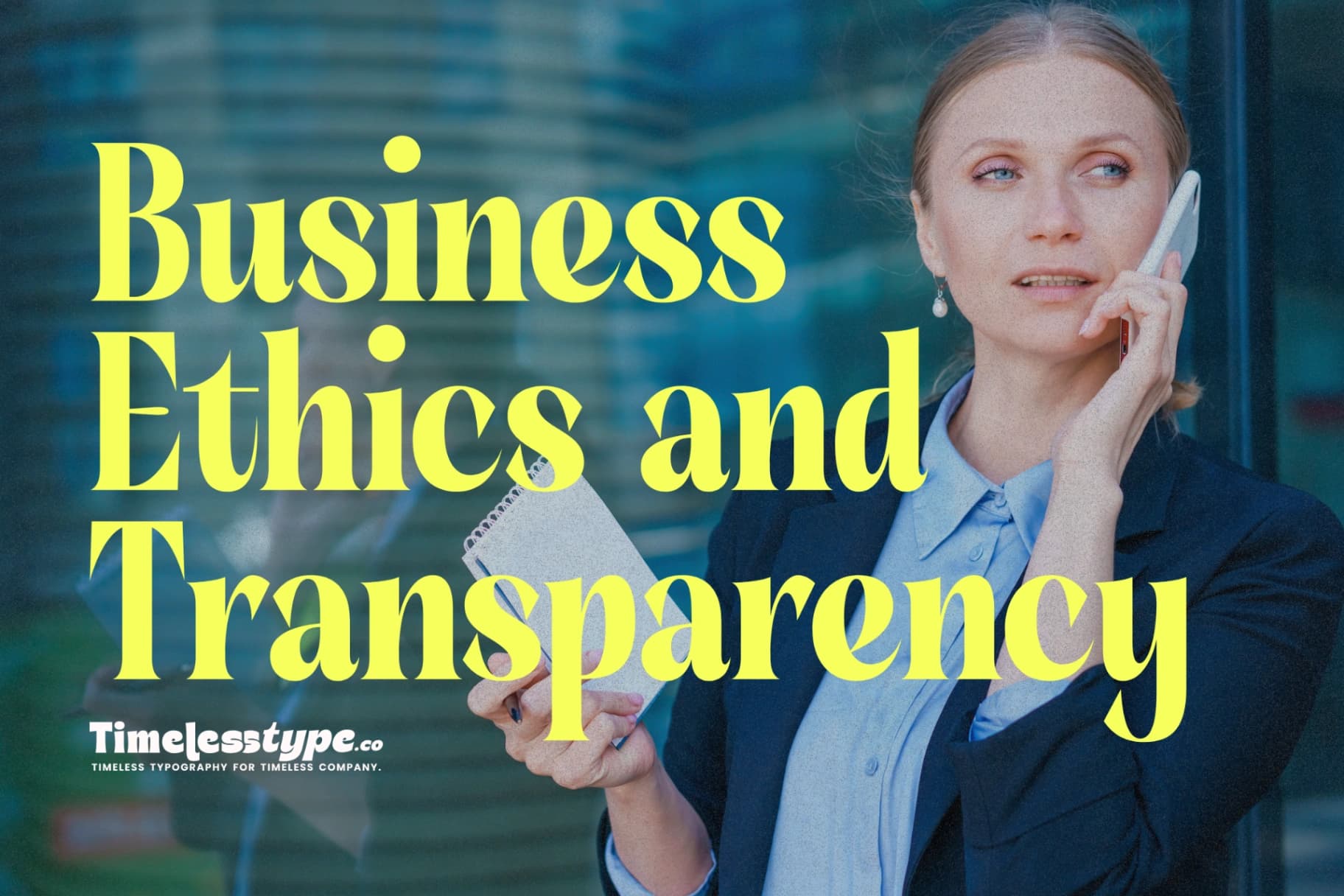
Table of Contents
- Business Ethics and Transparency: Why Trust Is the New Currency
- 💡 1. The Shift: From Profit-Driven to Purpose-Driven
- ⚖️ 2. What Is Business Ethics (and Why It Matters More Than Ever)
- 🔍 3. Transparency: The Heart of Trust
- 🌍 4. The Digital Age of Accountability
- 🧭 5. Why Trust Is the New Currency
- 💬 6. The Role of Leadership in Ethical Culture
- 💼 7. Case Studies: Ethics in Action
- 📊 8. Transparency Builds Brand Loyalty
- 🧩 9. The ROI of Ethics
- 🌱 10. Embedding Ethics Into Your DNA
- 💎 11. The Future: Ethical Innovation and Digital Integrity
- 🏁 Conclusion: Integrity Is the Ultimate Strategy
Business Ethics and Transparency: Why Trust Is the New Currency
In a world where information travels faster than ever, trust has become the most valuable currency in business.
You can buy attention with advertising, but you can’t buy credibility. You can’t purchase integrity. And once trust is broken, no amount of marketing can restore it overnight.
The modern business landscape is built not just on innovation or profit, but on ethics, transparency, and accountability.
In the age of digital transparency, doing good isn’t just morally right — it’s strategically smart.
Here’s why trust has become the foundation of success in the 21st century — and how businesses can build it through authentic ethics and openness.
💡 1. The Shift: From Profit-Driven to Purpose-Driven
For decades, business success was measured purely by profit.
But today, consumers, employees, and investors demand more. They want to know how companies make their money, not just how much they make.
People are choosing to support brands that align with their values — sustainability, fairness, inclusivity, and honesty.
According to Edelman’s Trust Barometer, 81% of consumers say trust influences their buying decisions more than anything else.
Companies that ignore this shift risk losing relevance in a marketplace where purpose is as powerful as performance.
“People don’t buy what you do. They buy why you do it.” — Simon Sinek
Trust is the new brand equity. Ethics is the new marketing.
⚖️ 2. What Is Business Ethics (and Why It Matters More Than Ever)
Business ethics is the moral compass that guides decision-making — doing what’s right, even when no one is watching.
It encompasses everything from how you treat employees and suppliers to how you handle data, privacy, and the environment.
In today’s global economy, where customers can expose unethical practices within seconds, ethics is no longer optional — it’s existential.
Key aspects of business ethics:
Honesty: Transparent communication with stakeholders.
Integrity: Consistency between words and actions.
Fairness: Treating all partners, employees, and customers equitably.
Responsibility: Owning up to mistakes and correcting them.
Respect: Prioritizing people and planet over profit.
“Ethics is knowing the difference between what you have a right to do and what is right to do.” — Potter Stewart
Ethical businesses aren’t perfect — they’re accountable.
🔍 3. Transparency: The Heart of Trust
Transparency means openness — about decisions, practices, and values. It’s about making your processes visible and your intentions clear.
Customers no longer accept vague promises or glossy campaigns. They want data, clarity, and authenticity.
Why transparency builds trust:
It creates credibility.
It prevents misinformation.
It empowers consumers to make informed choices.
It shows you have nothing to hide.
From supply chains to sustainability reports, transparency is the bridge between business actions and public perception.
“Trust is built when actions meet words.” — Chris Butler
When transparency becomes part of your culture, trust becomes part of your brand.
🌍 4. The Digital Age of Accountability
In the age of social media and global connectivity, everything is visible.
One unethical action can spark a worldwide backlash within hours.
This reality has given rise to what experts call the “glass box economy” — where companies can no longer hide behind closed doors.
Everything — from how employees are treated to where materials are sourced — is scrutinized.
Digital transparency includes:
Open communication online.
Clear data privacy policies.
Honest advertising (no greenwashing or fake promises).
Public accountability when mistakes happen.
When businesses embrace transparency proactively, they turn potential vulnerabilities into trust-building opportunities.
🧭 5. Why Trust Is the New Currency
Trust is the invisible engine that powers every relationship — personal or professional.
In business, it drives loyalty, retention, and reputation.
When people trust you, they don’t just buy once — they stay, advocate, and defend your brand.
Trust creates:
Customer loyalty: People buy again from brands they trust.
Employee engagement: Teams work harder for leaders they believe in.
Investor confidence: Stakeholders invest where they feel secure.
Brand longevity: Trust sustains businesses long after trends fade.
“Trust takes years to build, seconds to break, and forever to repair.”
In a hyperconnected world, trust is the only currency that never loses value.
💬 6. The Role of Leadership in Ethical Culture
Ethical behavior starts at the top.
Leaders set the tone for integrity within an organization. When executives lead by example, employees follow.
Ethical leadership means:
Being transparent about goals and challenges.
Making decisions that reflect company values.
Encouraging open dialogue and accountability.
Recognizing ethical behavior, not just results.
A company’s culture is shaped by what leaders tolerate as much as what they promote.
“The culture of any organization is shaped by the worst behavior the leader is willing to tolerate.” — Gruenter & Whitaker
If leaders treat ethics as an afterthought, employees will too.
💼 7. Case Studies: Ethics in Action
✅ Patagonia — Profit With Purpose
The outdoor brand built its empire on radical transparency and environmental responsibility.
From publishing its supply chain data to encouraging customers to buy less, Patagonia has made integrity its brand identity — and profit followed.
✅ Unilever — Sustainability as Strategy
Unilever’s Sustainable Living Plan links its business goals to environmental and social impact, proving that doing good drives growth.
❌ The Counterexamples
Companies that ignore ethics — from privacy breaches to labor scandals — often suffer lasting reputational damage.
In the digital age, reputation spreads faster than recovery.
Ethics isn’t a PR strategy — it’s a long-term investment in credibility.
📊 8. Transparency Builds Brand Loyalty
People remember how you handle mistakes more than how you avoid them.
When something goes wrong, transparency can turn a crisis into a chance to rebuild trust.
Admit errors quickly.
Communicate openly about how you’ll fix them.
Follow through visibly.
Consumers are forgiving when brands are honest — but ruthless when they’re misled.
Transparency transforms vulnerability into strength.
“Honesty is more than not lying — it’s truth-telling, truth-speaking, and truth-living.” — James E. Faust
🧩 9. The ROI of Ethics
Ethics and transparency aren’t just moral imperatives — they’re smart business.
Studies show:
Ethical companies outperform unethical ones in profitability and growth.
Brands with high trust scores enjoy higher customer retention rates.
67% of employees say they prefer to work for ethical organizations.
Integrity doesn’t slow business — it scales it.
When trust becomes your brand strategy, marketing becomes effortless — because your reputation speaks louder than any campaign.
🌱 10. Embedding Ethics Into Your DNA
Building an ethical business isn’t about slogans or annual reports — it’s about daily behavior.
Practical ways to build ethical culture:
Code of conduct: Clear, actionable, and accessible to everyone.
Transparent communication: From leadership updates to social media.
Ethics training: Teach teams to handle dilemmas with confidence.
Accountability systems: Reward integrity, not just performance.
Open feedback channels: Let employees speak without fear.
Ethics must be woven into every process, not bolted on as an afterthought.
“Your brand is what people say about you when you’re not in the room.” — Jeff Bezos
Your ethics determine that conversation.
💎 11. The Future: Ethical Innovation and Digital Integrity
As technology advances, new ethical challenges arise — AI, data privacy, automation, and misinformation.
Businesses must navigate innovation with conscience.
Building ethical AI, protecting user data, and preventing exploitation aren’t just compliance issues — they’re trust issues.
The companies that lead the future will be those that combine innovation with integrity.
Because when trust is the new currency, ethics is the new innovation.
🏁 Conclusion: Integrity Is the Ultimate Strategy
In an era where every click, review, and comment is public, businesses no longer have the luxury of secrecy.
Transparency isn’t a risk — opacity is.
The companies that will thrive are those that lead with honesty, act with conscience, and communicate with clarity.
Ethics is not the soft side of business — it’s the strongest foundation it can have.
“Trust is the glue of life. It’s the most essential ingredient in effective communication and the foundational principle that holds all relationships.” — Stephen Covey
When you build with trust, you build for the long term.
Because in the end, the most valuable currency in business isn’t money — it’s belief.
Related
Tags
Browse similar work by purpose and style.
.webp&w=1920&q=75&dpl=dpl_Gc2H6qw5qz6tftmNLm7EMoaFVtW7)
.webp&w=1920&q=75&dpl=dpl_Gc2H6qw5qz6tftmNLm7EMoaFVtW7)
.webp&w=1920&q=75&dpl=dpl_Gc2H6qw5qz6tftmNLm7EMoaFVtW7)
.webp&w=1920&q=75&dpl=dpl_Gc2H6qw5qz6tftmNLm7EMoaFVtW7)
.webp&w=1920&q=75&dpl=dpl_Gc2H6qw5qz6tftmNLm7EMoaFVtW7)
.webp&w=1920&q=75&dpl=dpl_Gc2H6qw5qz6tftmNLm7EMoaFVtW7)
.webp&w=1920&q=75&dpl=dpl_Gc2H6qw5qz6tftmNLm7EMoaFVtW7)