


.jpg&w=256&q=75&dpl=dpl_Gc2H6qw5qz6tftmNLm7EMoaFVtW7)
.jpg&w=256&q=75&dpl=dpl_Gc2H6qw5qz6tftmNLm7EMoaFVtW7)
.webp&w=256&q=75&dpl=dpl_Gc2H6qw5qz6tftmNLm7EMoaFVtW7)
.webp&w=256&q=75&dpl=dpl_Gc2H6qw5qz6tftmNLm7EMoaFVtW7)



Technology
Automation and Robotics: How Machines Are Transforming the Workforce
Insights, tutorials, and type notes from the Timeless Type studio.
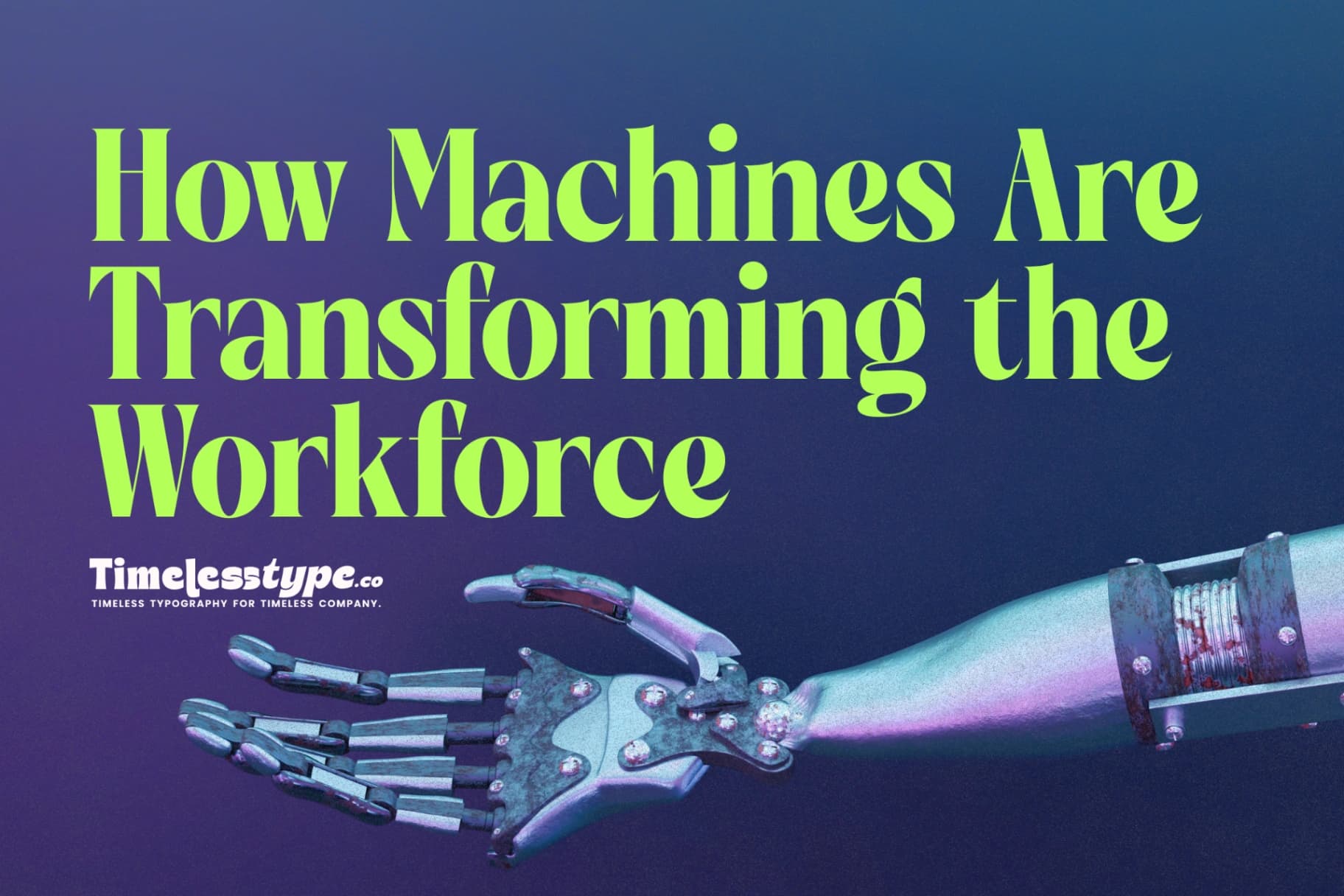
Table of Contents
- 1. The Rise of the Automated Era
- Key developments driving the revolution:
- 2. Why Automation Matters Now
- Companies turned to automation to:
- 3. The Evolution of Robotics in the Workplace
- Types of modern robotics:
- 4. The Human-Machine Partnership
- This partnership means:
- 5. Key Industries Being Transformed by Automation
- Manufacturing:
- Logistics and Supply Chain:
- Healthcare:
- Retail and E-commerce:
- Agriculture:
- 6. The Benefits of Automation and Robotics
- Major benefits:
- 7. Challenges and Ethical Considerations
- Job displacement:
- Economic inequality:
- Data privacy:
- 8. The Future of Jobs: Reskilling and Adaptability
- Skills for the future:
- 9. The Role of Education and Lifelong Learning
- How to stay future-ready:
- 10. Small Businesses and Automation
- Affordable automation options:
- 11. Robotics in Everyday Life
- Examples include:
- 12. The Integration of AI and Robotics
- Key advancements:
- 13. Human-Centered Automation
- This means:
- 14. Sustainability and Automation
- Examples:
- 15. The Global Impact: Redefining Economies
- Global shifts:
- 16. The Role of Government and Policy
- Key priorities:
- 17. The Future Workplace
- Key characteristics:
- 18. Balancing Efficiency and Empathy
- 19. Challenges Ahead
- Key concerns:
- 20. Conclusion: The Future of Work Is Collaboration
Automation and Robotics: How Machines Are Transforming the Workforce
Automation and robotics are no longer visions of the future — they’re reshaping the world we live and work in right now.
From self-driving vehicles to warehouse robots and AI-driven workflows, machines are becoming essential teammates in every industry.
While some fear robots will take over jobs, others see them as tools that enhance human potential.
The truth lies somewhere in between: automation is not replacing humans — it’s redefining what humans do best.
Here’s how automation and robotics are transforming the workforce, reshaping industries, and changing what it means to work in the digital age.
1. The Rise of the Automated Era
Automation isn’t new — it started with the Industrial Revolution.
But today’s automation, powered by artificial intelligence (AI), machine learning (ML), and robotics, is far more advanced.
Key developments driving the revolution:
AI-driven decision-making: Machines learn and adapt to data.
Collaborative robots (cobots): Work safely alongside humans.
Predictive analytics: Forecasts trends and maintenance needs.
Cloud automation: Connects entire operations in real time.
We’ve entered an era where technology doesn’t just assist — it learns, predicts, and improves continuously.
2. Why Automation Matters Now
Automation isn’t just about efficiency — it’s about resilience and scalability.
The COVID-19 pandemic exposed how fragile human-dependent systems could be.
Companies turned to automation to:
Maintain production during workforce shortages.
Enable remote monitoring and maintenance.
Reduce operational costs and errors.
Respond quickly to changing market demands.
The result? A fundamental shift toward tech-driven, crisis-proof operations.
3. The Evolution of Robotics in the Workplace
Modern robots are a far cry from the rigid, single-purpose machines of the past.
Today’s robots are intelligent, flexible, and collaborative.
Types of modern robotics:
Industrial robots: For assembly, welding, and packaging.
Service robots: Used in healthcare, hospitality, and retail.
Autonomous mobile robots (AMRs): Navigate warehouses and factories.
Collaborative robots (cobots): Work side-by-side with humans safely.
These systems increase output, precision, and safety — allowing humans to focus on higher-value, creative work.
4. The Human-Machine Partnership
The future of work isn’t “humans vs. robots” — it’s humans and robots together.
Automation handles repetitive, dangerous, or data-heavy tasks.
Humans provide creativity, critical thinking, empathy, and emotional intelligence — traits machines can’t replicate.
This partnership means:
Workers can focus on strategic and creative roles.
Productivity increases as machines handle repetitive labor.
Businesses achieve scalability without burning out human talent.
When used wisely, automation doesn’t eliminate jobs — it elevates human potential.
5. Key Industries Being Transformed by Automation
Automation and robotics are revolutionizing nearly every sector.
Here’s how it’s changing the world’s biggest industries:
Manufacturing:
Robots assemble, weld, and inspect with precision and speed.
Smart factories integrate IoT sensors and predictive maintenance to minimize downtime.
Human workers oversee systems instead of performing manual labor.
Logistics and Supply Chain:
Autonomous drones and delivery robots streamline last-mile shipping.
AI optimizes routes, cutting delivery times and costs.
Warehouses use AMRs to sort and transport goods efficiently.
Healthcare:
Surgical robots perform procedures with pinpoint accuracy.
AI diagnoses diseases faster through medical imaging.
Service robots assist with sanitation, medication, and elderly care.
Retail and E-commerce:
Automation powers checkout-free stores like Amazon Go.
Chatbots and AI personalize customer experiences.
Robots manage inventory and order fulfillment.
Agriculture:
Drones monitor crops and soil conditions.
Automated harvesters and irrigation systems boost efficiency.
AI predicts weather patterns and yield outcomes.
Every industry touched by automation gains one advantage: time.
Time saved on routine tasks means more time for innovation.
6. The Benefits of Automation and Robotics
Automation’s impact extends beyond cost savings.
It reshapes the way organizations — and people — work.
Major benefits:
Increased productivity: Machines operate 24/7 without fatigue.
Higher accuracy: Reduces human errors and waste.
Enhanced safety: Robots take over hazardous tasks.
Consistency: Ensures reliable quality across processes.
Cost efficiency: Cuts labor and operational expenses long term.
Scalability: Easily adapts to changes in demand.
Automation doesn’t just make companies faster — it makes them smarter.
7. Challenges and Ethical Considerations
While automation offers incredible benefits, it also raises critical questions.
Job displacement:
Certain repetitive roles are being replaced by machines, creating workforce anxiety.
The solution lies in reskilling and upskilling — preparing workers for new roles that technology creates.
Economic inequality:
Automation may widen the gap between tech-savvy workers and those left behind.
Governments and organizations must prioritize digital literacy programs.
Data privacy:
AI systems require vast data — raising concerns about misuse or surveillance.
Strong cybersecurity and ethical governance are essential.
Technology can either divide or empower — depending on how responsibly it’s implemented.
8. The Future of Jobs: Reskilling and Adaptability
Automation doesn’t destroy employment — it transforms it.
According to the World Economic Forum, by 2025 automation will displace 85 million jobs — but create 97 million new ones.
Skills for the future:
Analytical thinking and innovation.
Emotional intelligence and communication.
Digital literacy and data analysis.
Creativity and complex problem-solving.
The new workplace values adaptability over experience.
Those who learn continuously will thrive alongside technology.
9. The Role of Education and Lifelong Learning
To prepare for the automated economy, education must evolve.
The focus must shift from memorization to critical thinking, creativity, and digital fluency.
How to stay future-ready:
Take online courses in emerging technologies.
Learn coding, AI, or data analytics basics.
Develop soft skills — empathy, teamwork, leadership.
Stay curious — lifelong learning is your most powerful tool.
Automation rewards learners, not followers.
10. Small Businesses and Automation
Automation isn’t just for tech giants.
Small and medium-sized enterprises (SMEs) are embracing it to stay competitive.
Affordable automation options:
Cloud-based accounting and CRM tools.
Chatbots for customer service.
Automated marketing campaigns and analytics.
AI-powered inventory management.
Technology levels the playing field — giving small businesses access to tools once reserved for corporations.
11. Robotics in Everyday Life
Robotics isn’t confined to factories anymore — it’s part of daily life.
Examples include:
Home assistants: Alexa, Google Home.
Cleaning robots: Roomba and window-cleaning bots.
Delivery robots: Autonomous food and package deliveries.
Healthcare companions: Robots providing mobility or emotional support.
The future isn’t about replacing humans — it’s about making life simpler, safer, and smarter.
12. The Integration of AI and Robotics
AI gives robots the ability to think, adapt, and learn — creating intelligent systems capable of complex decisions.
Key advancements:
Computer vision: Robots “see” and recognize objects.
Natural language processing: Machines understand human speech.
Autonomous navigation: Vehicles and drones move without human control.
Self-learning algorithms: Systems improve performance through data feedback.
AI and robotics together create adaptive ecosystems where machines don’t just execute commands — they make judgments.
13. Human-Centered Automation
To ensure technology benefits everyone, companies must adopt human-centered automation.
This means:
Designing technology that complements, not replaces, people.
Prioritizing ergonomics, safety, and collaboration.
Involving employees in digital transformation decisions.
The most successful organizations of the future will be those that put people at the center of innovation.
14. Sustainability and Automation
Automation isn’t only improving productivity — it’s also driving sustainability.
Examples:
Energy efficiency: AI systems optimize power usage in factories.
Smart agriculture: Reduces water waste and chemical use.
Circular manufacturing: Robots sort and recycle materials efficiently.
Automation helps businesses do more with less — protecting both profits and the planet.
15. The Global Impact: Redefining Economies
Automation is reshaping global economies by changing labor markets, trade, and investment flows.
Global shifts:
Developed countries use automation to offset aging populations.
Developing nations leverage robotics to boost manufacturing competitiveness.
Remote and digital work creates new global talent hubs.
The result? A more interconnected, automated, and opportunity-driven world economy.
16. The Role of Government and Policy
As automation transforms industries, governments must evolve too.
Key priorities:
Supporting reskilling initiatives.
Regulating AI ethics and data privacy.
Incentivizing responsible automation adoption.
Ensuring inclusive access to technology.
Public and private collaboration will determine whether automation creates a balanced and fair digital economy.
17. The Future Workplace
The workplace of the future is hybrid — a blend of human creativity and machine efficiency.
Key characteristics:
Flexible work models combining in-person and remote setups.
Smart offices powered by data and automation.
AI assistants supporting productivity and communication.
Workplace 2.0 isn’t about doing more — it’s about working smarter, safer, and more meaningfully.
18. Balancing Efficiency and Empathy
As automation takes over routine work, human qualities — empathy, compassion, creativity — become more valuable.
The future belongs to those who can balance technology with humanity.
Automation will handle the logic — humans will handle the meaning.
That’s not the end of work — it’s the evolution of purpose.
19. Challenges Ahead
Automation’s rise comes with challenges that require foresight and collaboration.
Key concerns:
Workforce displacement.
Ethical use of AI.
Inequality in access to technology.
Psychological effects of human-machine integration.
The goal isn’t to stop automation — it’s to guide it responsibly.
20. Conclusion: The Future of Work Is Collaboration
Automation and robotics are transforming work — not ending it.
They’re eliminating repetitive tasks, creating new industries, and empowering humans to reach their full potential.
The future workforce won’t be defined by competition between man and machine, but by collaboration between them.
Humans bring imagination and ethics; machines bring speed and precision.
Together, they create a world where work is not just efficient — but meaningful.
Because the real revolution of automation isn’t about replacing people —
it’s about freeing them to do what only humans can.
Related
Tags
Browse similar work by purpose and style.
.webp&w=1920&q=75&dpl=dpl_Gc2H6qw5qz6tftmNLm7EMoaFVtW7)
.webp&w=1920&q=75&dpl=dpl_Gc2H6qw5qz6tftmNLm7EMoaFVtW7)
.webp&w=1920&q=75&dpl=dpl_Gc2H6qw5qz6tftmNLm7EMoaFVtW7)
.webp&w=1920&q=75&dpl=dpl_Gc2H6qw5qz6tftmNLm7EMoaFVtW7)
.webp&w=1920&q=75&dpl=dpl_Gc2H6qw5qz6tftmNLm7EMoaFVtW7)
.webp&w=1920&q=75&dpl=dpl_Gc2H6qw5qz6tftmNLm7EMoaFVtW7)
.webp&w=1920&q=75&dpl=dpl_Gc2H6qw5qz6tftmNLm7EMoaFVtW7)
.webp&w=1920&q=75&dpl=dpl_Gc2H6qw5qz6tftmNLm7EMoaFVtW7)