


.jpg&w=256&q=75&dpl=dpl_Gc2H6qw5qz6tftmNLm7EMoaFVtW7)
.jpg&w=256&q=75&dpl=dpl_Gc2H6qw5qz6tftmNLm7EMoaFVtW7)
.webp&w=256&q=75&dpl=dpl_Gc2H6qw5qz6tftmNLm7EMoaFVtW7)
.webp&w=256&q=75&dpl=dpl_Gc2H6qw5qz6tftmNLm7EMoaFVtW7)



Technology
Augmented Reality vs Virtual Reality: The Future of Digital Experience
Insights, tutorials, and type notes from the Timeless Type studio.
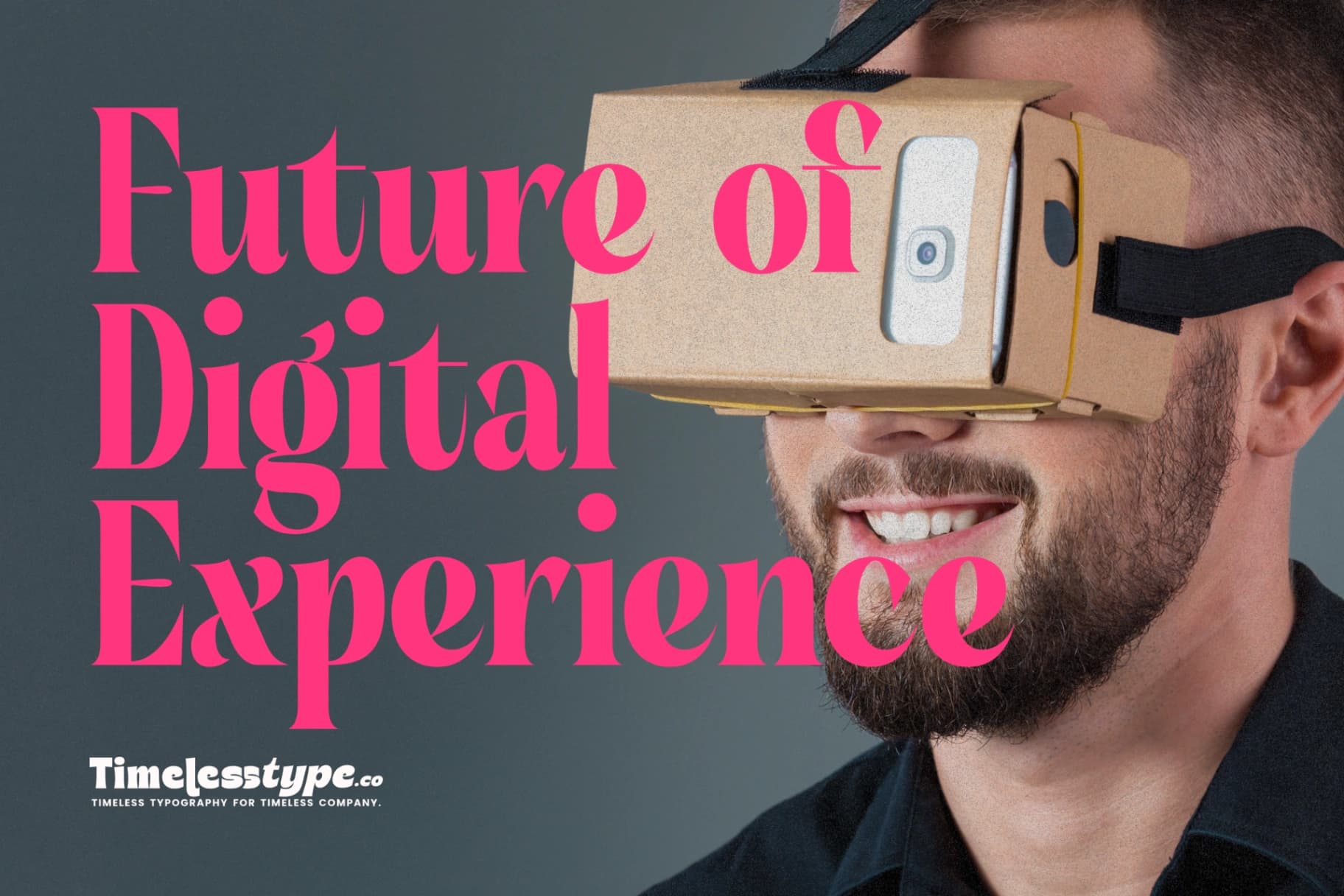
Table of Contents
- 1. Understanding the Basics
- What Is Augmented Reality (AR)?
- Examples:
- What Is Virtual Reality (VR)?
- Examples:
- 2. The Key Differences Between AR and VR
- 3. How AR and VR Work Technically
- AR Technology:
- VR Technology:
- 4. The Convergence: Mixed Reality (MR)
- 5. The Rise of AR in Everyday Life
- Common AR applications:
- 6. VR’s Transformational Power
- Major VR applications:
- 7. The Role of AI in AR and VR
- AI enables:
- 8. AR and VR in Business
- Examples:
- 9. Education and Training: Learning Through Immersion
- Benefits:
- 10. AR and VR in Healthcare
- Applications:
- 11. Marketing in the Age of Immersion
- Examples:
- 12. Accessibility and Inclusion in Immersive Tech
- Progress includes:
- 13. Challenges and Limitations
- 14. The Metaverse: The Next Frontier
- 15. The Economic Impact of AR and VR
- Drivers of growth:
- 16. The Role of 5G and Cloud Computing
- 17. Environmental and Ethical Considerations
- Key concerns:
- 18. The Future of AR: Blending Digital with Reality
- Upcoming trends:
- 19. The Future of VR: Total Immersion and Human Connection
- The next frontier includes:
- 20. Conclusion: Beyond Reality
Augmented Reality vs Virtual Reality: The Future of Digital Experience
The line between the physical and digital world is disappearing.
With Augmented Reality (AR) and Virtual Reality (VR), we’re no longer just using technology — we’re immersed in it.
From gaming and entertainment to education, healthcare, and business, AR and VR are redefining how humans experience reality.
But while the two technologies often get mentioned together, they serve very different purposes and create distinct types of interaction.
This article explores the differences, similarities, and future potential of AR and VR — and how they’re shaping the next era of the digital experience.
1. Understanding the Basics
What Is Augmented Reality (AR)?
Augmented Reality enhances the real world by overlaying digital elements — like images, information, or 3D objects — onto your physical environment.
Think of AR as digital layering on top of reality.
Examples:
Pokémon Go: Players see Pokémon characters integrated into real-world surroundings.
IKEA Place: Lets users visualize furniture in their homes before buying.
Snapchat or Instagram filters: Add interactive effects to real-time photos and videos.
AR keeps you in your real environment — but adds extra layers of interaction and information.
What Is Virtual Reality (VR)?
Virtual Reality, on the other hand, creates a completely simulated environment — one that replaces the real world entirely.
With a headset and controllers, you step into an immersive digital universe where you can see, hear, and move as if you were inside it.
Examples:
Meta Quest or PlayStation VR: Gaming experiences where you move through 360-degree virtual worlds.
VR training simulations: Used by surgeons, pilots, and engineers for realistic practice.
Virtual travel experiences: Explore space, museums, or global landmarks from your living room.
VR transports you from reality into a fully constructed digital world.
2. The Key Differences Between AR and VR
Though both create immersive experiences, the level of immersion and interaction distinguish them.
FeatureAugmented Reality (AR)Virtual Reality (VR)ExperienceEnhances real worldReplaces real worldHardwareSmartphones, tablets, AR glassesVR headsets, controllersEnvironmentReal + digital overlayFully virtualMobilityCan move freely in real spaceLimited to virtual spaceInteractionReal-world and digital combinedEntirely digitalUse casesRetail, navigation, education, marketingGaming, training, design, entertainment
In simple terms:
👉 AR adds to your world.
👉 VR takes you to a new one.
3. How AR and VR Work Technically
AR Technology:
AR uses:
Camera sensors: To capture the real environment.
Computer vision algorithms: To detect surfaces, depth, and objects.
3D modeling: To position digital elements in real space.
Display: Through smartphones, AR glasses (like Microsoft HoloLens), or head-up displays.
It relies heavily on real-time processing to ensure digital objects interact naturally with the real world — like shadows, distance, and perspective.
VR Technology:
VR uses:
Head-mounted displays (HMDs): Fully covering the user’s vision.
Motion sensors and controllers: Track body movement in 3D space.
Audio immersion: Surround sound and spatial audio to mimic reality.
Computer graphics engines: Generate realistic, responsive environments.
VR creates a multi-sensory illusion — your eyes, ears, and movement all synchronize with the virtual world to make it feel real.
4. The Convergence: Mixed Reality (MR)
Between AR and VR lies Mixed Reality (MR) — a hybrid that merges digital and physical worlds even more seamlessly.
In MR, digital objects not only appear in the real world (like AR) but also interact with it.
For example, a virtual ball could bounce off a real wall.
Microsoft’s HoloLens and Magic Leap are leading this innovation, blending the physical and virtual worlds into one unified experience.
The boundaries between AR, VR, and MR are increasingly blurred — together, they form what’s known as Extended Reality (XR).
5. The Rise of AR in Everyday Life
AR has quietly integrated into our daily routines — even if we don’t always notice it.
Common AR applications:
E-commerce: Virtual try-ons for clothes, makeup, and accessories.
Navigation: Google Maps Live View projects directions directly onto the real world.
Healthcare: Surgeons use AR overlays during complex operations.
Education: Interactive AR books and science models enhance learning.
Marketing: Brands use AR filters for product demos and storytelling.
AR’s biggest advantage?
It doesn’t require expensive hardware — just a smartphone.
That accessibility makes it the most practical and scalable of immersive technologies.
6. VR’s Transformational Power
VR offers total immersion, making it ideal for experiences that require focus, realism, and emotional engagement.
Major VR applications:
Gaming and entertainment: From immersive RPGs to virtual concerts and cinemas.
Professional training: Medical, military, aviation, and industrial simulation.
Education: Virtual classrooms where students “visit” historical sites or scientific environments.
Therapy: VR treatments for PTSD, anxiety, or phobias.
Remote collaboration: Virtual offices and design labs where teams work as 3D avatars.
VR redefines how we learn, train, and connect — transforming industries from entertainment to enterprise.
7. The Role of AI in AR and VR
Artificial Intelligence is the backbone of next-generation immersive experiences.
AI enables:
Object recognition: AR systems identify and respond to real-world items.
Predictive analytics: Personalizing virtual experiences for users.
Natural language processing: Enabling human-like interactions with virtual assistants.
Environment rendering: Making virtual spaces more lifelike and adaptive.
AI makes AR and VR smarter, faster, and more intuitive — turning static visuals into dynamic, intelligent interactions.
8. AR and VR in Business
Companies across industries are leveraging AR and VR to improve productivity, marketing, and collaboration.
Examples:
Real estate: Virtual property tours for buyers anywhere in the world.
Retail: Virtual fitting rooms reduce returns and boost confidence.
Manufacturing: AR-guided assembly and maintenance for complex machinery.
Remote work: VR meeting rooms for immersive team collaboration.
Tourism: Virtual previews of destinations before booking.
These tools help businesses save time, reduce costs, and deliver memorable customer experiences.
9. Education and Training: Learning Through Immersion
Traditional learning relies on theory — AR and VR bring experience-based education.
Benefits:
Safe environments for practice (e.g., medical or engineering simulations).
Higher retention rates — learners remember more through visualization.
Global accessibility — students can explore labs, museums, or even Mars.
Immersive learning turns education from passive to participatory.
10. AR and VR in Healthcare
Few industries demonstrate the impact of immersive tech better than healthcare.
Applications:
VR surgery training: Realistic practice without patient risk.
AR-guided operations: Surgeons visualize anatomy in 3D during procedures.
Therapy: Exposure therapy for anxiety, pain management, and rehabilitation.
Medical education: Students interact with 3D anatomy instead of flat diagrams.
AR and VR are enhancing precision, empathy, and access — making medicine both smarter and more human.
11. Marketing in the Age of Immersion
Consumers are no longer satisfied with ads — they crave experiences.
AR and VR enable brands to tell stories that engage all senses.
Examples:
Coca-Cola: AR filters that animate packaging.
Nike: Virtual try-on experiences in stores and apps.
IKEA and Amazon: Preview furniture in your home before buying.
Tourism boards: VR destination previews to inspire travelers.
Immersive marketing transforms customers from spectators into participants.
12. Accessibility and Inclusion in Immersive Tech
A key focus for the future of AR and VR is making them accessible to everyone.
Progress includes:
Voice commands for navigation.
Haptic feedback for those with visual impairments.
Customizable interfaces for cognitive diversity.
As technology evolves, inclusivity ensures AR and VR serve all communities — not just tech enthusiasts.
13. Challenges and Limitations
While promising, AR and VR face several hurdles:
Hardware costs: VR headsets and AR glasses remain expensive for mass adoption.
Motion sickness: Some users experience dizziness in VR environments.
Data privacy: AR collects real-world visuals; VR tracks body movements — both raise security concerns.
Content creation: Building quality 3D experiences requires expertise and time.
Accessibility: Not all regions have internet speeds or infrastructure to support immersive technologies.
Innovation must balance excitement with ethical and practical responsibility.
14. The Metaverse: The Next Frontier
The term Metaverse refers to the collective virtual shared space — powered by AR, VR, blockchain, and AI.
In the Metaverse:
People can work, play, and socialize as digital avatars.
Businesses create virtual storefronts.
Artists and developers sell virtual goods or experiences.
Companies like Meta, Apple, and NVIDIA are heavily investing in building this digital universe.
AR and VR are the core gateways to this interconnected, immersive future.
15. The Economic Impact of AR and VR
The global AR and VR market is expected to exceed $500 billion by 2030.
Drivers of growth:
Demand for immersive learning and training.
Rise of remote collaboration.
Expansion of 5G and cloud computing.
Integration with AI and Internet of Things (IoT).
Beyond entertainment, AR and VR are creating new industries, jobs, and ecosystems.
16. The Role of 5G and Cloud Computing
For AR and VR to reach their full potential, they need speed and stability.
5G offers ultra-low latency and massive bandwidth, enabling real-time rendering and smoother experiences.
Meanwhile, cloud computing provides scalable storage and processing power — reducing the need for bulky hardware.
Together, they make immersive technology faster, lighter, and more affordable.
17. Environmental and Ethical Considerations
Sustainability and ethics are becoming central to digital innovation.
Key concerns:
The carbon footprint of VR data centers.
Recycling and disposal of devices.
Psychological effects of long-term immersion.
Data ownership in virtual spaces.
Responsible design ensures AR and VR enhance humanity — not exploit it.
The future of technology must also be the future of balance.
18. The Future of AR: Blending Digital with Reality
In the next decade, AR is expected to become as common as smartphones.
Upcoming trends:
AR glasses: Lightweight and stylish replacements for phones.
Real-time translation and subtitles: Breaking communication barriers.
Retail and navigation: Seamless, data-rich real-world experiences.
AR advertising: Interactive billboards and store displays.
AR’s future is one where the digital world enhances reality — not replaces it.
19. The Future of VR: Total Immersion and Human Connection
VR’s evolution is about deeper emotional and social engagement.
The next frontier includes:
Full-sensory immersion: Incorporating touch, smell, and temperature.
Social VR spaces: Shared environments for collaboration and creativity.
Virtual travel and exploration: Expanding access to the world’s wonders.
VR will reshape not just entertainment — but how we connect as humans.
20. Conclusion: Beyond Reality
Augmented and Virtual Reality aren’t competing technologies — they’re complementary forces shaping how we experience the world.
AR keeps us grounded in reality while expanding what’s possible.
VR takes us beyond reality, into worlds limited only by imagination.
Together, they represent the future of human experience — where technology enhances, not replaces, life.
The question is no longer if AR and VR will transform our lives — it’s how fast we’ll adapt to this new dimension of reality.
Welcome to the future —
where the boundary between the physical and the digital is no longer a line,
but a bridge.
Related
Tags
Browse similar work by purpose and style.
.webp&w=1920&q=75&dpl=dpl_Gc2H6qw5qz6tftmNLm7EMoaFVtW7)
.webp&w=1920&q=75&dpl=dpl_Gc2H6qw5qz6tftmNLm7EMoaFVtW7)
.webp&w=1920&q=75&dpl=dpl_Gc2H6qw5qz6tftmNLm7EMoaFVtW7)
.webp&w=1920&q=75&dpl=dpl_Gc2H6qw5qz6tftmNLm7EMoaFVtW7)
.webp&w=1920&q=75&dpl=dpl_Gc2H6qw5qz6tftmNLm7EMoaFVtW7)
.webp&w=1920&q=75&dpl=dpl_Gc2H6qw5qz6tftmNLm7EMoaFVtW7)
.webp&w=1920&q=75&dpl=dpl_Gc2H6qw5qz6tftmNLm7EMoaFVtW7)
.webp&w=1920&q=75&dpl=dpl_Gc2H6qw5qz6tftmNLm7EMoaFVtW7)