


.jpg&w=256&q=75&dpl=dpl_Gc2H6qw5qz6tftmNLm7EMoaFVtW7)
.jpg&w=256&q=75&dpl=dpl_Gc2H6qw5qz6tftmNLm7EMoaFVtW7)
.webp&w=256&q=75&dpl=dpl_Gc2H6qw5qz6tftmNLm7EMoaFVtW7)
.webp&w=256&q=75&dpl=dpl_Gc2H6qw5qz6tftmNLm7EMoaFVtW7)



Technology
Augmented Reality vs Virtual Reality: The Battle for the Future of Experience
Insights, tutorials, and type notes from the Timeless Type studio.
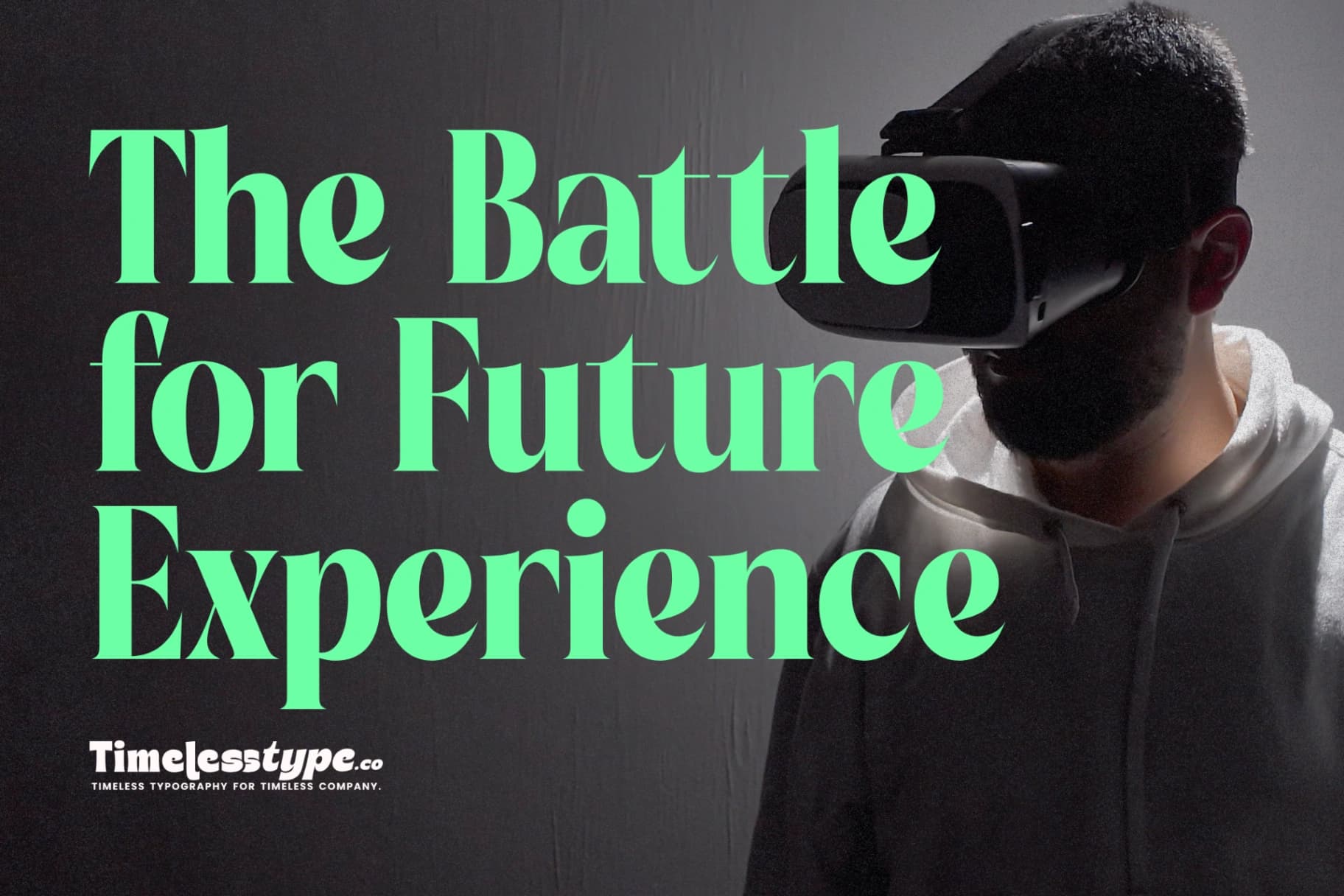
Table of Contents
- 1. Understanding the Basics: AR vs VR
- Augmented Reality (AR): Enhancing the Real World
- Virtual Reality (VR): Replacing Reality Entirely
- 2. The Core Difference: Integration vs Immersion
- 3. The Power of AR: Reality, Reinvented
- How AR Is Changing the World:
- 4. The Power of VR: Immersion Without Limits
- Where VR Is Making an Impact:
- 5. The Convergence: When AR Meets VR
- 6. The Battle for the Future: Which Will Dominate?
- Why AR Might Win:
- Why VR Might Lead:
- 7. The Economic Impact: A Trillion-Dollar Reality
- Key Growth Sectors:
- 8. The Challenges Ahead
- For AR:
- For VR:
- 9. The Role of AI in AR and VR
- AI’s Impact Includes:
- 10. Human Connection in a Digital World
- 11. The Future of Work and Creativity
- AR in Work:
- VR in Work:
- 12. The Path Forward: Coexistence, Not Competition
- In the 2030s and Beyond:
- 13. Final Thought: Reality, Redefined
Augmented Reality vs Virtual Reality: The Battle for the Future of Experience
Technology has always shaped how we see and interact with the world — from the invention of the printing press to the rise of smartphones.
Now, a new frontier is emerging, one that doesn’t just display reality, but transforms it.
Welcome to the world of Augmented Reality (AR) and Virtual Reality (VR) — two technologies that are redefining how we work, play, learn, and connect.
While they often get mentioned together, AR and VR are not the same.
They represent two distinct paths toward the future of human experience — one that enhances our reality, and one that replaces it entirely.
So which one will define the future? Let’s explore the battle — and the balance — between Augmented and Virtual Reality.
1. Understanding the Basics: AR vs VR
Before diving into their rivalry, it’s essential to understand what sets these technologies apart.
Augmented Reality (AR): Enhancing the Real World
AR overlays digital information — like graphics, sound, or text — onto the real world.
It doesn’t take you out of your environment; it adds to it.
Examples of AR in action:
Snapchat filters and Instagram effects.
IKEA Place, which lets you preview furniture in your home.
AR navigation in Google Maps.
With AR, the real world remains the stage — technology simply paints new layers on top of it.
“AR doesn’t replace reality; it enhances it.”
Virtual Reality (VR): Replacing Reality Entirely
VR transports you into a fully digital world — a complete simulation of reality (or imagination).
Using headsets like Meta Quest, HTC Vive, or PlayStation VR, users are immersed in environments they can explore and interact with.
Examples of VR experiences:
Gaming worlds like Beat Saber or Half-Life: Alyx.
Virtual meetings or classrooms.
3D design and architecture walkthroughs.
VR isolates you from your physical surroundings, creating a new world that feels tangible — even though it isn’t real.
“VR doesn’t change your world — it gives you another one.”
2. The Core Difference: Integration vs Immersion
At their heart, AR and VR are about how much reality they let in.
FeatureAugmented Reality (AR)Virtual Reality (VR)EnvironmentReal world + digital layerFully digital simulationExperienceEnhancement of surroundingsTotal immersionDeviceSmartphone, tablet, AR glassesVR headset or consoleMobilityHighly mobileLimited (often tethered or stationary)PurposeBlending real and digital experiencesEscaping into virtual environments
Simply put:
AR adds to reality.
VR replaces it.
Both are transformative — but in very different ways.
3. The Power of AR: Reality, Reinvented
AR is quietly infiltrating our everyday lives — from shopping and entertainment to education and healthcare.
It’s the technology behind the apps we already use, even when we don’t realize it.
How AR Is Changing the World:
a. Retail and E-Commerce
Shoppers can now try before they buy — virtually.
From clothes and makeup to furniture and cars, AR removes uncertainty and enhances customer confidence.
b. Education and Training
AR brings textbooks and lessons to life, turning complex subjects into interactive experiences.
Imagine learning anatomy through a 3D hologram or studying history through AR reenactments.
c. Healthcare
Surgeons use AR overlays during operations for better precision.
Medical students can practice procedures safely in simulated environments.
d. Everyday Life
AR glasses and mobile apps are reshaping how we navigate, socialize, and create.
“AR makes the invisible — visible.”
4. The Power of VR: Immersion Without Limits
If AR enhances reality, VR creates a new one entirely.
VR offers escapism, creativity, and empathy in ways no other medium can match.
Where VR Is Making an Impact:
a. Gaming and Entertainment
VR turns players into participants.
You’re not just watching the story — you’re living it.
From concerts to movies, VR is changing how we consume media by placing us inside the experience.
b. Training and Simulation
Airline pilots, firefighters, and military personnel use VR to train safely in realistic virtual scenarios.
Mistakes become lessons, not losses.
c. Mental Health and Therapy
VR exposure therapy is helping people overcome fears, phobias, and PTSD by recreating controlled environments for healing.
d. Remote Collaboration
Virtual offices and meeting spaces are becoming common.
Instead of staring at screens, teams can work together inside immersive digital environments.
“VR doesn’t just replicate life — it reimagines it.”
5. The Convergence: When AR Meets VR
As technology evolves, the line between AR and VR is blurring.
The result? Mixed Reality (MR) — where digital and physical objects coexist and interact seamlessly in real time.
Companies like Apple (Vision Pro) and Microsoft (HoloLens) are leading the charge in combining the two worlds.
In MR, you can:
Place virtual objects in your real environment.
Interact with them naturally through gestures and eye-tracking.
Move effortlessly between immersion and awareness.
This convergence marks the next step: the rise of Extended Reality (XR) — the umbrella term covering AR, VR, and MR.
“The future isn’t AR or VR — it’s the fusion of both.”
6. The Battle for the Future: Which Will Dominate?
The rivalry between AR and VR isn’t just technical — it’s philosophical.
It’s a battle between enhancement and escape, between coexistence and replacement.
Why AR Might Win:
Easier adoption (smartphones and wearables).
Integrates with daily life seamlessly.
Lower cost and accessibility.
Ideal for work, navigation, and social use.
Why VR Might Lead:
Unmatched immersion for gaming, entertainment, and training.
Stronger emotional and experiential impact.
Increasingly affordable hardware and content ecosystems.
Ultimately, AR and VR will serve different purposes — and both will thrive.
AR will dominate the everyday, while VR will define the extraordinary.
7. The Economic Impact: A Trillion-Dollar Reality
The AR/VR industry is projected to surpass $1.5 trillion by 2030.
Key Growth Sectors:
Gaming and entertainment: Immersive experiences continue to drive adoption.
Retail and advertising: Virtual shopping and AR product visualization.
Healthcare and education: Training and patient care revolutionized.
Remote work: Virtual offices and collaboration tools.
The integration of 5G, AI, and advanced sensors will make immersive experiences more seamless and realistic than ever.
Tech giants — from Meta and Apple to Sony and Samsung — are investing billions, betting that immersive technology is the next evolution of computing.
8. The Challenges Ahead
Despite the hype, AR and VR face significant obstacles before they become truly mainstream.
For AR:
Privacy concerns from constant data and location tracking.
Limited hardware adoption (AR glasses still in development).
Battery and processing limitations on mobile devices.
For VR:
Expensive and bulky headsets.
Motion sickness and physical discomfort.
Lack of universal standards for content creation.
The race to solve these issues will determine which technology wins the next decade.
9. The Role of AI in AR and VR
Artificial Intelligence is becoming the invisible engine behind immersive experiences.
AI’s Impact Includes:
Realistic world mapping and object recognition in AR.
Smarter NPCs (non-player characters) and adaptive storytelling in VR.
Voice and gesture recognition for natural user interaction.
Personalized experiences that respond to user behavior and emotion.
AI transforms AR/VR from novelty into necessity — turning technology into living, learning ecosystems.
10. Human Connection in a Digital World
As immersive technology advances, one concern remains:
Will AR and VR bring us closer — or isolate us further?
If used wisely, these tools can enhance empathy, education, and understanding.
Imagine learning history by walking through ancient civilizations or connecting with loved ones in a virtual family reunion.
But if misused, they risk detaching us from physical reality, turning human connection into simulation.
The future of experience depends on how responsibly we balance immersion with authenticity.
“Technology expands what we can do — humanity decides what we should do.”
11. The Future of Work and Creativity
The creative industries are already being reshaped by AR and VR.
AR in Work:
Architects visualize buildings in 3D before they’re built.
Designers prototype products in real-time with clients.
VR in Work:
Engineers simulate environments to test safety and functionality.
Remote teams collaborate in fully immersive workspaces.
Artists, musicians, and filmmakers are exploring immersive storytelling — turning audiences from observers into participants.
In the future, creativity won’t be confined to screens — it will surround us.
12. The Path Forward: Coexistence, Not Competition
Rather than choosing between AR and VR, the future will blend them.
Think of it not as a battle, but a balance.
In the 2030s and Beyond:
AR will dominate daily utility — navigation, commerce, education.
VR will dominate deep experience — art, gaming, therapy, and virtual worlds.
Mixed Reality will serve as the bridge between them — merging digital and physical seamlessly.
The real victory won’t be which technology “wins” — but how both together redefine human experience.
13. Final Thought: Reality, Redefined
Augmented Reality and Virtual Reality represent more than gadgets — they represent the evolution of perception.
AR teaches us to see more of the world.
VR invites us to see beyond it.
Together, they will reshape everything — from how we learn, work, and heal, to how we dream.
The future of experience isn’t about escaping reality — it’s about expanding it.
And in that expansion lies the most human pursuit of all: curiosity, creativity, and connection.
Related
Tags
Browse similar work by purpose and style.
.webp&w=1920&q=75&dpl=dpl_Gc2H6qw5qz6tftmNLm7EMoaFVtW7)
.webp&w=1920&q=75&dpl=dpl_Gc2H6qw5qz6tftmNLm7EMoaFVtW7)
.webp&w=1920&q=75&dpl=dpl_Gc2H6qw5qz6tftmNLm7EMoaFVtW7)
.webp&w=1920&q=75&dpl=dpl_Gc2H6qw5qz6tftmNLm7EMoaFVtW7)
.webp&w=1920&q=75&dpl=dpl_Gc2H6qw5qz6tftmNLm7EMoaFVtW7)
.webp&w=1920&q=75&dpl=dpl_Gc2H6qw5qz6tftmNLm7EMoaFVtW7)
.webp&w=1920&q=75&dpl=dpl_Gc2H6qw5qz6tftmNLm7EMoaFVtW7)
.webp&w=1920&q=75&dpl=dpl_Gc2H6qw5qz6tftmNLm7EMoaFVtW7)